jueves, 6 de febrero de 2020

Moteefe, the e-commerce platform for on-demand merchandise, raises $5M Series A

Moteefe, the e-commerce platform for on-demand production of merchandise has raised $5 million in Series A funding.

Leading the round is Gresham House, and Force Over Mass Capital. It brings total funding to date to $12.5 million, and will be used to expand into new geographies including Australia and LATAM. The U.K. company also plans to launch new products for large retailers and invest in scaling its operations.

Launched in early 2016, Moteefe provides an “end-to-end” technology solution for entrepreneurs, influencers, and (micro) retailers wanting to design, create and sell customised products, such as printed t-shirts or engraved jewellery. The platform enables brands to design merchandise and sell it via their own white-labelled Moteefe store, or through their own site or app or other marketing channels.

Put simply, you upload your design to the Moteefe site and the company takes care of printing, the store, payments, customer service and fulfilment globally. Moteefe then takes a small commission on sales. However, unlike some traditional marketplaces, users can launch their own store with their own domain, maintaining the customer relationship and data.

“Launching and scaling a global e-commerce business is extremely complex and requires access to a wide variety of capabilities,” says co-founder and CEO Mathijs Eefting. “We provide a complete end-to-end solution that takes care of everything from e-commerce sites and payments up to (on-demand) production, fulfilment, and support at global scale. Everyone can start and scale their own business globally within a matter of minutes, [with] no upfront costs or inventory risk”.

Eefting says that at the heart of Moteefe’s offering is on-demand production. Typically referred to as Print-on-Demand (POD), the company works also with a range of other production methods via its network. “Since POD is difficult to implement — it requires completely different back-end and front-end processes — we have built an interface that allows anyone to leverage the functionality and start building/growing their own retail brands around the world within minutes for free”.

This has seen Moteefe build its own proprietary production software that instantaneously centralises orders via merchant sites. It then routes those orders on a per order basis directly into the production lines of its partners.

“It takes into consideration end-consumer location, partner inventory levels, capacity, quality and costs,” explains Eefting. “This enables us to deliver 10,000s of products on a daily basis anywhere in the world with a 1-2-day turnaround time”.

On competitors, the Moteefe CEO reiterates that the company isn’t a marketplace like Teespring, Red Bubble, Zazzle, or Café Press, which he says are leveraged mainly by creatives and designers uploading their own artwork onto the marketplace, and earning a small commission when someone purchases a product with their design. “They are not building a business, they’re simply monetising their creativity,” he explains.

Instead, Eefting says Moteefe is empowering brands and companies to take advantage of global on-demand production. “Our users own their brand, client relationship and marketing channels –- we provide the white label store and fulfilment technology”, he adds.


from TechCrunch https://ift.tt/2S3DqJd
via IFTTT

miércoles, 5 de febrero de 2020

YouTube to invest $100M in kids’ content that showcases character strengths, like compassion and curiosity

YouTube in September announced a $100 million fund to invest in new children’s video content, following its $170 million settlement with the FTC over children’s privacy law violations. The fund was meant to help soften the blow for children’s content creators on YouTube, who are being financially impacted by the changes the FTC required of their channels. Now we have the first bit of insight into what sort of content YouTube plans to back with the fund’s resources.

According to a report by Bloomberg, YouTube is looking to fund videos that “drive outcomes associated with the following character strengths:” courage, compassion, communication, gratitude, curiosity, humility, teamwork, integrity, perseverance, self-control, empathy, and creativity.

The details were shared in a note to partners, the report said.

“All our programming will seek to support kids in uncovering their unique strengths and passions,” the note read. “Specifically, we want to develop content that inspires children to develop life skills and pursue their passions; establish healthy habits and care for themselves; increase their understanding of culture and diversity; and/or engage with and care for their community.”

YouTube confirmed the report’s accuracy to TechCrunch. It said the company is now in discussions with partners, but further details on the kids content fund wouldn’t be shared until later this year.

The planned $100 million investment, which will be distributed over the next three years, is meant to help set the tone for the sort of children’s video content YouTube wants to see more of on its video-sharing platform.  Today, a number of creators in the kids’ space are gaining views for things like toy unboxings, pranks and family vlogs. For example, Ryan Kaji of Ryan’s World and Ryan ToysReview, was YouTube’s highest-paid star of 2019, pulling in a massive $26 million.

Parents, on the other hand, don’t often care for their kids’ addiction to this sort of lightweight, consumer-driven content. And thanks to updated screen time controls across iPhone and Android, they can now choose to limit the time their kids spend on YouTube. And with a growing number of streaming services on the market, including the kid-friendly Disney+, kids and families have other options.

The move to fund an elevated set of kids’ content could also help YouTube attract more advertising dollars, as companies are looking to pair their marketing messages with “brand-safe” content, which can be hit-or-miss on YouTube at times.

YouTube has no immediate concerns on the ad revenue front, having pulled in $15 billion in 2019. But the company knows there’s still so much more room to grow, given the TV ad market still massively dwarfs YouTube, with $70 billion in ad spending last year.


from TechCrunch https://ift.tt/2twLTuR
via IFTTT

viernes, 31 de enero de 2020

How Dubsmash revived itself as #2 to TikTok

Lip-syncing app Dubsmash was on the brink of death. After a brief moment of virality in 2015 alongside Vine (R.I.P), Dubsmash was bleeding users faster than it could recruit them. The app let you choose an audio track like a rap song or movie quote and shoot a video of you pretending to say the words. But there was nowhere in the app to post the videos. It was a creation tool like Hipstamatic, not a network like Instagram. There’s a reason we’re only using one of those today.

So in 2017 Dubsmash‘s three executives burned down the 30-person company and rebuilt something social from the ashes with the rest of the $15.4 million it’d raised from Lowercase Capital and Index Ventures. They ditched its Berlin headquarters and resettled in Brooklyn, closer to the one demographic still pushing Dubsmashes to the Instagram Explore page: African-American teenagers posting dances and lip-syncs to indie hip-hop songs on the rise.
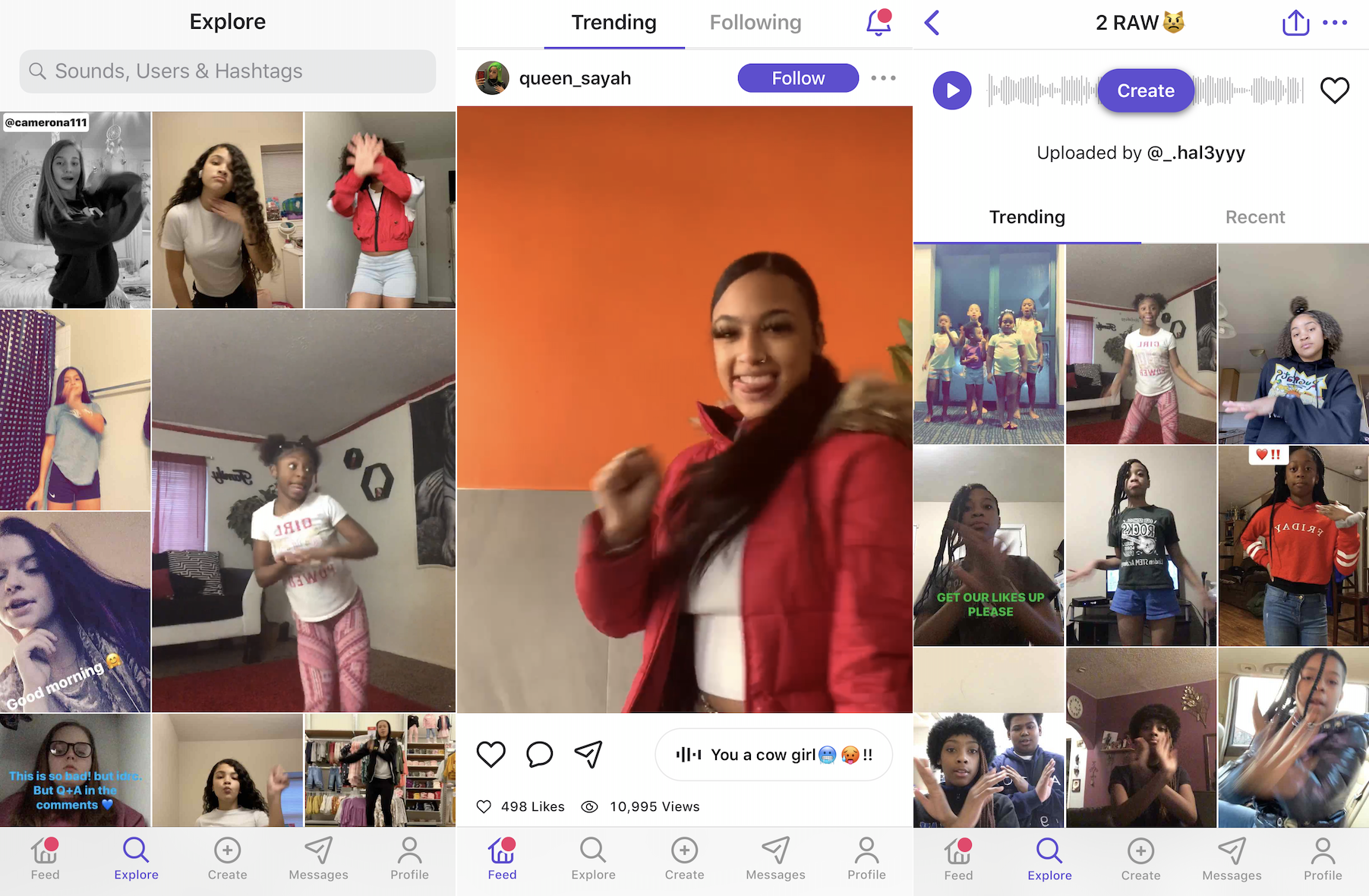
Dubsmash stretched its funding to rehire a whole new team of 15. They spent a year coding a new version of Dubsmash centered around Following and Trending feeds, desperately trying to match the core features of Musically, which by then had been bought by China’s ByteDance. It’s got chat but still lacks the augmented reality filters, cut transitions, and photo slideshows of TikTok. But Dubsmash has the critical remix option for soundtracking your clip with the audio of any other video that sets it apart from Instagram and Snapchat.

“We realized to build a great product, we needed a depth of expertise that we just didn’t have access to in Berlin” Dubsmash co-founder and CEO Jonas Druppel tells me. “It was a risky move and we felt the weight of it acutely.  But we also knew there was no other way forward, given the scale and pace of the other players in the market.”

Few social apps have ever pulled off a real comeback. Even Snapchat had only lost 5 million of its 191 million users before it started growing again. But in the case of Dubsmash, its biggest competitor was also its savior.

The pre-relaunch version of Dubsmash

In August 2018, ByteDance merged Musically into TikTok to form a micro-entertainment phenomenon. Instead of haphazardly sharing auto-biographical Stories shot with little forethought, people began storyboarding skits and practicing dances. The resulting videos were denser and more compelling than content on Snapchat and Instagram. The new Dubsmash, launched two months later, rode along with the surge of interest in short-form video like a Lilliputian in a giant’s shirt pocket. The momentum helped Dubsmash raise a secret round of funding last year to keep up the chase.

Now Dubsmash has 1 billion video views per month.
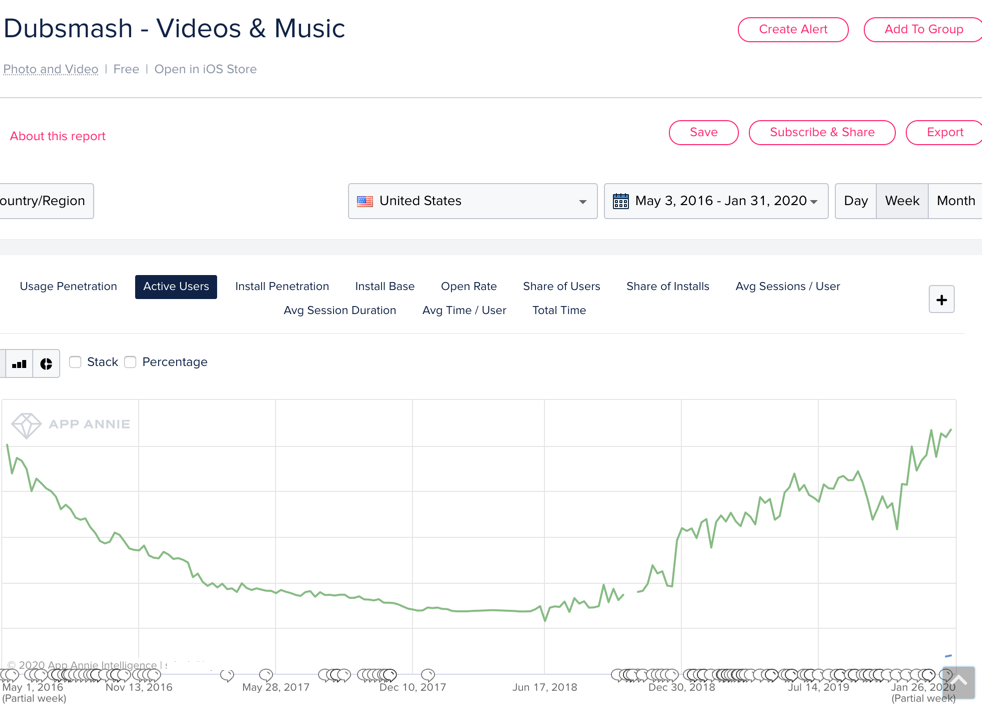
Dubsmash rebuilt its app and revived its usage

“The turnaround that we executed hasn’t been done in recent memory by a consumer app in such a competitive marketplace. Most of them fade to oblivion or shut down” Dubsmash co-founder and President Suchit Dash tells me. “By moving the company to the United States, hiring a brand new all-star team & relaunching the product, we gave this company & product a second life. Through that journey, we obsessed only on one metric: retention.”

Now the app has pulled 27% of the US short-form video market share by installs, second only to TikTok’s 59%, according to AppAnnie. Sensor Tower tells TechCrunch that TikTok has about 3X as many US lifetime installs as Dubsmash, and 11X more between when Musically became TikTok in August 2018 and now.

In terms of active users outside of TikTok, Dubsmash has 73% of the US market, compared to just 23% on Triller, 3.6% on Firework, and an embarrassing 0% on Facebook’s Lasso. And while Triller began surpassing Dubsmash in downloads per month in October, Dubsmash has 3X as many active users and saw 38% more first-time downloads in 2018 than 2019. Dubsmash now sees 30% retention after a month, and 30% of its daily users are creating content.
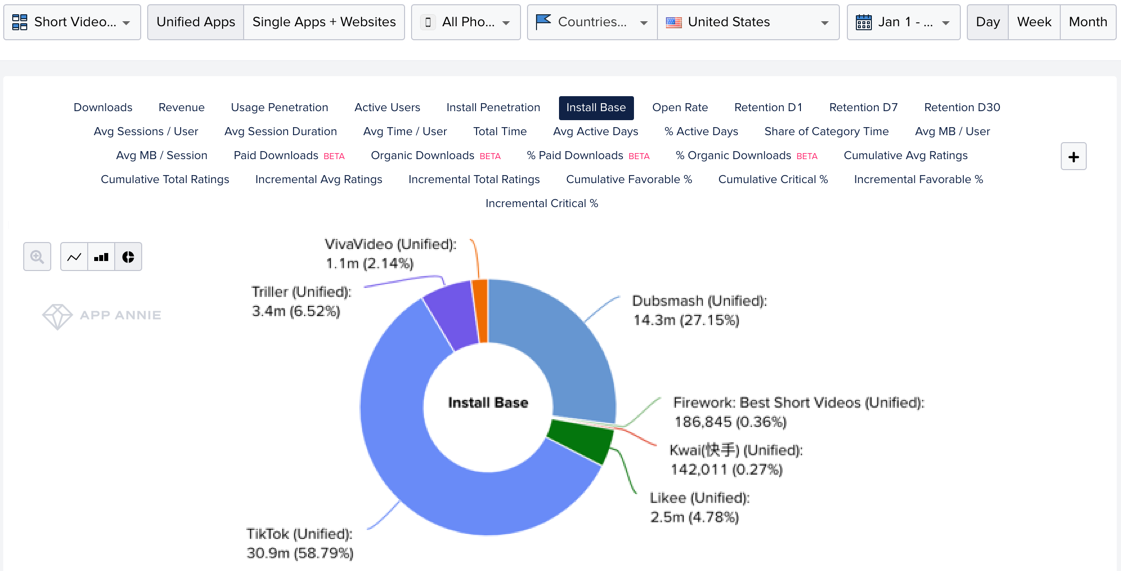
It’s that stellar rate of participation that’s brought Dubsmash back to life. It also attracted a previously unannounced round of $6.75 million in the Spring of 2019, largely from existing investors. While TikTok’s superstars and huge visibility could be scaring some users away from shooting videos while a long-tail of recent downloaders watch passively, Dubsmash has managed to make people feel comfortable on camera.

“Dubsmash is ground zero for culture creation in America—it’s where  the newest,  most popular hip-hop and dance challenges on the Internet originate” Dash declares.  “Members of the community are developing content that will make them the superstars of tomorrow.”

Being #2 might not be so bad, given how mobile video viewing is growing massively thanks to better cameras, bigger screens, faster networks, and cheaper data. Right now, Dubsmash doesn’t make any money. It hopes to one day generate revenue while helping its creators earn a living too, perhaps through ad revenue shares, tipping, subscriptions, merchandise, or offline meetups.
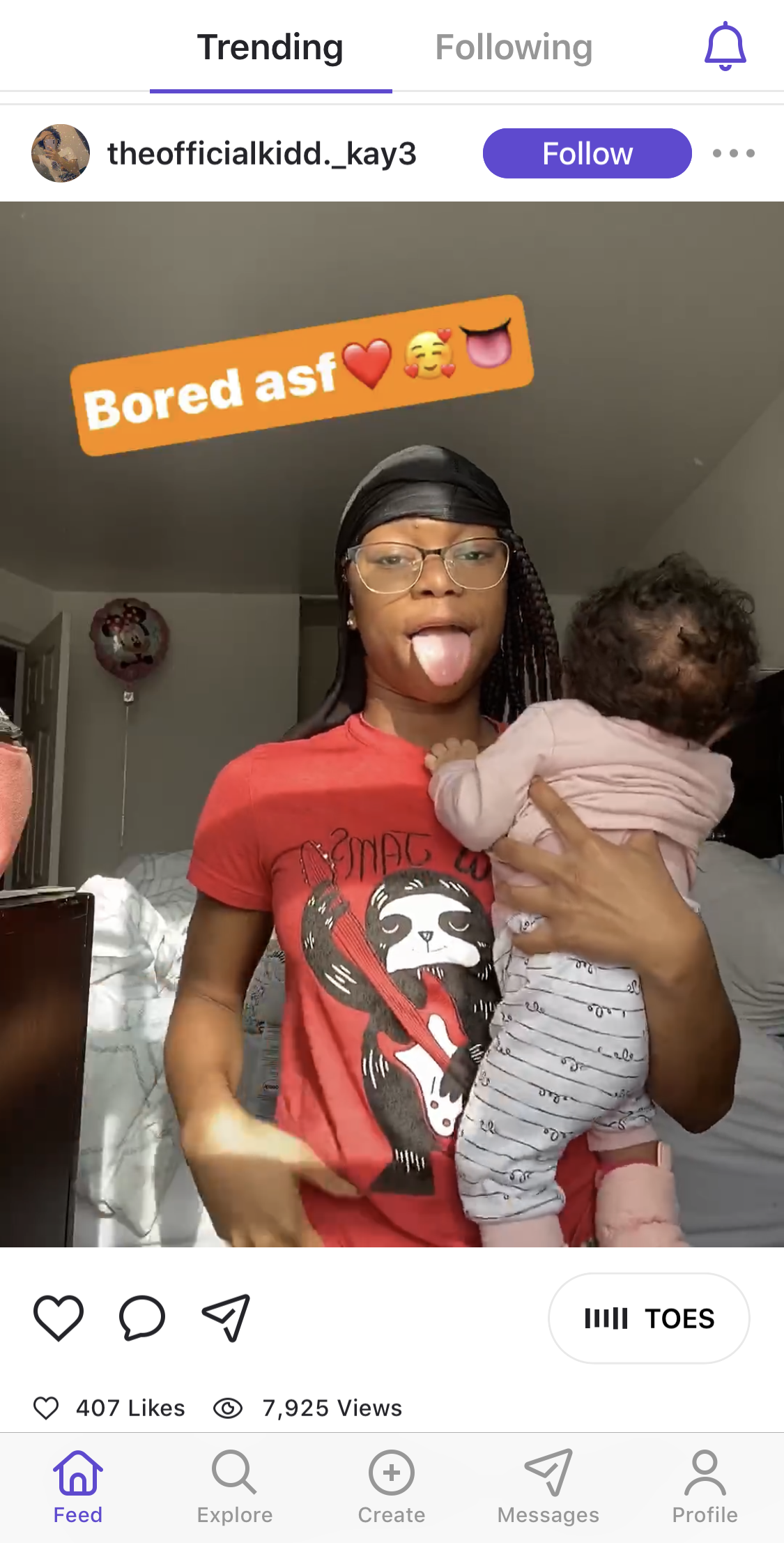
One advantage of not being TikTok is that the app feels less crowded by semi-pro creators and influencers. That gives users the vibe that they’re more likely to hit the Trending or Explore page on Dubsmash. The Trending page is dominated by hot new songs and flashy dances, even if they’re shot with a lower production quality that feels accessible.

Dubsmash tries to stoke that sense of opportunity by making Explore about discovering accounts and all the content they’ve made rather than specific videos. While popular clips might have tens of thousands of views rather than the hundred-thousand or multi-million counts on TikTok’s top content, there’s enough visibility to make shooting Dubsmashes worth it.

TikTok has already taken notice. Shown in a leak of its moderation guidelines from Netzpolitik, the company’s policy is to downrank the visibility of any video referencing or including a watermark from direct competitors including Dubsmash, Triller, Lasso, Snapchat, and WhatsApp. That keeps Dubsmash videos, which you can save to your camera roll, from going viral on TikTok and luring users away.
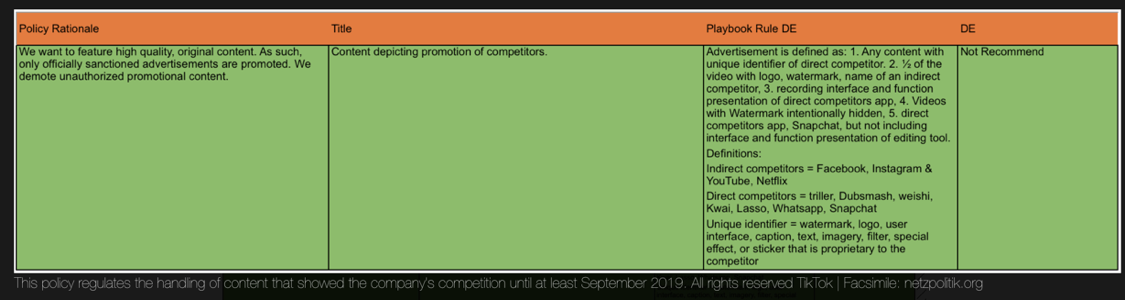
TikTok’s content moderation guidelines show it downranks content featuring the watermarks of competitors like Dubsmash

TikTok also continues to aggressively buy users via ads on competing apps like Facebook thanks to the billions in funding raked in by its parent ByteDance. In contast, Dash says Dubsmash has never spent a dollar on user acquisition, influencer marketing, or any other source of growth. That makes it achieving even half to a third of as many installs as TikTok in the US an impressive fete.

Why would creators choose Dubsmash over TikTok? Dash clinically explains that its a “decoupled audio and video platform that enables producers and tastemakers to upload fresh, original tracks that are utilized by creators and  influencers alike” but that it’s also about “Its role as a welcoming home for a community that’s underrepresented on social platforms.”

If Dubsmash keeps growing, though, it will encounter the inevitable content moderation problems that come with scale. It’s already doing a solid job of requiring users to sign up with their birthdate to watch or post videos, and it blocks those under 13. Only users who follow each other can chat.

Any piece of content that’s flagged by users is hidden from the network until it passes a review by its human moderation team that works around the clock, and it does proactive takedowns too. However, brigading and malicious takedown reports could be used by trolls to silence their enemies. Dubsmash is working off of a common sense model of what’s allowed rather than firm guidelines, which will be tough to keep consistent at scale.

“Being a social media app in 2020 means you need to take greater responsibility for the well being of the community” says Dash. “We decided upon relaunch to take a strict perspective. Our goal is to be intentional and proactive early, and invest in safety and healthy growth rather than growth at all costs. This may not be the most popular approach amongst the market, but we believe this is the most effective way to build a social platform.”

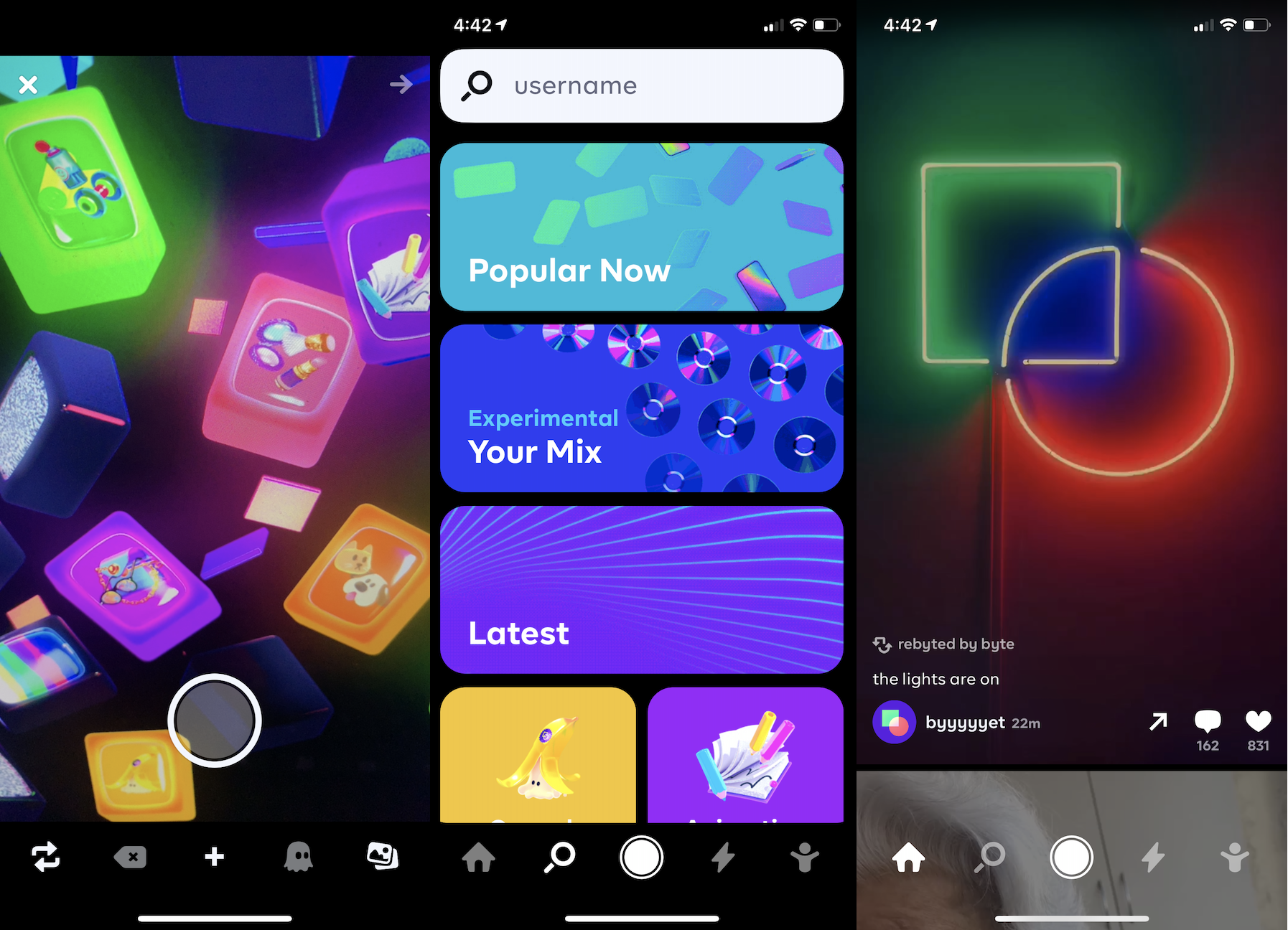
Dubsmash proves that short-form video is so compelling to teens that the market can sustain multiple apps. That will have to be the case given Instagram is preparing to release its TikTok clone Reels, and Vine’s co-founder Dom Hofmann just launched his successor Byte. The breakdown could look like:

  • TikTok: A slightly longer-form combo of comedy, dance, and absurdity
  • Dubsmash: Mid-length dance and music videos with a diverse community
  • Byte: Super short-form comedy featuring slightly older ex-Vine stars
  • Triller: Mid-length life blogging clips from Hollywood celebrities
  • Instagram Reels: International influencers making videos for a mainstream audience

Perhaps we’ll eventually see consolidation in the market, with giants like TikTok and Instagram acquiring smaller players to grow their content network effect with more fodder for remixes. But fragmentation could breed creativity. Different tools and audiences beg for different types of videos. Make something special, and there’s an app out there to enter your into pop culture cannon.

For more on the short-form video wars and the future of micro-entertainment, read:


from TechCrunch https://ift.tt/2RL0j44
via IFTTT

miércoles, 29 de enero de 2020

Google’s Area 120 launches Tangi, a short-form video app focused on creativity and DIY

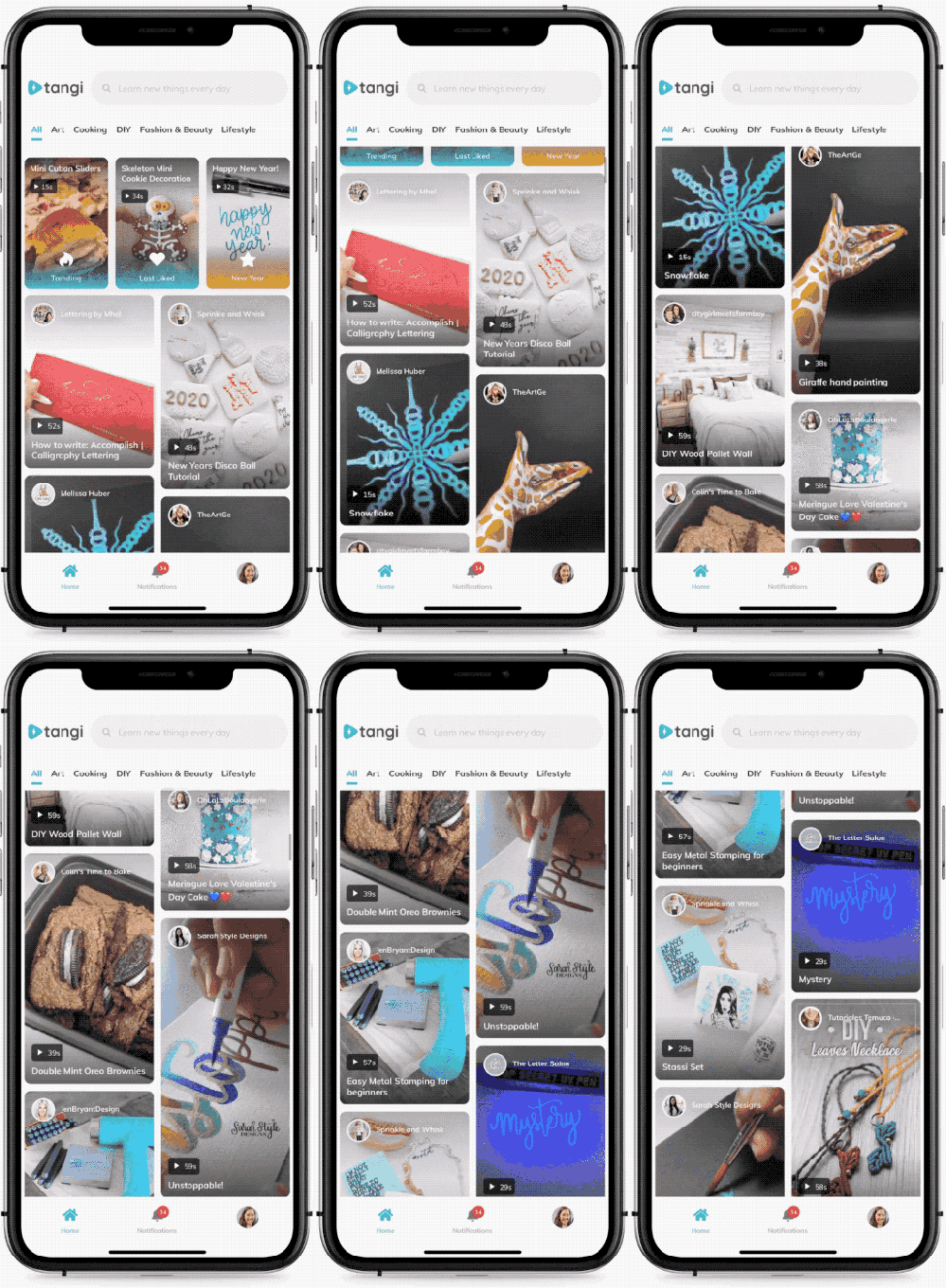
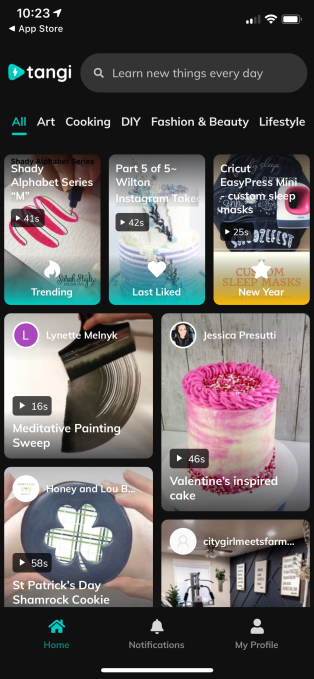
The latest project to emerge from Google’s in-house incubator, Area 120, takes the newfound interest in short-form video and focuses it on the DIY space. The company today is launching a short video platform called Tangi, initially on the web and iOS, that allows creative types to share how-to videos on subjects like crafting, painting, cooking, fashion, beauty and more.

Unlike apps like TikTok or newly-launched Byte, which are more focused on entertainment, Tangi aims to help people learn.

“We only focus on DIY and creativity content,” explains Tangi founder, Coco Mao. “Our platform’s goal is to help people learn to craft, cook, and create with quick one-minute videos. We designed Tangi to make it easier for users to find a lot of high-quality how-to videos,” she says.

Mao was inspired to create Tangi after going home to visit her parents in Shanghai. She found they were watching a lot of how-to videos on painting and photography on their phone, even though she had always believed they were “smartphone challenged.”

“My mom has always had a creative side, and I was surprised to learn that she’s now an amateur oil painter thanks to these niche communities with quick how-to videos,” Mao says. “I, too, joined some of these vibrant creative communities that make videos around cooking and fashion. I noticed something magical in these videos: They could quickly get a point across—something that used to take a long time to learn with just text and images,” she notes.

While Tangi’s vertical videos can be up to one-minute long, most average around 45 seconds. That means it’s not necessarily the place to be walked step-by-step through a complicated recipe as you could be on YouTube, for example. Instead, the videos might show you a quick cooking trick or inspire you to try a new idea in the kitchen.

Another difference between Tangi and other short-form video apps is a feature it includes called “Try It.” This encourages users to upload photos of their re-creation of the video as a way to interact with other community members, says Mao.
For example, one of the most re-created videos is this one of making guacamole in the avocado shell.

The creator might leave an actual recipe in the comments, however, even if they don’t show you each individual step in detail. (And it’s arguably a lot easier to follow a recipe on Tangi than on most of today’s recipe sites which are overrun with ads and SEO-driven “personal stories.”)

Already, Tangi is being used by a number of creators including DIY and lifestyle blogger Holly Grace, portrait artist Rachel Faye Carter, baker and food creator Paola D Yee, beauty vlogger Sew Wigged Out, art and DIYer TheArtGe, cooking and DIYer JonathanBlogs, and others.

Also unlike other social video apps, uploading to Tangi isn’t currently open to all. Instead, creators need to apply to be a part of the video platform. This allows Tangi to ensure their videos remain focused on creativity and DIY activities.

As a viewer, you can search Tangi for whatever it is you want to learn or filter videos by category, like art, cooking, DIY, fashion & beauty, and lifestyle. Or you can simply scroll down the home page until something catches your interest. To save a video or show your support for the creator, you click the heart icon to like the video. This saves it to your “Liked” section under your profile.

Tangi ends up having a sort of Pinterest-y vibe due to its content.

At launch, Tangi is available everywhere except the E.U., initially on the web and on iOS. The app is a free download, is ad-free, and isn’t currently being monetized in other ways.


from TechCrunch https://ift.tt/2RYWbMr
via IFTTT

Silicon Valley VC 7BC Capital expands in Europe, recruits first venture partner

Silicon Valley VC 7BC Venture Capital has decided to make an incursion into Europe, recruiting its first venture partner in the UK.

Monty Munford was previously a freelance journalist, conference speaker and columnist contributing to Forbes, The Telegraph, The Economist, BBC Newsweek and Wired, among others.

7BC VC focuses primarily on AI, FinTech, blockchain and related startups. It recently invested in Kyndi at a Series B with a valuation of $20M.

Munford says he caught the venture bug by brokering a deal between Qriously — a mobile data company that had predicted correctly the Trump win, Brexit referendum and the French/Dutch — And UK/NYC company Brandwatch. The deal was covered by TechCrunch here.

“It was one of the most gratifying things I’d ever done… I see joining 7BC as a chance to change things from another angle,” he told TechCrunch.

“There really is a correlation there between tech journalism and investing. There is much in common between looking at horrendous press releases and commensurate startups pitches and their decks,” he added.

Brandwatch CEO Giles Palmer commented: “Monty has watched us build for the past decade and has always openly shared connections and possibilities for our growth. When he, almost hysterically, told me that ‘we had to buy the company’, we had to take a second look and he was right. He has the creativity to see connections where they don’t exist and a nose for when people are likely to click. It’s a powerful combo.”

7BC Venture Capital co-founder and CEO Andrew Romans said in a statement: “Part of the success of a startup with or without VC funding is their ability to generate positive PR for the company and be noticed by multiple relevant audiences, but also tell a story, do something novel, and innovate.”

He said a journalist can bring special skills to the investing role: “This results in a unique understanding of specific ecosystems and categories of startups and corporate players, not to mention relationships with all of these individuals and the key news outlets. On the treasure map of PR, media, tech, and creativity we place an X on Monty Munford.”

Romans is based in Silicon Valley and was previously an investor in Player X, where Munford had been an executive.


from TechCrunch https://ift.tt/2UcFW0W
via IFTTT

viernes, 24 de enero de 2020

Vine reboot Byte officially launches

Two years after Vine’s co-founder Dom Hofmann announced he was building a successor to the short-form video app, today Byte makes its debut on iOS and Android. Byte lets you shoot or upload and then share six-second videos. It comes equipped with standard social features like a feed, Explore page, notifications, and profiles. For now, though Byte lacks the remixability, augmented reality filters, transition effects, and other bonus features you’ll find in apps like TikTok.

What Hofmann hopes will differentiate Byte is an early focus on helping content creators make money — something TikTok, and other micro-entertainment apps largely don’t offer. The app plans to soon launch a pilot of its partner program for offering monetization options to people proving popular on Byte.

Staying connected with Byte’s most loyal users is another way Hofmann hopes to set his app apart. He’s been actively running a beta tester forum since the initial Byte announcement in early 2018, and sees it as a way to find out what features to build next. “It’s always a bummer when the people behind online services and the people that actually use them are disconnected from one another, so we’re trying out these forums to see if we can do a better job at that” Hofmann writes.

The big question will be whether Byte can take off despite its late start. Between TikTok, Snapchat, Instagram, and more, do people need another short-form video app?


from TechCrunch https://ift.tt/2sV024J
via IFTTT