miércoles, 17 de octubre de 2018

Smule raises $20M, with plans to expand India operations

App maker turned music social network Smule has raised another $20 million. The latest round follows a $54 million raise in May of last year, led by Tencent, intent on helping the company expand Asia operations. This time out, funding is arriving via Times Bridge, the VC wing of India media conglomerate The Times Group.

The “strategic investment” comes as Smule pushes to expand its footprint in India, currently the second largest of the app maker’s international markets. Engaging there requires building a platform for an utterly massive and multi-lingual market.

“Building the Smule brand in India is a long term process, but a critical facet of realizing our vision to connect the world through music,” CEO and co-founder Jeffrey Smith told TechCrunch. “We are therefore thrilled to expand our reach in India through this significant partnership with Times Bridge.”

The round marks the first full social media partnership for Times Bridge, which finds the organization leveraging connections with local artists and helping to provide targeted marketing for Smule.

“Times Bridge’s mission is to bring the world’s best ideas to India and share India’s best insights with the world,” Times Bridge CEO Rishi Jaitly says in a statement. “Smule is a deeply original, bold idea with a mission of changing the way the world experiences music. Our investment will advance Smule’s music mission across the Indian subcontinent and unlock the creativity of many millions along the way. We are delighted to be working with a partner who approaches India with the empathy, conviction and optimism that the Indian market warrants.”


from TechCrunch https://ift.tt/2Oufqyt
via IFTTT

lunes, 8 de octubre de 2018

Atomico leads $31M Series B in Varjo, the Finnish startup developing ‘human-eye resolution’ VR and XR

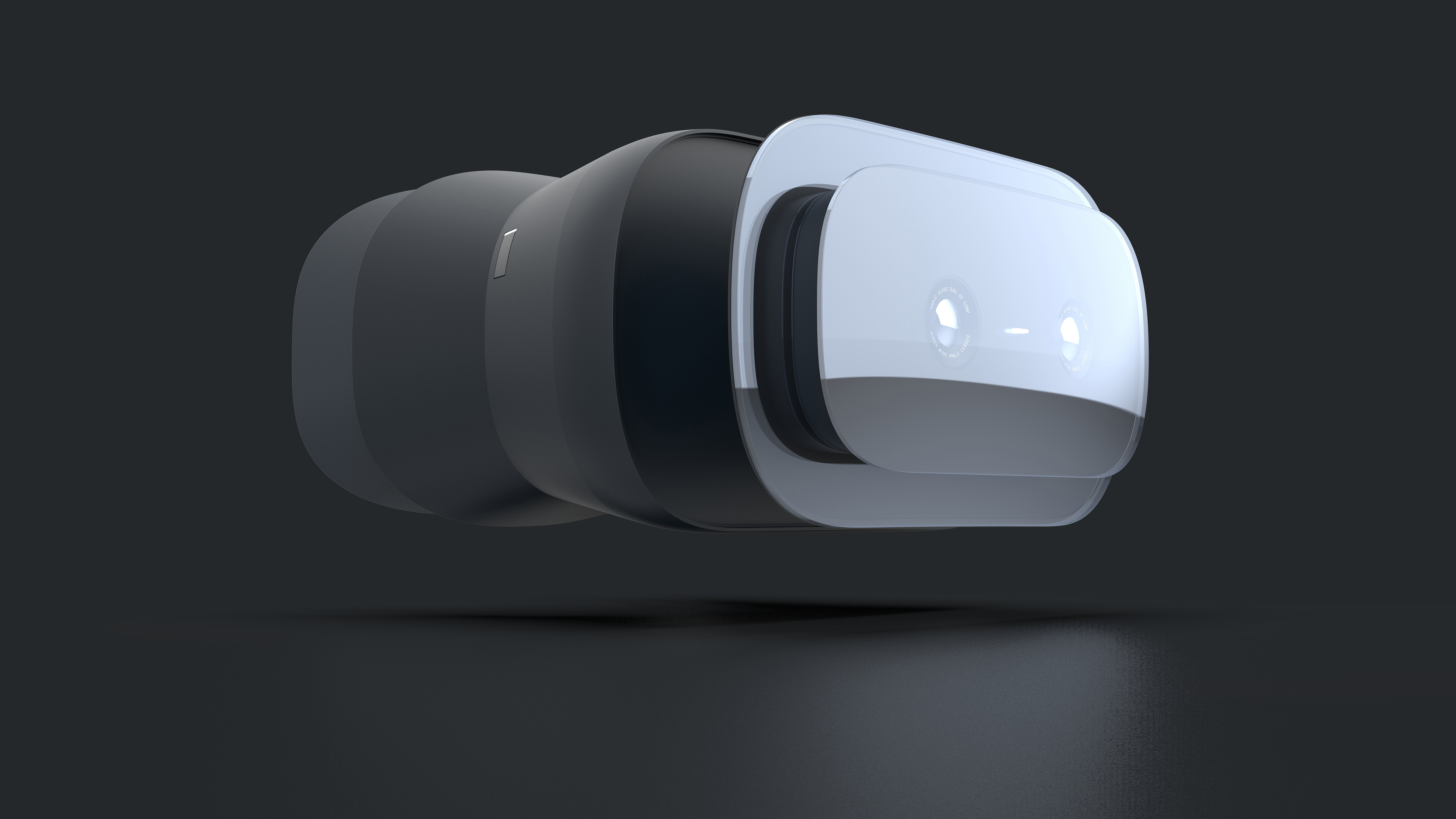
Varjo Technologies, the Finnish startup that made a splash earlier this year with news it had developed a virtual reality headset capable of “human-eye resolution,” has raised $31 million in Series B funding.

Leading the round is Europe’s Atomico, with participation from Siemens-backed venture capital firm Next47. Existing Series A investors EQT Ventures and Lifeline Ventures also followed on. It brings total funding for the Helsinki-based company to $46 million.

Founded in 2016, Varjo (which means “shadow” in Finnish and is pronounced “Var-yo”) aims to bring to market “the world’s first” human-eye resolution virtual reality (VR) and mixed reality (XR) product, which will be orders of magnitude higher in resolution than existing consumer headsets, such as Magic Leap or Microsoft’s HoloLens. However, unlike those existing devices — and courtesy of a claimed 20x bump in resolution — Varjo is targeting industrial use-cases for its wares.

In a call, co-founder and CEO Urho Konttori — who was previously at Nokia and Microsoft, where he played a pivotal role in the Meego N9 smartphone and the high-end Lumia devices, respectively — told me that Varjo is looking to sell into “design-driven” industries including simulation and training, architecture, automotive, aerospace, manufacturing, engineering, and construction — along with industrial design more generally.

These use-cases require VR and XR to mimic the human eye as closely as possible, and demand “extreme precision” and visual fidelity. Konttori says the status quo in resolution is like asking designers or engineers sporting headsets to work or train “half blind”. In contrast to existing lower resolution headsets, the startup’s prototype already claims “an effective resolution of 50 megapixels per eye”.

But to really understand the impact Varjo hopes to make, consider how complex design and engineering projects are undertaken today. In car design, for example, clay models are still used at key points of the design stage and form an important part of the creative loop. However, producing these slows down the design iteration process and in some ways stifles creativity because of the lag between tweaking a drawing or 3D CAD file and experiencing it in clay form in real life. Moving this to a high resolution virtual reality domain via VR and XR will remove this obstacle and enable designers to take more risks and try new things. This, in the longer term, should lead to better design and more innovative products.

What is also noteworthy, given VR and AR’s penchant for being the promise that keeps on promising, is that Varjo isn’t a “moonshot” investment, even though Atomico does do moonshot investments from time to time. Instead, the company says it is on track to commercially launch its VR headset later this year, with an AR/XR add-on to the headset available in the first half of 2019.

I’m also told it is already working in partnership with companies such as Airbus, Audi, BMW, Volkswagen, and Lilium, who have had early access to prototypes and have been feeding back and helping iterate the product.

I note that it is refreshing to see a new hardware company based in Europe, and that Varjo, with its ties to ex-Nokians, appears to be benefiting from European hardware talent, Konttori says that European VC firms have seemingly lost their appetite for truly innovative hardware. In Varjo’s case, he says Atomico was the exception, and that — along with flying taxi company Lilium (which Atomico has also invested in) — he hopes it can be the start of a European hardware startup renaissance.


from TechCrunch https://ift.tt/2y7xuEt
via IFTTT

viernes, 5 de octubre de 2018

Reelgood’s app for cord cutters adds 50+ services, personalized recommendations

Reelgood, a startup aimed at helping cord cutters find their next binge, is out today with its biggest update yet. The company has been developing its streaming guide over the past year to solve the issues around discovery that exist when consumers drop traditional pay TV in favor of streaming services like Netflix, Hulu, HBO, Prime Video, and others.

The company first launched as a website in the summer of 2017 before expanding to mobile last fall. During that time, it’s grown to over a million monthly active users who now check in with Reelgood to find something new to watch.

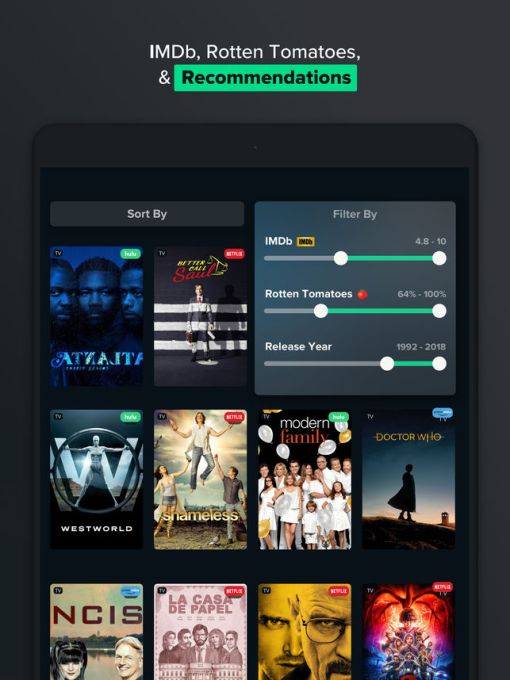
With today’s update to its iOS app, Reelgood is adding a number of features, including personalized recommendations, curated selections, alerts for shows and movies you’re tracking, advanced search and filtering, and the ability to track content over 50 more streaming services, among other things.

As discovery is Reelgood’s focus, the updated app now offers two new types of recommendations.

One is Reelgood’s own take on “Because You Watched” – a type of viewing suggestion you’ll find today on individual services, like Netflix. But those are more limited because they’ll only suggest other shows or movies they offer themselves. Reelgood’s recommendations will instead span all the services you have access to, offering a more universal set of suggestions.

This feature is tied to Reelgood’s watch history, where you track which shows and movies you’ve seen. That means you have to use Reelgood as your tracking app as well, in order for this feature to work.

The app’s other new way of offering recommendations is less personalized – in fact, it’s random. Because sometimes serendipity is a better way to find something, a feature called “Reelgood Roulette” lets you shake your device while on the Discover tab to get a non-personalized, random suggestion.

Reelgood credits Netflix Roulette, created by Andrew Sampson, as the basis for this addition. In fact, it acquired the rights to the software last year, and then updated it to support more streaming services.

The app also now offers more powerful search and filtering capabilities involving Rotten Tomatoes, IMDb scores, plus cast and crew listings. This allows you to query up things like “Meryl Streep’s top-rated movies” or “drama series with an IMDb rating of at least 8.0 that came out in the last 3 years,” for example.

Reelgood’s search and filtering mechanisms have always been the place where it excels, but it’s less useful as a simple tracker. For that, I prefer TV Time, which lets you quickly mark entire seasons or series as “Watched” and offers discussion boards for each episode where you can post photos and memes and chat with other fans.

TV Time, however, hasn’t been as useful for making recommendations – its suggestions have been off-the-mark when I’ve tried it in the past, often leaning too heavily on network’s back catalogs than pushing me to more current or trending content. It makes me wish I could combine the two apps into one for the best of both worlds – tracking and recommendations.

The updated Reelgood app also doubles down on its own curation capabilities by offering editorial collections. For example: 2018 Emmy Nominees, IMDb’s Top 250 Movies, Original Picks, Dark Comedies, British Humour, and more. This can be a good way to find something to watch when you’re really stumped.

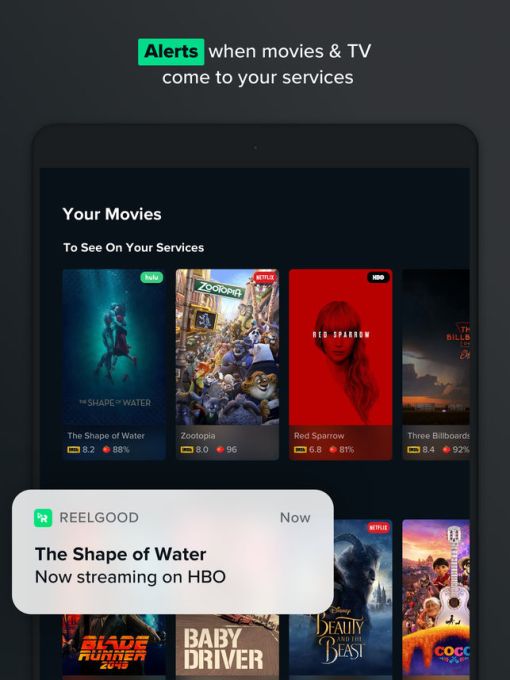
And as you discover new shows and movies you want to see, you can set alerts so you’ll be notified when they hit one of the streaming services you’re subscribed to, similar the tracking feature on Roku OS.

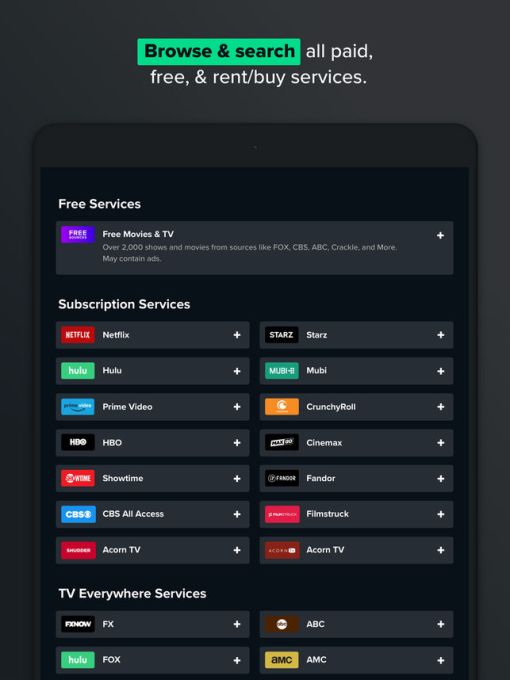
Finally, Reelgood’s update includes the addition of 50+ streaming services – that means there’s now support for more niche services like IndieFlix, FilmStruck, Shudder, Fandor, Crunchyroll, Mubi, AcornTV and Starz, among others.

“Reelgood 4.0 is the culmination of all we’ve learned about how people watch and the increasingly fragmented streaming world,” said Eli Chamberlin, Reelgood’s head of product and design. “Our aim with this release was to take all the streaming content out there, and display it in the most meaningful way possible so that people can get the most out of their existing streaming services without wasting countless hours browsing.”

The new app is rolling out to iOS today on the App Store.


from TechCrunch https://ift.tt/2RuK6xG
via IFTTT

jueves, 4 de octubre de 2018

9 highlights from Snapchat CEO’s 6000-word leaked memo on survival

Adults, not teens. Messaging, not Stories. Developing markets, not the US. These are how Snapchat will make a comeback, according to CEO Evan Spiegel. In a 6,000-word internal memo from late September leaked to Cheddar’s Alex Heath, Spiegel attempts to revive employee morale with philosophy, tactics, and contrition as Snap’s share price sinks to an all-time low of around $8 — half its IPO price and a third of its peak.

“The biggest mistake we made with our redesign was compromising our core product value of being the fastest way to communicate” Spiegel stresses throughout the memo regarding ‘Project Cheetah’. It’s the chat that made Snapchat special, and burying it within a combined feed with Stories and failing to build a quick-loading Android app have had disastrous consequences.

Spiegel shows great maturity here, admitting to impatient strategic moves and outlining a cohesive path forward. There’s no talk of Snapchat ruling the social app world here. He seems to understand that’s likely out of reach in the face of Instagram’s competitive onslaught. Instead, Snapchat is satisfied if it can help us express ourselves while finally reaching even meager profitability.

Snapchat may be too perceived as a toy to win enough adults, too late to win back international markets from the Facebook empire, and too copyable by good-enough alternatives to grow truly massive. But if Snap can follow the Spiegel game-plan, it could carve out a sustainable market through a small but loyal audience who want to communicate through imagery.

Here are the most interesting takeaways from the memo and why they’re important:

1. Apologizing For Rushing The Redesign

“There were, of course, some downsides to moving as quickly as a cheetah We rushed our redesign, solving one problem but creating many others . . . Unfortunately, we didn’t give ourselves enough time to continue iterating and testing the redesign with a smaller percentage of our community. As a result, we had to continue our iterations after we launched, causing a lot of frustration for our community.”

Spiegel always went on his gut rather than relying on user data like Facebook. Aging further and further away from his core audience, he misread what teens cared about. The appealing buzz phrase of “separating social from media” also meant merging messaging and Stories into a chaotic list that made both tougher to use. Spiegel seems to have learned a valuable lessen about the importance of A/B testing.
2. Chat Is King

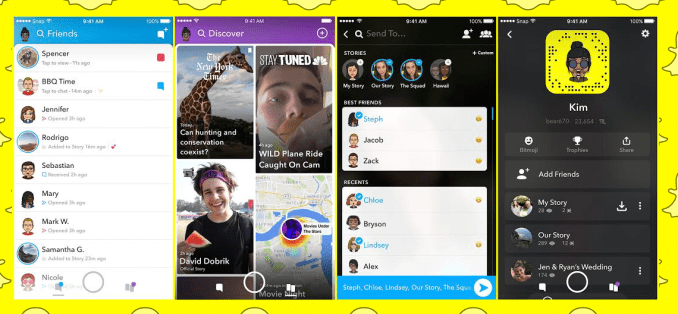
“Our redesigned algorithmic Friend Feed made it harder to find the right people to talk to, and moving too quickly meant that we didn’t have time to optimize the Friend Feed for fast performance. We slowed down our product and eroded our core product value. . . . Regrettably, we didn’t understand at the time that the biggest problem with our redesign wasn’t the frustration from influencers – it was the frustration from members of our community who felt like it was harder to communicate . . . In our excitement to innovate and bring many new products into the world, we have lost the core of what made Snapchat the fastest way to communicate.”

When Snap first revealed the changes, we predicted that “Teen Snap addicts might complain that the redesign is confusing, jumbling all content from friends together.” That made it too annoying to dig out your friends to send them messages, and Snap’s growth rate imploded, with it losing 3 million users last quarter. Expect Snap to optimize its engineering to make messages quicker to send and receive, and it even sacrifice some of its bells and whistles to make chat faster in developing markets.

3. Snapchat Must Beat Facebook At Best Friends

“Your top friend in a given week contributes 25% of Snap send volume. By the time you get to 18 friends, each incremental friend contributes less than 1% of total Snap send volume each. Finding best friends is a different problem than finding more friends, so we need to think about new ways to help people find the friends they care most about.”

Facebook’s biggest structural disadvantage is its broad friend graph that’s bloated to include family, co-workers, bosses, and distant acquaintances.  That might be fine in a feed app, but not for Stories and messaging where you only care about your closest friends. With friend lists and more, Facebook has tried and failed for a decade to find better ways to communicate with your besties. This is the wedge through which Snapchat can attack Facebook. If it develops special features for luring your best friends onto the app and staying in touch with them for better reasons than just maintaining a Snap “Streak”, it could hit Facebook where it can’t defend itself.

4. Discover Soars As Facebook Watch And IGTV Stumble

“Our Shows continue to attract more and more viewers, with over 18 Shows reaching monthly audiences of over 10M unique viewers. 12 of which are Original productions. As a platform overall, we’ve grown the amount of total time spent engaging with our Shows product, almost tripling since the beginning of the year. Our audience for Publisher Stories has increased over 20% YoY, and we believe there is a significant opportunity to continue growing the number of people who engage with Discover content . . .We are also working to identify content that is performing well outside of Snapchat so that we can bring it into Discover. “

Discover remains Snapchat’s biggest differentiator, scoring with premium video content purposefully made for mobile. What it really needs, though, are a few must-see tentpole shows to drag in a wider audience that can get hooked on the reimagined digital magazine experience.

5. But Discover Is A Mess

“Our content team is working hard to experiment with new layouts and content types in the wake of our redesign to drive increased engagement.”

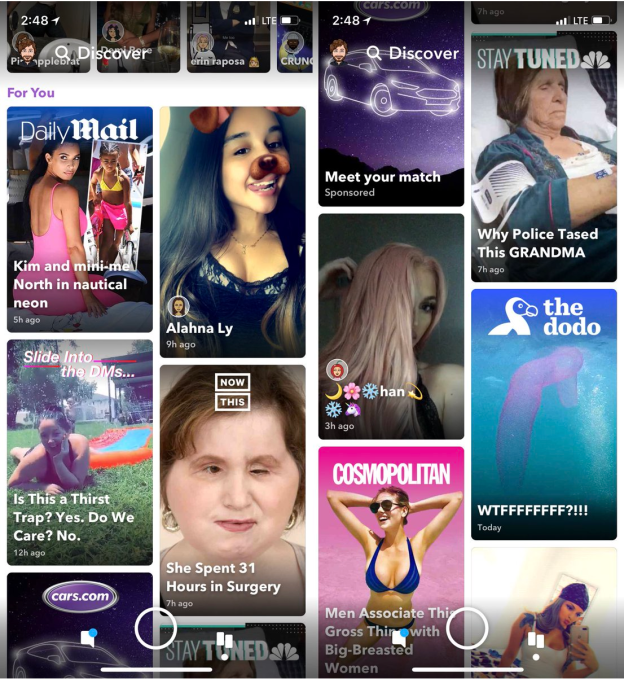
Snapchat Discover is an overcrowded pile of clickbait. News outlets, social media influencers, original video Shows, and aggregated user content collections all battle for attention in a design that feels overwhelming to the point of exhaustion. Thankfully Snapchat seems to recognize that more cohesive sorting with fewer images and headlines bombarding you might make Discover a more pleasant lean-back consumption experience.
6. Aging Up To Earn Money

“Most of the incremental growth in our core markets like the US, UK, and France will have to come from older users who generate higher average revenue per user . . . Growing in older demographics will require us to mature our application . . . Many older users today see Snapchat as frivolous or a waste of time because they think Snapchat is social media rather than a faster way to communicate. Changing the design language of our product and improving our marketing and communications around Snapchat will help users understand our value . . . aging-up our community in core markets will also help the media, advertisers, and Wall Street understand Snapchat.”

Snapchat can’t just be for cool kids anymore. Their lower buying power and lifestage make them less appealing to brands. The problem is that Snapchat risks turning off younger users by courting their older siblings or adults. If, like Facebook, users start to feel like Snapchat is a place for parents, they may defect in search of the next purposefully built to confuse adults to stay hip.

7. Finally Prioritizing Developing Markets

“We already have many projects underway to unlock our core product value in new markets. Mushroom allows our community to use Snapchat on lower-end devices. Arroyo, our new gateway architecture, will speed up messaging and many other services . . . It might require us to change our products for different markets where some of our value-add features detract from our core product value”

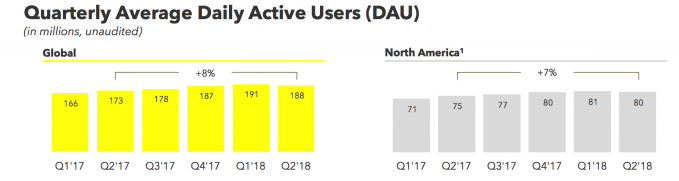
Sources tell me Snapchat’s future depends on the engineering overhaul of its Android app, a project codenamed ‘Mushroom’. Slow video load times and bugs have made Snapchat practically unusable on low-bandwidth connections and old Android phones in the developing world. The company concentrated on the US and other first-world markets, leaving the door open for copycats of Stories built by Instagram (400 million daily users) and WhatsApp (450 million daily users) to invade the developing world and dwarf Snap’s 188 million total daily users. In hopes of a smooth rollout, Snapchat is already testing Mushroom, but it will have to do a ton of marketing outreach to convince frustrated users who ditched the app to give it another try.
8. Fresh Ideas, Separate Apps

“We’re currently building software that takes the millions of Snaps submitted to Our Story and reconstructs parts of the world in 3D. We can then build augmented reality experiences on top of those models and distribute them as Lenses . . . If our innovation compromises our core product of being the fastest way to communicate, we should consider create [sic] separate applications or other ways of delivering our innovation.”

Snapchat has big plans for augmented reality. It doesn’t just want to stick animations over the top of anywhere, or create AR art installations in a few big cities. It wants to build site-specific AR experiences across the globe. And while everything the company has built to date has lived inside of Snapchat, it’s willing to spawn standalone apps if necessary so that it doesn’t bog down its messaging service. That could give Snapchat a lot more leeway to experiment.

9. The Freedom Of Profitability

“Our 2019 stretch output goal will be an acceleration in revenue growth and full year free cash flow and profitability. With profitability comes increased autonomy and freedom to operate our business in the long term best interest of our community without the pressure of needing to raise additional capital.”

Snapchat is still bleeding money, losing $353 million last quarter. Snapchat ended up selling 2.3 percent of its equity to a Saudi Arabian prince in exchange for $250 million to lengthen its rapidly shortening runway. And last year it took $2 billion from Chinese gaming giant Tencent. Deals like that could threaten Snapchat’s ability to prioritize its goals alone, not the moral imperatives or developer platforms that would benefit its benefactors. Once profitable, Snapchat won’t have to worry so much about struggling with short-term user growth and can instead focus on retention, societal impact, and its true purpose — creativity.



from TechCrunch https://ift.tt/2P7EBDo
via IFTTT

martes, 2 de octubre de 2018

The Freewrite Traveler offers distraction-free writing for the road

If you’ve ever tried to write something long – a thesis, a book, or a manifesto outlining your disappointment in the modern technocracy and your plan to foment violent revolution – you know that distractions can slow you down or even stop the creative process. That’s why the folks at Astrohaus created the Freewrite, a distraction-free typewriter, and it’s always why they are launching the Traveler, a laptop-like word processor that’s designed for writing and nothing else.

The product, which I saw last week, consists of a hearty, full-sized keyboard and an e-ink screen. There are multiple “documents” you can open and close and the system autosaves and syncs to services like Dropbox automatically. The laptop costs $279 on Indiegogo and will have a retail price of $599.

The goal of the Freewrite Traveler is to give you a place to write. You pull it out of your bad, open it, and start typing. That’s it. There are no Tweets, Facebook sharing systems, or games. It lasts for four weeks on one charge – a bold claim but not impossible – and there are some improvements to the editing functions including virtual arrow keys that let you move up and down in a document as you write. There are also hotkeys to bring up ancillary information like outlines, research, or notes.

If the Traveler is anything like the original Freewrite then you can expect some truly rugged hardware. I tested an early model and the entire thing was built like a tank or, more correctly, like a Leica. Because it is aimed at the artistic wanderer, the entire thing weighs two pounds and is about as big as the collected stories of Raymond Carver.

Is it for you? Well, if you liked the original Freewrite or even missed the bandwagon when it first launched, you might really enjoy the Traveler. Because it is small and light it could easily become a second writing device for your more creative work that you pull out in times of pensive creativity. It is not a true word processor replacement, however, and it is a “first-thought-best-thought” kind of tool, allowing you to get words down without much fuss. I wouldn’t recommend it for research-intensive writing but you could easily sketch out almost any kind of document on the Traveler and then edit it on a real laptop.

There aren’t many physical tools to support distraction-free writing. Some folks, myself included, have used the infamous AlphaSmart, a crazy old word processor used by students or simply set up laptops without a Wi-Fi connection. The Freewrite Traveler takes all of that to the next level by offering the simplest, clearest, and most distraction-free system available. Given it’s 50% off right now on Indiegogo it might be the right time to take the plunge.


from TechCrunch https://ift.tt/2OtY0S1
via IFTTT

lunes, 1 de octubre de 2018

Apple’s ‘Everyone Can Create’ curriculum launches on Apple Books

Fist announced at Apple’s education event in Chicago, the company today launched its new “Everyone Can Create” curriculum on Apple Books. The curriculum joins Apple’s “Everyone Can Code” initiative by offering teachers a way to integrate drawing, music, filmmaking and photography into their classroom lesson plans.

Specifically, “Everyone Can Create” is designed to take advantage of Apple’s new 9.7-inch iPad and Apple Pencil, also introduced at the company’s event this March in Chicago. Before its introduction, only Apple’s expensive iPad Pro model offered Pencil support. The new iPad, however, is just $299 for schools, like the prior 9.7-inch device. (Or it’s $329 for consumers.)

The curriculum itself was built by Apple in collaboration with teachers and educators, and works to alongside Apple’s built-in apps like GarageBand, iMovie, Clips, and others. It’s been in preview since the news of its arrival earlier this year, with educators in over 350 schools worldwide giving it a go. Now, it’s open to all, the company says.

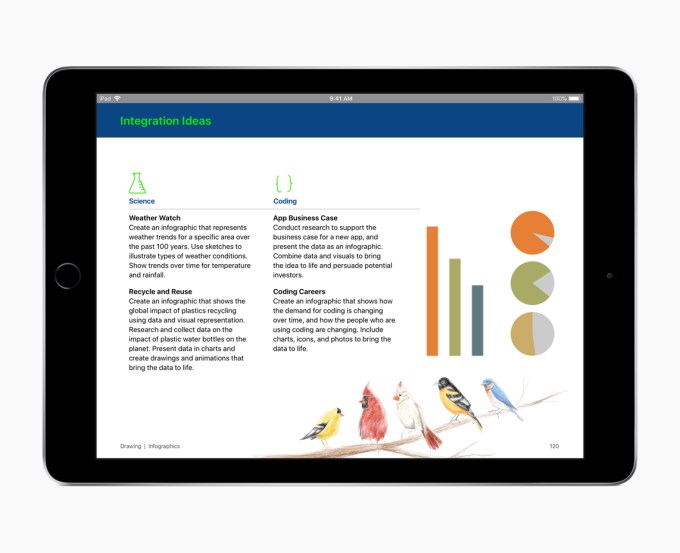
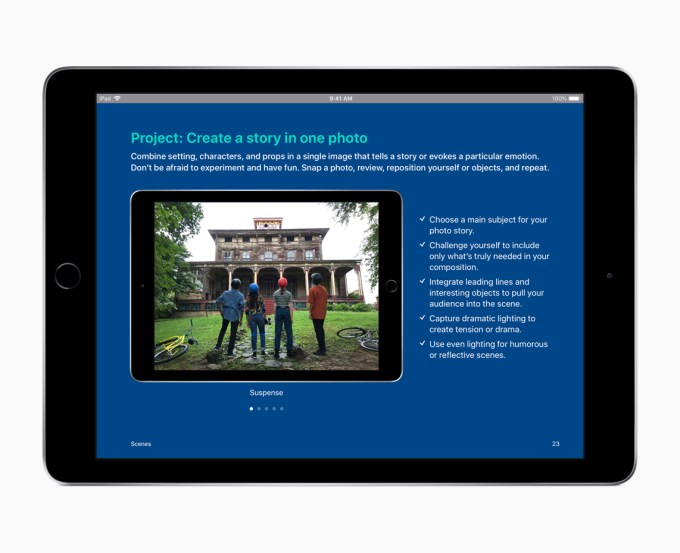
Included in the curriculum are four project guides for drawing, music, video, and photos, each with a series of projects that build skills progressively. In total, there are 300 lesson plan ideas across media, projects, and subjects. Not all are focused on the creative arts, to be clear. For example, a math teacher can use the iPad camera’s burst mode to capture the arc of a basketball toss to measure its parabola, the company explains in its announcement. Students can also use the camera to learn about fractals or use Apple Pencils and apps to learn about symmetry.

“We believe Apple technology can help unleash every child’s creative genius,” said Philip Schiller, Apple’s senior vice president of Worldwide Marketing, in a statement about the launch. “Working closely with teachers, we have built the Everyone Can Create curriculum to help bring creative expression and the arts into the classroom, and to help students stay engaged through creativity and ultimately be more successful.”

Apple has proven fairly successful with its prior curriculum, “Everyone Can Code,” which is now used by over 5,000 schools, community colleges and technical colleges worldwide. It also offers a large library of third-party education apps for teachers to tap into – there are nearly 200,000 on today’s App Store.

“Everyone Can Create” is now available in English on Apple Books, with other languages rolling out by the end of 2018. Apple Stores will also feature “Everyone Can Create” at its Apple Teacher Tuesday sessions.


from TechCrunch https://ift.tt/2Re0KRQ
via IFTTT