lunes, 21 de junio de 2021

Electric utility bike startup Ubco raises $10 million to fund its global expansion

Ubco, the New Zealand-based electric utility bike startup, has raised $10 million to fund a global expansion focused on the U.S. market and scale up its commercial subscription service business. 

Ubco’s hero product, the Ubco 2X2, is an all-wheel drive electric motorbike that looks like a dirt bike but rides like a moped. What began as a solution for farmers to get around pastures and farms easily, safely and quickly has expanded to include an urban version of the bike that caters to fleet enterprise customers, gig economy workers and city riders. 

Since its founding in 2015, the company has produced two versions of its 145-pound utility bike: The Work Bike, the original off-road vehicle, and the Adventure Bike, the newer version that’s made for city riding but can handle itself off-road. 

Now that Ubco’s got a fresh cash infusion from the round led by Seven Peak Ventures, Nuance Capital and TPK Holdings, it hopes to continue expanding into existing verticals, like food delivery, postal service and last-mile logistics. The company already works with Domino’s in New Zealand and the United Kingdom, as well as a range of other national clients, like the New Zealand Post, the Defense Force, the Department of Conservation and Pāmu, or Landcorp Farming Limited and other local restaurants and stores.

“We have a strong enterprise market in New Zealand and have developed a strong pipeline of sales internationally,” Timothy Allan, CEO and co-founder, told TechCrunch. 

While direct consumer sales make up for most of Ubco’s revenue at present, the company is pushing aggressively into enterprise, and more specifically, subscription services. The 2X2 is built on an intelligent platform that includes vehicle and power systems, cloud connectivity and data analysis, which enables the subscription model to work alongside fleet management systems. 

Ubco expects revenue to climb from $2.1 million in 2020 to $8.4 million by the end of 2021 as it pushes to increase its annual recurring revenue through subscriptions. Ubco’s subscription model, which costs about $50 to $60 per week ($75 to $85 NZD) for fleet enterprise customers, is being rolled out in New Zealand, Australia, the U.K., Europe and the U.S. this year and into 202. Consumers will get access to the subscriptions as well within the next couple of months, according to a spokesperson for the company. 

Allan sees subscriptions as the future of the EV industry, not just because it allows for a high chance of profitability, but also because it’s far more environmentally sustainable. As the company expands this part of its business model, it hopes to lead the circular economy space.

The company predicts that vehicles run through the subscription model will have four times the life expectancy as those sold outright and produce 80% less carbon overall compared to a combustion vehicle. 

“Subscription means we own the vehicle, so we manage the lifecycle,” said Allan. “So the first life starts at high intensity, and that might be 60,000 kilometers delivering pizza, or it might be 30,000 kilometers on a farm, which are equally hard for different reasons. Then after, that vehicle will go down to a lower intensity application. After that the battery can then be pulled out, and that might go into passive solar storage or something like that.”

Allan sees solving the end-of-life issue as a personal and professional challenge, one with room for creativity since no one has fully figured out the correct way of doing it. He says he takes a bottom up approach when it comes to the engineering of the vehicle in a way that allows for easier recycling.

“Like when you design a battery, fuck putting fire retardant foam into it because you can’t get it back at the end of life,” he said. “So it starts with correctly labeling, engineering with intent so that you’re designing for this type of assembly, and then your business or commercial system needs to support the concept. Now, we’ve got the advantage because the economics and incentives are aligned, and that all aligns with New Zealand’s product stewardship legislation.”

Trying to perfect the circular economy through utility vehicles isn’t just about doing what’s right for the environment. Allan thinks it’ll be a smart business decision in the end, one that will draw in customers and give the company a competitive edge with enterprise clients. 

“This is a part of your journey with us as a customer,” said Allan. “If we can design subscriptions and the life of the vehicle in such a way that you feel good about it, that’s where we’re driving from. Most people want to do the right thing, and we can provide something that logically fits the economics, can be done at scale and can be managed holistically.”


from TechCrunch https://ift.tt/3iZfVi5
via IFTTT

Apple’s App Store to face scrutiny in Germany as FCO opens ‘market power’ proceeding

Germany’s competition authority, the FCO, has completed its Big Tech GAFA ‘bingo’ card by opening a proceeding against Apple.

As with similar investigations already opened this year — into Amazon, Facebook and Google — the proceeding will determine whether or not the iPhone maker meets the threshold of Germany’s updated competition law.

The 10th amendment to the law, which came into force in January, enables the Bundeskartellamt to intervene proactively against the practices of large digital companies — if they are determined to have “paramount significance for competition across markets” and in order to prevent them from engaging in anti-competitive practices.

Discussing the key new provision to the Competition Act (aka, the GWB Digitalisation Act and specifically Section 19a) — in a panel discussion last week, the FCO’s president, Andreas Mundt, explained that the competition law update had been influenced by its experience with a long running (and pioneering) case against Facebook’s superprofiling of Internet users.

The upshot is that German competition law now has a theory of harm which entwines competition law and data protection — albeit, in the case of Apple, its tech empire is typically associated with defence (rather than abuse) of user privacy.

But the comprehensive amendments to German antitrust law are broadly targeted at Big Tech, with the goal of keeping markets open, fostering innovation and putting a stop to any abusive behavior, via provisions the FCO will be able to order — such an banning or restricting self-preferencing and bundling; or stopping giants tying products together to try to muscle into adjacent markets; or preventing them blocking interoperability and data access to try to lock out rivals, to name a few.

A mix of provisions are likely to be deployed, as tech giants are designated as addressable under the law, depending on the specifics of each case and the particular ecosystem business. So how it will operate in practice remains to be seen. So far the FCO is still in the process of determining (in each case) whether it can apply the law against GAFA.

For the Apple proceeding, Mundt said in a statement today that its operation of the App Store will be a “main focus” for the investigation because he said it “enables Apple in many ways to influence the business activities of third parties”.

“We will now examine whether with its proprietary operating system iOS, Apple has created a digital ecosystem around its iPhone that extends across several markets,” he added. “Apple produces tablets, computers and wearables and provides a host of device-related services. In addition to manufacturing various hardware products, the tech company also offers the App Store, iCloud, AppleCare, Apple Music, Apple Arcade, Apple TV+ as well as other services as part of its services business. Besides assessing the company’s position in these areas, we will, among other aspects, examine its extensive integration across several market levels, the magnitude of its technological and financial resources and its access to data.”

The FCO also noted that it has received a number of complaints against Apple “relating to potentially anti-competitive practices” — such as one from the advertising and media industry against Apple restricting user tracking with the introduction of its iOS 14.5 operating system; and a complaint against the exclusive pre-installation of the company’s own applications as a possible type of self-preferencing prohibited under Section 19a GWB.

“App developers also criticise the mandatory use of Apple’s own in-app purchase system (IAP) and the 30% commission rate associated with this,” it added in a press release. “In this context, the marketing restrictions for app developers in Apple’s App Store are also addressed. The latter complaint has much in common with the European Commission’s ongoing proceeding against Apple for imposing restrictions on the streaming service Spotify and accordingly preferencing its own services. Where necessary, the Bundeskartellamt will establish contact with the European Commission and other competition authorities in this regard. So far, no decision on initiating a further proceeding has been taken.”

Apple was contacted for comment on the FCO’s proceeding and it sent us this statement, attributed to a spokesperson:

Apple is proud to be an engine for innovation and job creation, with more than 250,000 jobs supported by the iOS app economy in Germany. The App Store’s economic growth and activity have given German developers of all sizes the same opportunity to share their passion and creativity with users around the world while creating a secure and trusted place for customers to download the apps they love with the privacy protections they expect. Germany is also home to Apple’s largest engineering hub in Europe, and a new €1BN investment in our European Silicon Design Center in Munich. We look forward to discussing our approach with the FCO and having an open dialogue about any of their concerns.”

Once issued by the FCO, a ‘paramount significance’ finding lasts for five years — while any legal challenges to orders made under Section 19a are intentionally expedited, with appeals going direct to Germany’s Federal Court of Justice (which is given exclusive competence). The goal being to avoid long drawn out litigations, as has occurred in the FCO’s case against Facebook’s superprofiling — which had legal questions referred to the CJEU back in March, some five years after the Bundeskartellamt began looking into Facebook’s data practices.

The coming months and years could be highly significant to how GAFA is able to operate in Europe’s largest economy — and, likely by extension, further afield in Europe and beyond as a number of jurisdictions are now paying active attention to how to regulate Big Tech.

Back in March, for example, the UK’s Competition and Markets Authority opened its own probe into Apple’s App Store. Simultaneously it’s working on reforming national law to create a ‘pro-competition’ for regulating tech giants.

While, last December, European Union lawmakers proposed the Digital Markets Act — also aiming to tackle the power market of so-called ‘gatekeeper’ platforms.

The FTC appointing Lina Khan as chair also appears to signify a change of direction on tech antitrust over in the US.


from TechCrunch https://ift.tt/3iZhw7I
via IFTTT

jueves, 10 de junio de 2021

When Walmart comes knocking

As I’m typing this, I’ve just finished my second panel for our big TC Sessions: Mobility event. The write-ups will be ready in time for next week’s roundup, but a couple of things worth thinking about in the meantime.

The first is partnerships with big companies like Walmart. I get the sense that Walmart really loves to play the field when it comes to partnering with small tech startups. And honestly, why not, right?

There’s a lot of upside and relatively little downside. At the end of the day, a company like Walmart is looking for a competitive advantage against Amazon, the galactic emperor of competitive advantages. Amazon, of course, has invested a ton in robotics, including acquisitions and first-party development.

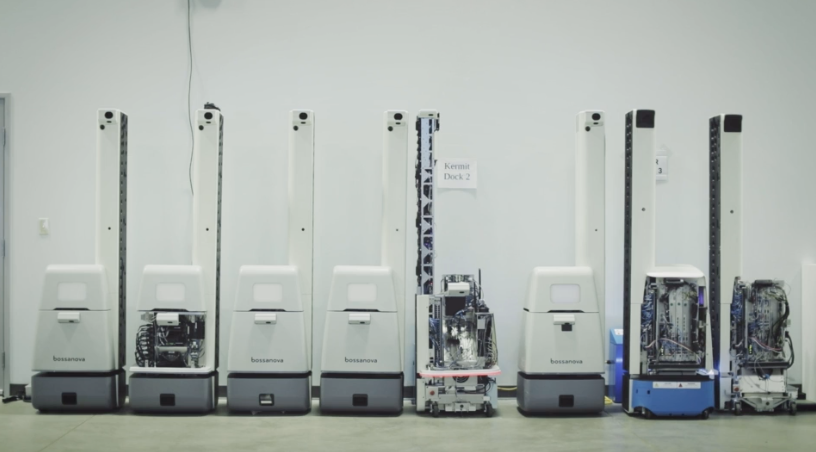
bossa nova-robots veanne cao

Image Credits: Veanne Cao/TechCrunch

For startups, there’s tremendous up and downside here. It’s hard not to see a company like Bossa Nova as a kind of cautionary tale on that front. The promising inventory scanning startup took a massive hit when Walmart backed out of a deal the company had invested large resources into. It left Bossa Nova shaken, to say the least.

There’s no easy math on this one. When a company like Walmart knocks on your door with a big contract, you want to jump in with both feet. But how do you avoid putting all of your eggs in that one basket. When it comes to emerging tech, companies like Walmart like to play the field.

Another subject I’ve been thinking a lot about of late is whether universities are doing enough to foster innovation in their own backyard. There are plenty of good and bad examples of this, but as someone who writes about robots, I keep coming back to Carnegie Mellon. Other big robotics schools like MIT and Stanford haven’t had to concern themselves with talent drain, in large part due to location.

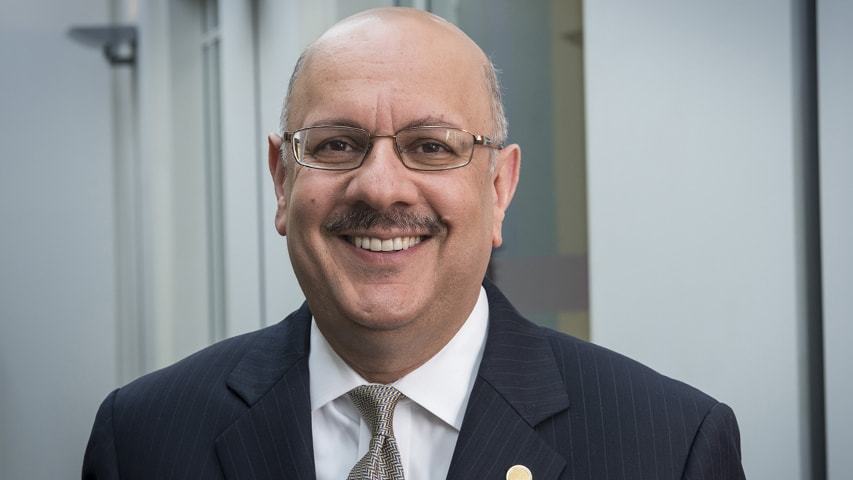
Image Credits: Carnegie Mellon University

So, how does a school like CMU both help budding entrepreneurs transition from laboratory to startup and keep that talent in its own backyard? The good news is I’ll be able to take that question directly to the source. I’ll be interviewing CMU President Farnam Jahanian at TC’s upcoming virtual Pittsburgh event on June 29. Here’s a quote from Jahanian to whet your appetite:

Carnegie Mellon’s decades-long leadership in research and education in AI and robotics has catalyzed an innovation ecosystem in the Pittsburgh region where entrepreneurship, creativity and placemaking intersect. These emerging technologies are changing the way we farm, enabling millions to learn a new language, leading the race to develop self-driving vehicles, and even going to the moon. We are committed to empowering citizens across Pittsburgh to take part in the economic benefits of these innovations as they continue to transform our world.

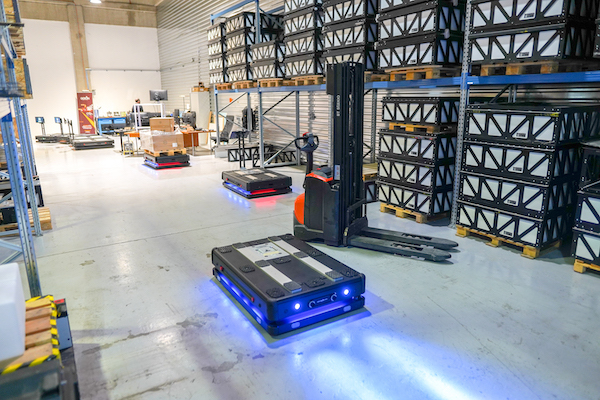
Gideon Brothers robots

Image Credits: Gideon Brothers

As we head into summer, the investments in the category aren’t coming quite as fast and furiously as they were earlier in the year. But I have it on good authority that we’ll be seeing some more robotics funding announcements in the not too distant future. Of course, for all of the reasons I’ve alluded to before, the warehouse space continues to be hot. And this week a Croatian firm named Gideon Brothers announced a $31 million raise. From a recent piece by Mike, here’s CEO Matija Kopić:

The pandemic has greatly accelerated the adoption of smart automation, and we are ready to meet the unprecedented market demand. The best way to do it is by marrying our proprietary solutions with the largest, most demanding customers out there. Our strategic partners have real challenges that our robots are already solving, and, with us, they’re seizing the incredible opportunity right now to effect robotic-powered change to some of the world’s most innovative organizations.

Kopić and team should clearly all consider changing their last name to Gideon and doing a whole Ramones thing. Of course, they’re the ones who just raised $31 million, so maybe they’re doing something right.


from TechCrunch https://ift.tt/2Tgm9Q7
via IFTTT

martes, 8 de junio de 2021

Carnegie Mellon University President Farnam Jahanian is speaking at TechCrunch City Spotlight: Pittsburgh

TechCrunch is thrilled to announce Carnegie Mellon University President Farnam Jahanian is speaking at our Pittsburgh event on June 29. You can register here. It’s free to participate and hear President Farnam’s interview.

President Jahanian is an outspoken advocate for science and innovation, making him perfect to headline our event focused on startup activity in Pittsburg, PA. Speaking to a House committee in April, Jahanian identified recent trends shaping the research and development throughout the United States. Among those mentioned was a widening opportunity gap and rising economic inequality — topics that are also fundamentally shaping startups in Silicon Valley, Pittsburgh, and elsewhere.

“Carnegie Mellon’s decades-long leadership in research and education in AI and robotics has catalyzed an innovation ecosystem in the Pittsburgh region where entrepreneurship, creativity and placemaking intersect,” Jahanian told TechCrunch. “These emerging technologies are changing the way we farm, enabling millions to learn a new language, leading the race to develop self-driving vehicles, and even going to the moon. We are committed to empowering citizens across Pittsburgh to take part in the economic benefits of these innovations as they continue to transform our world.”

Pittsburgh is a fantastic startup ecosystem quickly growing by leveraging its incredible universities, a welcoming local government, and experienced investors. Though thousands of miles away, Pittsburgh has long contributed to Silicon Valley’s success through research and development. To TechCrunch, Pittsburgh represents a city leveraging its local assets to help build companies in and out of the area. We recently published a deep profile on Duolingo that highlights how the local Pittsburgh ecosystem helped turn the startup into a billion dollar company.

TechCrunch Hardware Editor Brian Heater is interviewing Jahanian. Heater was key in shaping and programming TechCrunch’s past events including Sessions: Robotics, a cornerstone discipline at CMU.

TechCrunch City Spotlight: Pittsburgh features talks from Jahanian, local startups, and local leaders. More names will be announced in the coming weeks.

We’re still looking for startups to participate in the event. It’s free to register and participating in networking and watch the event (click here to register). It’s also free to apply to pitch your startup at the event (click here to apply). We’re looking for early stage companies from the greater Pittsburgh area that can give a two minute pitch to a panel of local venture capitalists in exchange for feedback.


from TechCrunch https://ift.tt/2Sb4SHX
via IFTTT

jueves, 3 de junio de 2021

TikTok called out for lack of ads transparency and for failing to police political payola

TikTok announced a ban on political advertising all the way back in 2019. So you’d be forgiven for thinking the ugly problem of democracy-denting political disinformation doesn’t apply inside its walled garden of dancing Gen Zers. But you’d be wrong.

New research by Mozilla suggests that policy loopholes and lax oversight, especially around influencer marketing, coupled with an ongoing lack of ads transparency by TikTok — which offers no publicly searchable ad archive — are making its video-sharing platform vulnerable to passing off political ads as organic content.

Mozilla says it found over a dozen instances of TikTok influencers across the political spectrum who were being paid (or otherwise compensated) by a variety of political organizations to promote partisan messages without disclosing that these posts were sponsored.

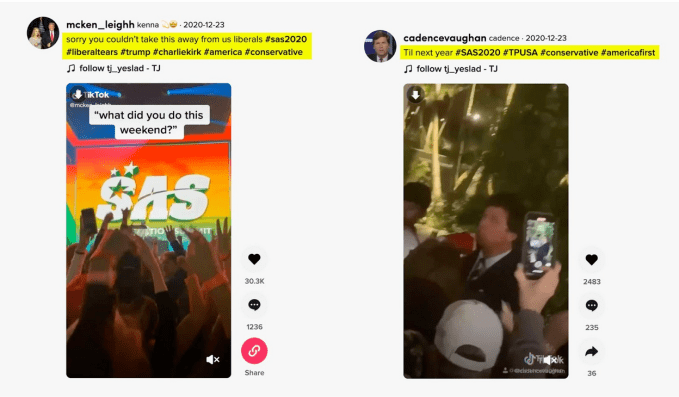
“Our research found that TikTok influencers across the political spectrum had undisclosed paid relationships with various political organizations in the U.S.,” it writes. “Several right-wing TikTok influencers appear to be funded by conservative
organizations like Turning Point USA, a tax-exempt nonprofit which has a dedicated influencer program specifically targeted at funding young conservative content creators on social media.”

Examples of TikTok influencers spreading political messaging (Image credits: Mozilla)

It similarly found evidence of left-leaning sponsored political messaging being spread without proper disclosures by TikTok influencers, noting that: “We found some evidence that progressive influencers supported by left-leaning political organizations were posting pro-Biden messages prior to the U.S. presidential election. For instance, The 99 Problems created and funded the Hype House account House of US, where influencers post political messaging.”

In the report, Th€se Are Not Po£itical Ad$: How Partisan Influencers Are Evading TikTok’s Weak Political Ad Policies, Mozilla calls out the platform for not offering adequate tools for ‘influencers’ — aka users who have amassed a large enough number of followers to become attractive targets for advertisers to target for making paid postings — to report sponsorships, pointing out that other major social media platforms (like Facebook/Instagram) do offer such tools and can flag influencer content if they’re found failing to properly report ads.

“Of course, it’s hard to know exactly how self-disclosure ad policies are being enforced across platforms but TikTok is significantly far behind Instagram and YouTube when it comes to providing tools and enacting clear, strict, and transparent policies,” Mozilla writes in the report.

Per TikTok’s rules, content creators are supposed to self-identify any paid content (typically by using the hashtag #ad or #sponsored), in keeping with U.S. Federal Trade Commission guidelines for the disclosure of paid influence.

But, as Mozilla points out, if TikTok isn’t actively monitoring or scrutinizing influencer ads (as the report suggests) it raises an obvious concern over how the platform can claim to be enforcing its “trust and safety” protocols.

Mozilla’s report also points to rumours that TikTok is testing features that will allow influencers to pay to further promote specific posts — which could dial up the ‘dark money’ political disinformation problem further, i.e. if not combined with active policing and enforcement of sponsorship disclosures.

“There do not appear to be any safeguards preventing creators from using this feature to promote paid political messages,” it warns. “It is unclear how TikTok is monitoring this content to ensure that it complies with their political ad policy.”

Another major criticism in the report is the general lack of ads transparency by TikTok vs other social platforms — with Mozilla’s report pointing out that it does not offer public, searchable ad databases as others (including Facebook/Instagram, Snap, and Google/YouTube) do. Twitter has also had a searchable ads archive since 2018.

“Mozilla believes Facebook and Google are doing a poor job on ad transparency, so the fact that TikTok can’t match even them is troubling,” the report notes.

In recommendations to TikTok (or to policymakers shaping laws aimed at preventing abuse of such platforms) Mozilla suggests that it needs to develop specific mechanisms for content creators to disclose partnerships; invest in comprehensive advertising transparency, including launching an ad database which includes paid partnerships (not just native platform ads); and update its policies and enforcement processes to cover all the ways that paid political influence can happen on its platform.

TikTok was contacted with questions on its approach to ads transparency and sponsored content. It sent this statement:

“Political advertising is not allowed on TikTok, and we continue to invest in people and technology to consistently enforce this policy and build tools for creators on our platform. As we evolve our approach we appreciate feedback from experts, including researchers at the Mozilla Foundation, and we look forward to a continuing dialogue as we work to develop equitable policies and tools that promote transparency, accountability, and creativity.”

There are signs that TikTok is trying to get ahead of criticisms in the report — as Mozilla’s researcher, Becca Ricks, notes that the company has very recently (“within the past week”) created a branded content policy.

“It includes mention of a ‘branded content toggle‘ to help influencers disclose paid partnerships,” she went on, adding: “We’re currently analyzing the feature to learn more. But we’re cautiously optimistic that this could be a (small) step in the right direction, especially after we raised these issues directly with TikTok two weeks ago in the course of our research.

That said, Mozilla’s other recommendations — and the entirety of the problems we uncovered in the research — remain. So TikTok has a long road to being truly transparent.”

Mozilla’s report is just the latest black cloud to fall over TikTok’s platform which is under pressure on a variety of fronts related to its content and wider policies, including around ad disclosures.

Last week, EU regulators kicked off what they couched as a formal “dialogue” with TikTok following a number of complaints by consumer protection groups which have accused the platform of hidden marketing, aggressive advertising techniques targeted at children and misleading and confusing contractual terms.

Other regional complaints have called out TikTok’s approach to privacy and user data. And it’s being sued in the UK over its handling of children’s data.

Concerns over weak age verification also led to an intervention by Italy’s data protection regulator earlier this year — acting on concerns for the safety of underage users. In that case TikTok was forced to remove over half a million accounts which were suspected of being used by children younger than 13.

In recent months TikTok has been trying to burnish its image with policymakers, announcing what it bills as a ‘Transparency Center’ in the U.S. last year — and another for Europe this April — saying these centers would provide a space for outside experts to access information about its content moderation and security policies.

However Mozilla said the centers suffer from a lack transparency vis-a-vis ads, writing in the report that they “do not provide detailed transparency regarding advertisements”, and specifying TikTok does not disclose specific data about “how many or which ads were rejected under TikTok’s ban on political advertisements”, for example.

TikTok’s opacity arounds ads looks to be on borrowed time as the issue of online political ads transparency is coming into sharper focus around the world.

In the U.S. a bipartisan bill to try to regulate online platforms that sell ads was introduced in 2017 — although progress stalled as the bill failed to pass ahead of the 2019 US presidential election.

In Europe lawmakers are expected to put forward a regulatory proposal this fall that will tighten ad disclosure and reporting requirements on platforms, as part of a wider package of digital reforms that aim to drive safety, transparency and accountability.


from TechCrunch https://ift.tt/3cfiLeI
via IFTTT

Register for Product Hunt’s Makers Festival for a chance to launch at Disrupt for free

Builders, creators and developers, this one’s for you! TechCrunch has always been about discovering fresh solutions and shining the light on exciting, new products that have the potential to make a difference. Our past hackathons have been the breeding ground for products like Alexa Shop Assist, Quick Insurance, reVIVE and GroupMe who went on to be acquired by Skype.

This year, we’ve partnered with Product Hunt’s Makers Festival to give builders a platform to unleash your creativity and bring your ideas to reality and even have a chance to get some exposure at Disrupt 2021. This Makers Festival is centered all around green tech and environmental ingenuity. As humans, our daily connections to the environment are all-encompassing including how we eat, pay, invest, shop, advocate, and travel. That means there are better solutions everywhere, too. Get inspired and ask yourself “what haven’t we tried yet?”

The grand prize winner will get a free spot to launch their product to the TechCrunch community at Disrupt 2021 in Startup Alley along with a bunch of other prizes and tools to help you kickstart your product.

So how do you participate?

Register here for free and get your creative juices flowing. Make sure you sign up asap as registration closes tomorrow, June 4. 

And who knows – maybe your product will be the next one that snapped up at Disrupt!


from TechCrunch https://ift.tt/3fKtPTq
via IFTTT

martes, 1 de junio de 2021

Tesla files trademark, hinting at Elon Musk’s restaurant concept plans

Tesla has recently filed a new trademark for its brand under restaurant services, a sign the company might be finally gearing up to deliver on an idea that CEO Elon Musk and other company executives have discussed publicly since at least 2017.

The company applied for three new trademarks that will cover the categories of: “Restaurant services, pop-up restaurant services, self-service restaurant services, take-out restaurant services, according to the May 27 filing with the United States Patent and Trademark Office that was first reported by Electrek. The application is awaiting examination and will be reviewed by an attorney around August 27.

You might be thinking, how does the restaurant industry fit in with the world’s most influential luxury electric car company? Let’s take it back to 2017, when then-CTO JB Straubel said at a FSTEC restaurant-technology conference that the company might move into the restaurant business. The idea was to turn EV charging stations into full-service convenience stores that also serve food. Tesla has tried out a scaled down version of that idea by creating lounges like the one at its Kettleman City, California Supercharger station.

Tesla CEO Elon Musk then expanded upon the convenience store idea and tossed out on Twitter — as he does — a restaurant concept. “Gonna put an old school drive-in, roller skates & rock restaurant at one of the new Tesla Supercharger locations in LA.”

A few months later, Tesla did in fact apply for a restaurant and supercharger station, but has been relatively quiet about the potential business venture since. The company, which recently dissolved its communications team, did not respond to requests for more information on Tesla’s plans to open a restaurant charging station, or whether other restaurants would be able to use the logo to create a similar business model.

Tesla’s iconic ‘T’ logo is featured on the USTPO application to be trademarked for use by restaurants. The company also applied for trademarks for the word ‘Tesla’ itself, as well as a stylized version of the word.

Tesla applied for a trademark under restaurant services for a stylized version of the company name.

With this filing, it looks like Tesla might be taking the necessary steps to move forwards with Musk’s plans to create a Sonic-meets-fueling station. This is not the first time the restaurant industry and the auto industry have collided. The Michelin Guide, in which the loss or acquisition of a star might make or break a restaurant, was originally compiled in 1900 by brothers Andre and Edouard Michelin who wanted to create demand for automobiles, and therefore, the tires they manufactured. So they created an extensive guide of restaurants and hotels, as well as mechanics and gas stations along the way, so people might be encouraged to use their newfound mobility to explore their taste buds and the world.

Tesla’s supercharger restaurant isn’t quite as revolutionary as that, but it does invite creativity to the EV game by providing people with another incentive structure to purchase a new vehicle – even if that incentive is only to appear trendy while basking in the nostalgic glow of the past. And who knows, maybe the waiters will serve up burgers on electric roller skates, too.


from TechCrunch https://ift.tt/2TqJmim
via IFTTT