martes, 3 de marzo de 2020

Applications are open for the latest Disney accelerator program

The Walt Disney Company is now accepting applications for its 2020 Disney Accelerator, the company said today.

The accelerator accepts ten growth-stage startups for a three-month mentorship program that provides access to the creativity, imagination and expertise of Disney — including unique access to Disney’s leadership team.

“We created the Disney Accelerator six years ago to explore the incredible innovation that could occur between The Walt Disney Company and companies working on the forefront of technology,” said David Min, Vice President, Corporate Innovation, The Walt Disney Company, in a statement. “Not only has the Disney Accelerator become the premier and longest-running media and entertainment accelerator in the industry, but the program has also launched a number of products, experiences, and cutting-edge technologies. We look forward to discovering new companies and technologies through this year’s program that will continue to position Disney as a leader in today’s dynamic media environment.”

Companies in the accelerator get space in Disney’s Glendale, Calif. campus and a small amount of investment capital.

Some previous graduates from the company’s accelerator include Epic Games, the maker of Unreal Engine and the creator of Fortnite, joined the Disney Accelerator in 2017 (the same year that Fortnite launched).

Epic has worked with Disney’s Industrial Light & Magic team on technology used in the Disney+ series, “The Mandalorian”. the company also worked on tech for rides like Millennium Falcon: Smugglers Run.

Other graduates from the accelerator include programmable robot manufacturer, SpheroStatMuse, a voice and text-based search for sports stats and information; and the game-based learning platform, Kahoot!

“Our participation in and ongoing relationship with the Disney Accelerator has brought creative inspiration and larger business perspective to Kahoot!, contributing to our growth and development,” said Eilert Hanoa, CEO, Kahoot!, in a statement “By combining the strength and reach of our platform with the magic and mentorship of Disney, we’ve been able to make learning even more awesome. The Disney Accelerator has been key to unlocking many opportunities for us as a company.”


from TechCrunch https://ift.tt/2TkutvK
via IFTTT

MWM raises $55.9 million after generating 400 million music app downloads

Popular music app publisher MWM has raised a $55.9 million (€50 million) funding round. Blisce/ is leading the round with Idinvest Partners, Bpifrance (Large Venture fund), Aglaé Ventures and Xavier Niel also participating.

Some of MWM’s apps include edjing Mix, Beat Maker Pro, Drum Machine, Beat Snap 2, TaoMix 2, Guitar and Drums. The company has slowly expanded to cover more grounds in the music space, from production to learning, gaming and utilities.

Up next, MWM wants to expand beyond music and tackle new verticals in the creative space. And the company seems well-positioned to reproduce some of its successes as MWM has attracted over 400 million app downloads over the years.

Some of those verticals are already quite busy, such as video and photo editing. But MWM hopes that it’ll be able to become a sort of Adobe for mobile creativity apps.

The startup has also launched hardware products. Its latest product Phase lets you turn good old turntables into digital DJ controllers. After plugging a receiver to your mixer, you just have to put two tiny receivers at the center of your turntables, on top of records.

MWM was founded in 2012. It has attracted $67 million (€60 million) of funding in total. The company currently has 70 employees across two offices in Paris and Bordeaux.


from TechCrunch https://ift.tt/3cprgCz
via IFTTT

jueves, 27 de febrero de 2020

Newlab and The Boston Globe team up to launch AI tools startup Applied XLabs

Applied XLabs is a new startup building tools that can automate data-gathering for journalists — and eventually, for knowledge workers in other industries.

The company is emerging from Brooklyn-based Newlab, with The Boston Globe as its launch partner. It will be led by Francesco Marconi (pictured above), who was previously R&D chief at The Wall Street Journal and head of AI strategy at the Associated Press.

Marconi told me that there’s a tremendous amount of data out there that could be useful to journalists, whether that’s inside public company filings or academic climate change research. But data-driven journalism remains a sliver of the industry, because “only a handful of organizations have the internal resources to create these types of tools, these types of analyses.”

The plan is for Applied XLabs to develop products to help newsrooms, starting with The Globe, automatically pull data and generate insights.

Vinay Mehra, president of The Boston Globe, said the hope is to use AI to improve the information that Globe journalists provide to different communities.

For example, Mehra said that The Globe has been expanding its coverage in Rhode Island, partly in response to the disappearance of local newspapers and the resulting “news deserts.” When the team started talking to the community about what kind of coverage they wanted to see, they came up with a long list of ideas like restaurant openings and closings. (That’s something news startup Hoodline, co-founded by Extra Crunch Managing Editor Eric Eldon, has also tried to tackle with data and automation.)

But providing comprehensive coverage in these areas is tough with a small newsroom, Mehra said: “We can’t keep throwing journalists at this.” So the idea is to “mine that data” and make existing journalists more effective.

At the same time, he emphasized that he doesn’t see AI as a way to replace journalists or justify newsroom cuts, and he noted that The Globe continues to hire.

“We can’t sit back and ignore these technologies that are coming out every day,” Mehra said. “The opportunity here is to redefine what is possible with AI, to expand our own thinking and horizons around how we do journalism today and how we serve these communities.”

Marconi added that ultimately, these tools could also be sold to knowledge workers in a variety of industries.

Newlab

“The same way that you have Salesforce for managing the sales process, we are building the platform for knowledge workers,” he said. “The reason why it’s so important to start with news and why we’re working with journalists [is] the threshold is really, really high. If you are able to build products and seeds of information that editors can use and sign off on, then you can quickly expand into other industries.”

Applied XLabs is also the first startup to emerge Newlab’s venture studio program. When we first visited Newlab back in 2016, it described itself as a workspace for companies in robotics, AI and other fields. Now it’s created a studio model where it aims to bring together “diverse stakeholders” to create new companies in frontier tech.

“There is a substantial investment from Newlab, and in addition to capital, Newlab is providing all of the back office services,” Marconi said. “I get the stability of an established company with the freedom, flexibility and creativity of a new venture.”


from TechCrunch https://ift.tt/2PvMTXZ
via IFTTT

miércoles, 19 de febrero de 2020

Snap accelerator names its latest cohort

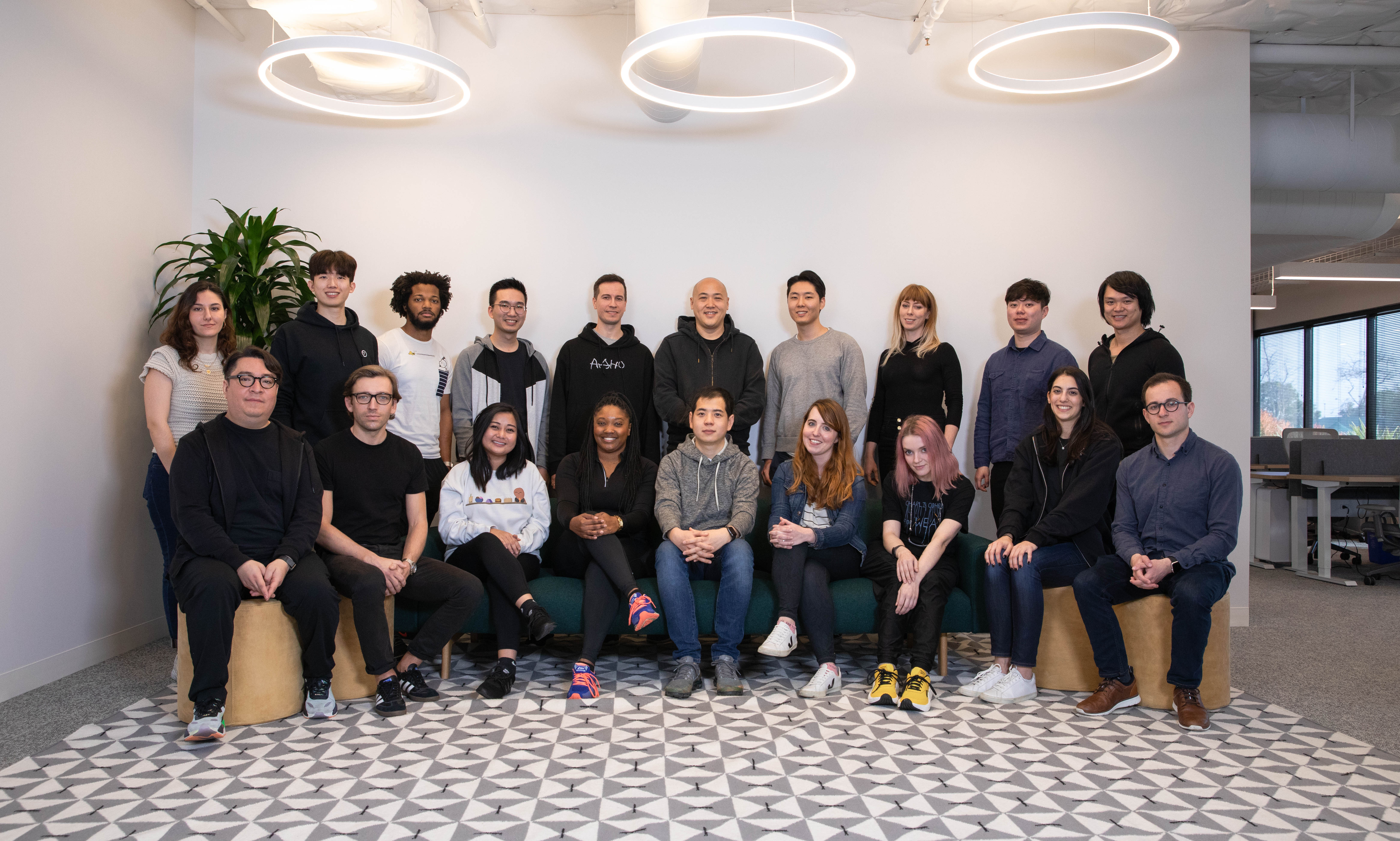
Yellow, the accelerator program launched by Snap in 2018, has selected ten companies to join its latest cohort.

The new batch of startups coming from across the U.S. and international cities like London, Mexico City, Seoul and Vilnius are building professional social networks for black professionals and blue collar workers, fashion labels, educational tools in augmented reality, kids entertainment, and an interactive entertainment production company.

The list of new companies include:

  • Brightly — an Oakland, Calif.-based media company angling to be the conscious consumer’s answer to Refinery29.
  • Charli Cohen — a London-based fashion and lifestyle brand.
  • Hardworkers a Cambridge, Mass.-based professional digital community built for blue-collar workers.
  • Mogul Millennial — this Dallas-based company is a digital media platform for black entrepreneurs and corporate leaders.
  • Nuggetverse — Los Angeles-based Nuggetverse is creating a children’s media business based on its marquee character, Tubby Nugget.
  • SketchAR — this Lithuanian company is developing an AI-based mobile app for teaching drawing using augmented reality.
  • Stipop — a Seoul-based sticker API developer with a library of over 100,000 stickers created by 5,000 artists.
  • TRASH — using this machine learning-based video editing toolkit, users can quickly create and edit high-quality, short-form video. The company is backed by none other than the National Science Foundation and based in Los Angeles.
  • Veam — another Seoul-based social networking company, Veam uses Airdrop as a way to create persistent chats with nearby users as a geolocated social network.
  • Wabisabi Design, Inc. — hailing from Mexico City, this startup makes mini games in augmented reality for brands and advertisers.

The latest cohort from Snap’s Yellow accelerator

Since launching the platform in 2018, startups from the Snap accelerator have gone on to acquisition (like Stop, Breathe, and Think, which was bought by Meredith Corp.) and to raise bigger rounds of funding (like the voiceover video production toolkit, MuzeTV, and the animation studio Toonstar).

Every company in the Yellow portfolio will receive $150,000 mentorship from industry veterans in and out of Snap, creative office space in Los Angeles and commercial support and partnerships — including Snapchat distribution.

“Building from the momentum of our first two Yellow programs, this new class approaches mobile creativity through the diverse lenses of augmented reality, platforms, commerce and media, yet each company has a clear vision to bring their products to life,” said Mike Su, Director of Yellow. “This class shows us that there’s no shortage of innovation at the intersection of creativity and technology, and we’re excited to be part of each company’s journey.”


from TechCrunch https://ift.tt/2T1zQye
via IFTTT

martes, 18 de febrero de 2020

Twitter acquihires Stories template maker Chroma Labs

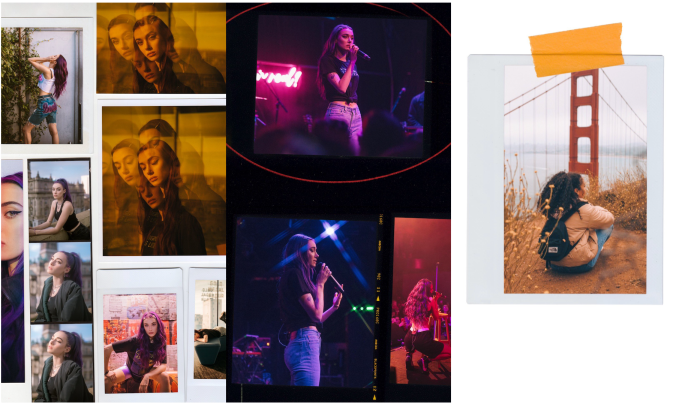
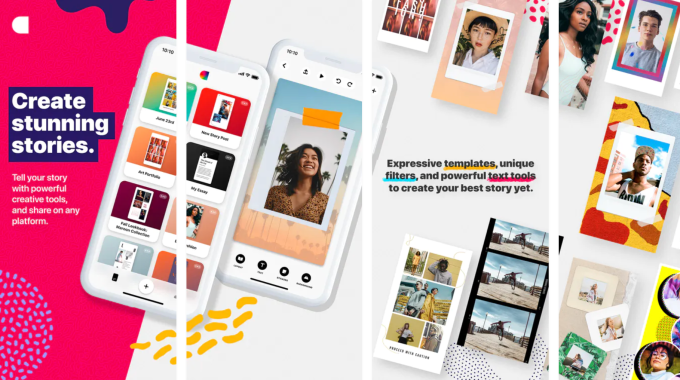
Is “Twitter Stories” on the way? Or will we just get tools to send prettier tweets? Well now Twitter has the talent for both as it’s just acquihired Chroma Labs. Co-founded by Instagram Boomerang inventor John Barnett, Chroma Labs’ Chroma Stories app let you fill in stylish layout templates and frames for posting collages and more to Instagram Stories, Snapchat, and more.

Rather than keeping Chroma Stories around, Twitter will be splitting the Chroma Labs squad up to work on its product, design and engineering teams. The Chroma Stories iPhone app won’t be shut down, but it won’t get more updates and will only work until there’s some breaking change to iOS.

“When we founded Chroma Labs in 2018, we set out to build a company to inspire creativity and help people tell their visual stories. During the past year, we’ve enabled creators and businesses around the world to create millions of stories with the Chroma Stories app” the Chroma Labs team writes on its site. “We’re proud of this work, and look forward to continuing our mission at a larger scale – with one of the most important services in the world.”

We’ve reached out to Twitter for more details on the deal and any price paid. We’ll update if we hear back.

With Chroma Stories, you could choose between retro filters, holiday themed frames, and snazzy collage templates to make your Storie look special amidst the millions posted each day.

By snatching up some of the smartest talent in visual storytelling, Twitter could give its text-focused app some spice. It’s one of the few social apps without a Stories product already, and its creative tools are quite limited. Better ways to lay out photos in tweets could make Twitter more beautiful and less exhausting to sift through.


from TechCrunch https://ift.tt/2V3fSWP
via IFTTT

domingo, 16 de febrero de 2020

With the development of generalized AI, what’s the meaning of a person?

For the next installment of the informal TechCrunch book club, we are reading the fourth story in Ted Chiang’s Exhalation. The goal of this book club is to expand our minds to new worlds, ideas, and vistas, and The Lifecycle of Software Objects doesn’t disappoint. Centered in a future world where virtual worlds and generalized AI have become commonplace, it’s a fantastic example of speculative fiction that forces us to confront all kinds of fundamental questions.

If you’ve missed the earlier parts in this book club series, be sure to check out:

Some questions for the fifth story in the collection, Dacey’s Patent Automatic Nanny, are included below.

And as always, some more notes:

  • Want to join the conversation? Feel free to email me your thoughts at danny+bookclub@techcrunch.com or join some of the discussions on Reddit or Twitter.
  • Follow these informal book club articles here: https://techcrunch.com/book-review/. That page also has a built-in RSS feed for posts exclusively in the Book Review category, which is very low volume.
  • Feel free to add your comments in our TechCrunch comments section below this post.

Thinking about The Lifecycle of Software Objects

This is a much more sprawling story than the earlier short stories in Exhalation, with much more of a linear plot than the fractal koans we experienced before. That wider canvas offers us an enormous buffet of topics to discuss, from empathy, the meaning of humanity, and the values we vouch for to artificial entities, the economics of the digital future, and onwards to the futures of romance, sex, children, and death. I have pages of notes from this story, but we can’t cover it all, so I want to zoom in on just two threads that I found particularly deep and rewarding.

One core objective of this story is to really interrogate the meaning of a “person.” Chiang sets up our main character Ana as a mother of a digital entity (a “digient”) who was a zookeeper in a past life. That career history gives us a nice framing: it allows us via Ana to compare humans to animals, and therefore to contextualize the personhood debate around the digients throughout the story.

On one hand, humans uniquely value themselves as a species, and even the most dedicated digient owner eventually moves on. As one particularly illuminating passage discusses when a digient’s owner announces that his wife is pregnant:

“Obviously you’re going to have your hands full,” says Ana, “but what do you think about adopting Lolly?” It would be fascinating to see Lolly’s reaction to a pregnancy.

“No,” says Robyn, shaking her head. “I’m past digients now.”

“You’re past them?”

“I’m ready for the real thing, you know what I mean?”

Carefully, Ana says, “I’m not sure that I do.”

“…Cats, dogs, digients, they’re all just substitutes for what we’re supposed to be caring for.”

This owner has made a clear distinction: there is only one form of entity worth caring for, only one thing that a human can consider a person, and that is another human.

Indeed, throughout this short story, Chiang constantly notes how the tastes, values, norms, rules, and laws of human society are designed almost exclusively with humans in mind. Yet, the story never takes a definitive stance, and even Ana is not at all convinced of any one point of view, even right up to the end of the story. However, the narrative does offer us one model to think through that I thought was valuable, and that’s around experience.

What separates humans from other animals is that we base decisions on our own prior experiences. We collect these experiences, and use them to guide our actions and drive us toward the right outcomes that we — also from experience — desire. We might want to make money (because experience tells us that money is good), and so we decide to go to college to get the right kind of learning in order to compete effectively in the job market. Essential to that whole decision is lived experience.

Chiang makes a very clear point here when it comes to a company called Exponential, which is interested in finding “superhuman AI” that comes without the work that Ana and the other owners of digients have put in to raise their entities. Ana eventually realizes that they can never find what they are looking for:

They want something that responds like a person, but isn’t owed the same obligations as a person, and that’s something that she can’t give them.

No one can give it to them, because it’s an impossibility. The years she spent raising Jax didn’t just make him fun to talk to, didn’t just provide him with hobbies and a sense of humor. They were what gave him all the attributes Exponential is looking for: fluency at navigating the real world, creativity at solving new problems, judgment you could entrust with an important decision. Every quality that made a person more valuable than a database was a product of experience.

She wants to tell them that Blue Gamma was more right than it knew: experience isn’t merely the best teacher; it’s the only teacher … experience is algorithmically incompressible.

Indeed, as the owners start to think about when they might offer their digients independence to make their own decisions, experience becomes the key watchword. Their ability to make their own decisions in the context of past experiences is what defines their personhood.

And so when we think about generalized artificial intelligence and the hope of creating a sentient artificial life, I think this litmus test starts to get at the real challenge what this technology can even be. Can we train an AI purely through algorithms, or will we have to guide these AIs with their open but empty minds every step of the way? Chiang discusses this a bit earlier in the story:

They’re blind to a simple truth: complex minds can’t develop on their own. If they could, feral children would be like any others. And minds don’t grow the way weeds do, flourishing under indifferent attention; otherwise all children in orphanages would thrive. For a mind to even approach its full potential, it needs cultivation by other minds.

Indeed, Ana and the other main character Derek are forced to keep pushing their digients along, assigning them homework and guiding them to new activities to continue propelling them to get the kind of experience they need to succeed in the world. Why should we assume a generalized AI wouldn’t be any less lazy than a child today? Why would we expect that it can teach itself when humans can’t teach themselves?

Speaking about children, I want to head over to the other thread in this story I found particularly trenchant. Clearly, there is a whole parallel to real-life human childrearing that is sort of intrinsic to the whole story. I think that’s obvious, and while interesting, a lot of the conclusions and meanings from that concept are obvious.

What’s more interesting is what affection and bonding signifies in a world where entities don’t have to be “real.” Ana is a zookeeper who had deep affection for the animals under her care (“Her eyes still tear up when she thinks about the last time she saw her apes, wishing that she could explain to them why they wouldn’t see her again, hoping that they could adapt to their new homes.”) She vigorously defends her relationship with those animals, as she does with the digients throughout the story.

But why are some entities loved more than others if they are all just code running in the cloud? The main digients featured in the book were literally designed to be attractive to humans. As Blue Gamma scans through the thousands of algorithmically-generated digients, it carefully selects the ones that will attract owners. “It’s partly been a search for intelligence, but just as much it’s been a search for temperament, the personality that won’t frustrate customers.”

The reason of course is obvious: these creatures need attention to thrive, but they won’t get it if they are not adorable and desirable. Derek spends his time animating the avatars of the digients to make them more attractive, generating spontaneous and serendipitous facial expressions to create a bond between their human owners and them.

Yet, the story pushes so much harder on this theme in layers that connect with each other. Derek is attracted to Ana throughout the story, even as Ana stays focused on developing her own digient and keeping her relationship with her boyfriend Kyle going. Derek eventually realizes that his own obsession with Ana has become untenable, which is a subtle parallel to Ana’s own obsession with her digients:

He no longer has a wife who might complain about this, and Ana’s boyfriend, Kyle, doesn’t seem to mind, so he can call her up without recrimination. It’s a painful sort of pleasure to spend this much time with her; it might be healthier for him if they interacted less, but he doesn’t want to stop.

Indeed, the book’s strongest thesis may be that this sort of love just isn’t reproducible. Ana wants to join a company called Polytope in order to raise funding to port her digient to a new digital platform. As part of the employer agreement, she is expected to wear a “smart transdermal” called InstantRapport that uses chemical alterations in the brain to rewire a human’s reward centers to love a specific individual automatically. Ana’s love for her digient pushes her to consider rewiring her own brain to get the resources she needs.

And yet, the digients eventually develop similar thought processes. Marco and Polo, two digients owned by Derek, eventually agree to be copied as sex toys, in order to provide funding for the port. Their clones will have their “reward maps” rewired to make them love the customer that purchases them.

The story gives us a haunting reminder that we are ultimately a bunch of neurons that respond to stimuli. Some of that stimuli is under control, but much of it is not, instead programmed by our experiences without our conscious intervention. And there we see how these two threads come entwined together — it is only through experience that we can create affection, and it is precisely affection and therefore experience that creates a person in the first place.

Some questions for Dacey’s Patent Automatic Nanny

  • Can machines play a meaningful role in childrearing?
  • Did the scientific method work in this instance?
  • Connecting this story to the Lifecycle of Software Objects, what is Chiang trying to say about childrearing? Are there similarities or differences between these two stories’ conceptions of children and parents?
  • Should we be concerned if a child only wants to talk to a machine? Do we care what entities a human feels comfortable socializing with?


from TechCrunch https://ift.tt/2SvA024
via IFTTT

jueves, 13 de febrero de 2020

Facebook’s latest experiment is Hobbi, an app to document your personal projects

Facebook is adding another app to its group of experimental projects from the NPE Team, an initiative it announced last year focused on rapidly trying out new ideas in social to see how users react. This week, the team released its fourth app experiment with the launch of Hobbi, a photo and video sharing app designed for documenting your personal projects and hobbies.

Though Hobbi takes obvious cues from Pinterest, it’s not just a pinboard of inspirational ideas. Instead, the app is designed to help hobbyists organize photos of their own projects into themed collections — like gardening, cooking, arts & crafts, décor and more. The idea is to track the progress you’re making over time.

There’s not a social networking component to the app beyond being able to create video highlight reels you could share externally with friends after your projects are complete.

In that sense, Hobbi is more like an editor and organizer than any sort of new social network.

It’s also a very simple app with limited controls or editing options, compared with something like Instagram’s more robust Stories editor, for instance.

It’s interesting, however, that Hobbi’s launch follows shortly after that of Tangi, an app from Google’s Area 120 incubator also focused on creativity, hobbies, and DIY content. Arguably Tangi is a different type of app, as it’s designed around short-form video — similar to a curated TikTok for DIY. But for both companies to launch experiments in the DIY space signals that’s an area where there’s potential to still carve out a niche, despite Pinterest’s domination as a home for hobbies, projects, and interests.

Facebook so far has launched just a handful of NPE Team-branded apps. In November, it launched a chat app for making friends called Bump and a social music app Aux. Its first experiment, a meme editor called Whale, has already shut down, however.

Facebook so far has declined to comment on its plans for any individual NPE Team app, pointing back to its original announcement that said availability would depend on the app. The company had also said the experiments in many cases would be short-lived, as the NPE Team will shut down apps that people don’t find useful and then move on to create others.

Hobbi became available as of yesterday on iOS only.


from TechCrunch https://ift.tt/37qRG39
via IFTTT