miércoles, 18 de noviembre de 2020

Apple to reduce App Store fees for small businesses with under $1 million in revenues

Amid increased regulatory scrutiny over how it runs its App Store, Apple today announced it will reduce the App Store commissions for smaller businesses. Under the new guidelines of the “App Store Small Business Program,” as it’s called, developers earning up to $1 million per year will only have to pay a 15% commission on in-app purchases, rather than the standard 30% commission.

The new program will launch on Jan. 1, 2021, and will be based on the business’s revenues in the previous calendar year — meaning 2020. This $1 million threshold will be based on how much existing developers made across all their applications on a post-commission basis, Apple notes. That means the businesses could actually earn up to $1.3 million in gross revenues. The reduced fee will also apply to new developers launching their apps for the first time.

If, during the course of the year, the developer’s apps surpass the $1 million threshold, they’ll be moved to the standard commission rate, generally 30%, for the remainder of the year. They’ll also then enter the following year at that standard rate, as well. Depending on the developers’ business, however, the “standard” rate may not always be 30%. For developers running an auto-renewing subscription business, for example, the standard commission drops to 15% in year two on a per-user basis, based on Apple’s existing guidelines. This will not change.

Developers can have their eligibility for the App Store Small Business Program reassessed on an annual basis going forward, Apple says.

Despite the lowered commissions, there are no planned changes to the services offered by the Apple Developer program as a whole. Smaller businesses will continue to have access to Apple’s development applications, like Xcode, its programming languages, like Swift, its secure payments interface, over 250,000 APIs, as well as new technologies like HealthKit, ARKit, CoreML and others.

Apple today has 1.8 million apps on its App Store, which reaches over 1.5 billion Apple devices across 175 countries worldwide. In 2019, the App Store facilitated $519 billion in commerce worldwide, with over 85% of that total accruing solely to third-party developers. Apple only commissions the smaller 15% of apps that sell digital goods and services through either in-app purchases or through paid application downloads.

While Apple didn’t provide an exact number of how many apps will be impacted by the new program, it did say that it believes the “vast majority” will qualify.

The company plans to announce further details about the eligibility process in December.

Given that a large number of developers could potentially qualify for the new reduced commissions, Apple’s bottom line within its growing Services business may be impacted.

In addition to the App Store, Apple’s Services business includes other subscription offerings, including AppleCare, Apple Music, Apple Pay, Apple TV+, Apple Music, Apple News+, and more. This business hit an all-time high of $14.5 billion in Apple’s fiscal Q4 2020. While the Services business has heavily leaned on the App Store in years past, Apple has more recently found ways to reduce its reliance on App Store fees. For example, the company recently launched Apple One, a family of subscription bundles that make it easier and more affordable for consumers to pay for Apple’s subscription services.

The changes to the commission structure follow a year that’s been particularly tough on small businesses due to the coronavirus pandemic and the resulting hit to the global economy. Meanwhile, Apple cracked down harder than ever in 2020 on developers skirting its rules over in-app purchases.

Apple’s demands for a 30% cut — which the company recently argued is comparable to other marketplaces of this nature — led it to do battle with its own developers over the course of 2020.

It rejected apps like Basecamp’s Hey from the the App Store for failing to offer support for in-app purchases, and it rejected apps that directed users to other ways to pay outside the App Store, like WordPress for iOS. It’s also now battling in court with Epic Games over the latter’s refusal to pay App Store commissions for its game Fortnite, which Apple yanked from the App Store. The growing chorus of discontent from the developer community, led to the creation of the Coalition for App Fairness, an advocacy group comprised of developers large and small fighting against what they perceive to be anti-competitive behavior from Apple and Google.

Apple’s battle with developers wasn’t limited to the fee structure itself. This year, the company oddly to burn developer goodwill in other ways, too, like when it announced iOS 14 would launch in less 24 hours, leaving developers unable to have their apps iOS 14-ready on day one.

And as the battles over App Store played out, Apple rolled out an increasingly complex set of rules around how apps can operate and when fees are assessed, under the guise of being developer-friendly. What’s actually developer-friendly, however, is what Apple is doing now: simply dropping the commission rate for smaller businesses.

“Small businesses are the backbone of our global economy and the beating heart of innovation and opportunity in communities around the world. We’re launching this program to help small business owners write the next chapter of creativity and prosperity on the App Store, and to build the kind of quality apps our customers love,” said Apple CEO Tim Cook, in a statement about the new program. “The App Store has been an engine of economic growth like none other, creating millions of new jobs and a pathway to entrepreneurship accessible to anyone with a great idea. Our new program carries that progress forward — helping developers fund their small businesses, take risks on new ideas, expand their teams, and continue to make apps that enrich people’s lives,” he said.


from TechCrunch https://ift.tt/3nCll1U
via IFTTT

martes, 17 de noviembre de 2020

Yeah, Apple’s M1 MacBook Pro is powerful, but it’s the battery life that will blow you away

Survival and strategy games are often played in stages. You have the early game where you’re learning the ropes, understanding systems. Then you have mid-game where you’re executing and gathering resources. The most fun part, for me, has always been the late mid-game where you’re in full control of your powers and skills and you’ve got resources to burn — where you execute on your master plan before the endgame gets hairy.

This is where Apple is in the game of power being played by the chip industry. And it’s about to be endgame for Intel. 

Apple has introduced three machines that use its new M1 system on a chip, based on over a decade’s worth of work designing its own processing units based on the ARM instructions set. These machines are capable, assured and powerful, but their greatest advancements come in the performance per watt category.

I personally tested the 13” M1 MacBook Pro and after extensive testing, it’s clear that this machine eclipses some of the most powerful Mac portables ever made in performance while simultaneously delivering 2x-3x the battery life at a minimum. 

These results are astounding, but they’re the product of that long early game that Apple has played with the A-series processors. Beginning in earnest in 2008 with the acquisition of PA Semiconductor, Apple has been working its way towards unraveling the features and capabilities of its devices from the product roadmaps of processor manufacturers.  

The M1 MacBook Pro runs smoothly, launching apps so quickly that they’re often open before your cursor leaves your dock. 

Video editing and rendering is super performant, only falling behind older machines when it leverages the GPU heavily. And even then only with powerful dedicated cards like the 5500M or VEGA II. 

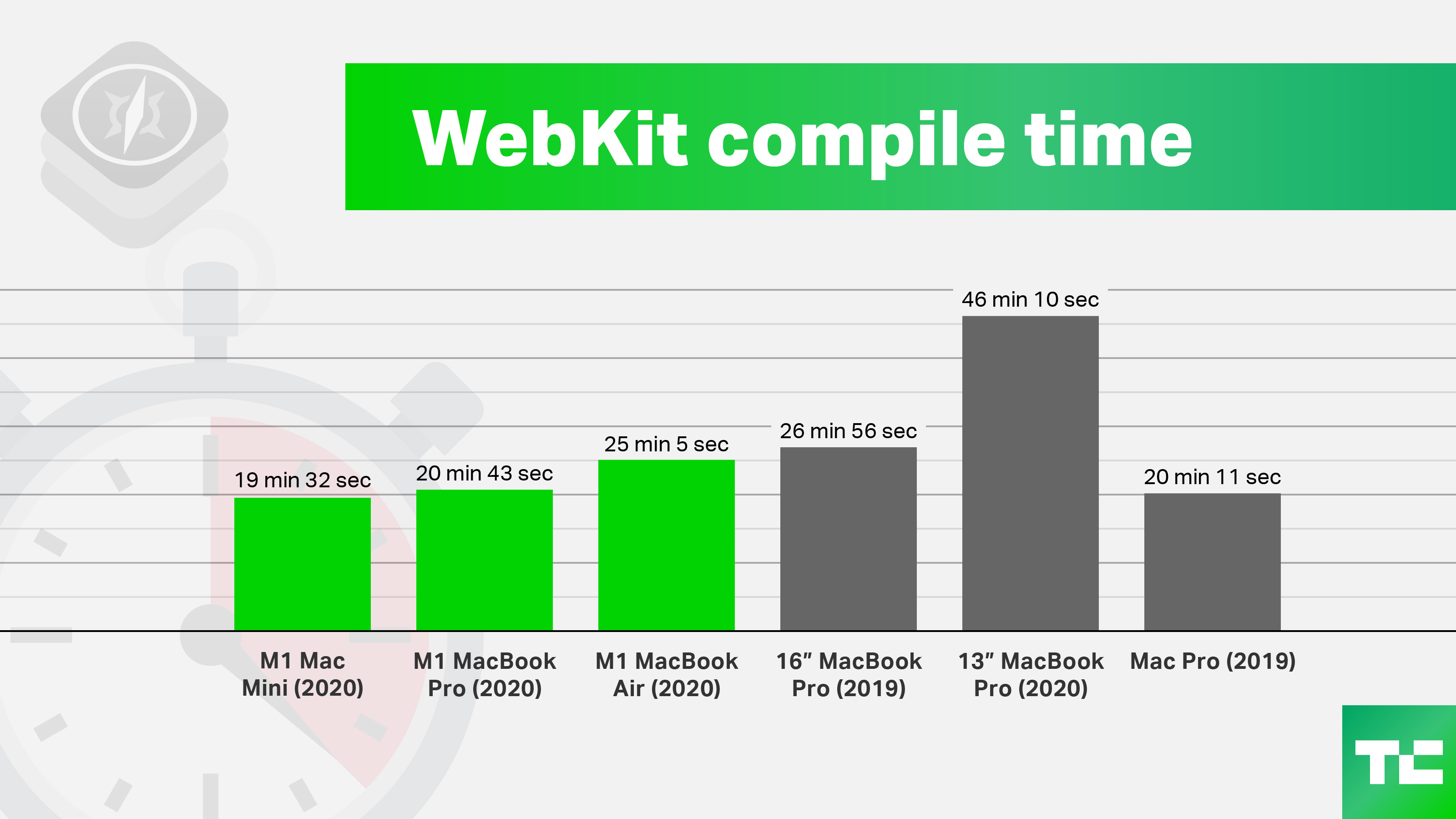
Compiling projects like WebKit produce better build times than nearly any machine (hell the M1 Mac Mini beats the Mac Pro by a few seconds). And it does it while using a fraction of the power. 

This thing works like an iPad. That’s the best way I can describe it succinctly. One illustration I have been using to describe what this will feel like to a user of current MacBooks is that of chronic pain. If you’ve ever dealt with ongoing pain from a condition or injury, and then had it be alleviated by medication, therapy or surgery, you know how the sudden relief feels. You’ve been carrying the load so long you didn’t know how heavy it was. That’s what moving to this M1 MacBook feels like after using other Macs. 

Every click is more responsive. Every interaction is immediate. It feels like an iOS device in all the best ways. 

At the chip level, it also is an iOS device. Which brings us to…

iOS on M1

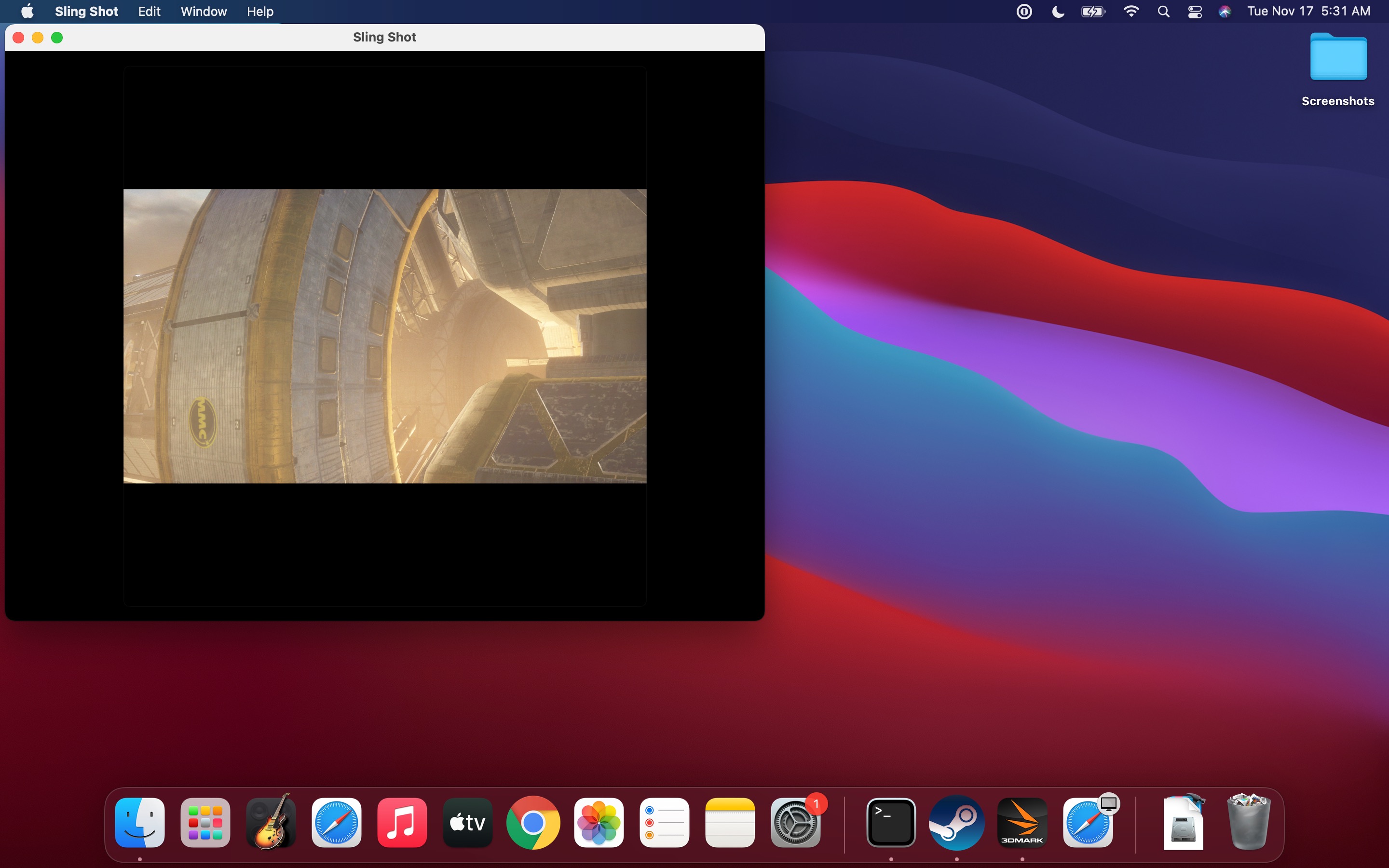
The iOS experience on the M1 machines is…present. That’s the kindest thing I can say about it. Apps install from the App Store and run smoothly, without incident. Benchmarks run on iOS apps show that they perform natively with no overhead. I even ran an iOS-based graphics benchmark which showed just fine. 

That, however, is where the compliments end. The current iOS app experience on an M1 machine running Big Sur is almost comical; it’s so silly. There is no default tool-tip that explains how to replicate common iOS interactions like swipe-from-edge — instead a badly formatted cheat sheet is buried in a menu. The apps launch and run in windows only. Yes, that’s right, no full-screen iOS apps at all. It’s super cool for a second to have instant native support for iOS on the Mac, but at the end of the day this is a marketing win, not a consumer experience win. 

Apple gets to say that the Mac now supports millions of iOS apps, but the fact is that the experience of using those apps on the M1 is sub-par. It will get better, I have no doubt. But the app experience on the M1 is pretty firmly in this order right now: Native M1 app>Rosetta 2 app>Catalyst app> iOS app. Provided that the Catalyst ports can be bothered to build in Mac-centric behaviors and interactions, of course. But it’s clear that iOS, though present, is clearly not where it needs to be on M1.

Rosetta 2

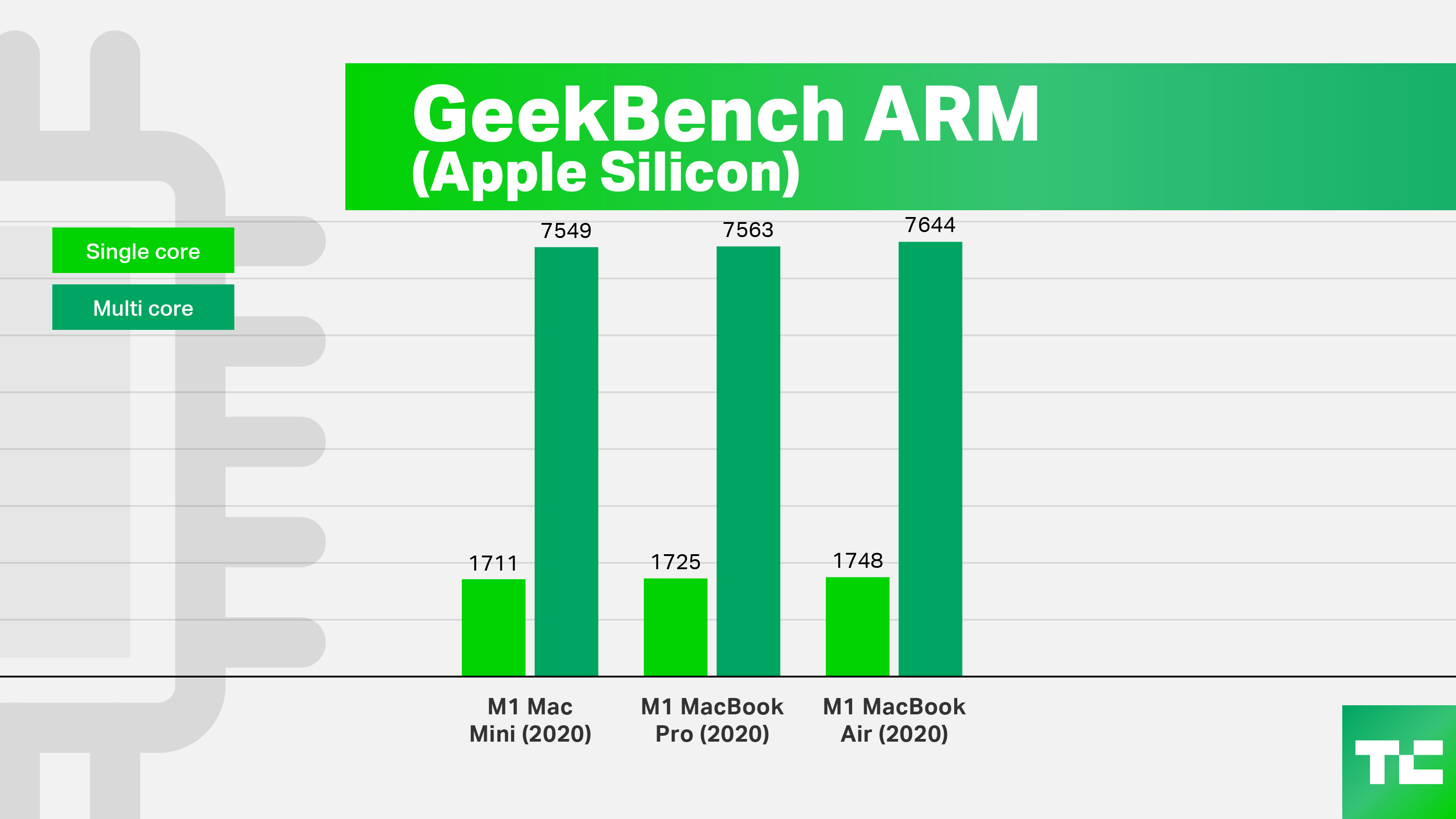
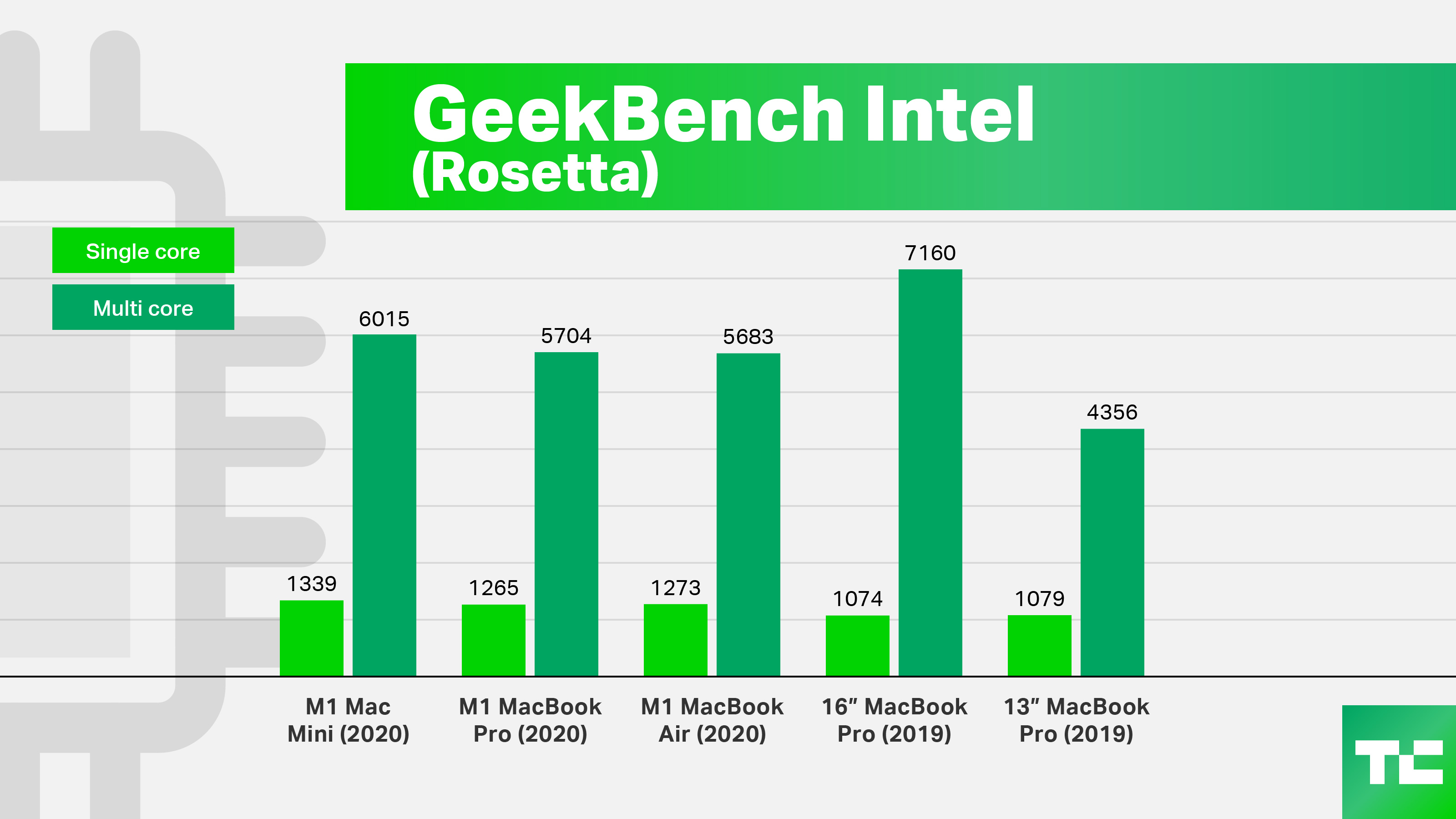
There is both a lot to say and not a lot to say about Rosetta 2. I’m sure we’ll get more detailed breakdowns of how Apple achieved what it has with this new emulation layer that makes x86 applications run fine on the M1 architecture. But the real nut of it is that it has managed to make a chip so powerful that it can take the approximate 26% hit (see the following charts) in raw power to translate apps and still make them run just as fast if not faster than MacBooks with Intel processors. 

It’s pretty astounding. Apple would like us to forget the original Rosetta from the PowerPC transition as much as we would all like to forget it. And I’m happy to say that this is pretty easy to do because I was unable to track any real performance hit when comparing it to older, even ‘more powerful on paper’ Macs like the 16” MacBook Pro. 

It’s just simply not a factor in most instances. And companies like Adobe and Microsoft are already hard at work bringing native M1 apps to the Mac, so the most needed productivity or creativity apps will essentially get a free performance bump of around 30% when they go native. But even now they’re just as fast. It’s a win-win situation. 

Methodology

My methodology  for my testing was pretty straightforward. I ran a battery of tests designed to push these laptops in ways that reflected both real world performance and tasks as well as synthetic benchmarks. I ran the benchmarks with the machines plugged in and then again on battery power to estimate constant performance as well as performance per watt. All tests were run multiple times with cooldown periods in between in order to try to achieve a solid baseline. 

Here are the machines I used for testing:

  • 2020 13” M1 MacBook Pro 8-core 16GB
  • 2019 16” Macbook Pro 8-core 2.4GHz 32GB w/5500M
  • 2019 13” MacBook Pro 4-core 2.8GHz 16GB
  • 2019 Mac Pro 12-Core 3.3GHz 48GB w/AMD Radeon Pro Vega II 32GB

Many of these benchmarks also include numbers from the M1 Mac mini review from Matt Burns and the M1 MacBook Air, tested by Brian Heater which you can check out here.

Compiling WebKit

Right up top I’m going to start off with the real ‘oh shit’ chart of this piece. I checked WebKit out from GitHub and ran a build on all of the machines with no parameters. This is the one deviation from the specs I mentioned above as my 13” had issues that I couldn’t figure out so I had some Internet friends help me

As you can see, the M1 performs admirably well across all models, with the MacBook and Mac Mini edging out the MacBook Air. This is a pretty straightforward way to visualize the difference in performance that can result in heavy tasks that last over 20 minutes, where the MacBook Air’s lack of active fan cooling throttles back the M1 a bit. Even with that throttling, the MacBook Air still beats everything here except for the very beefy MacBook Pro. 

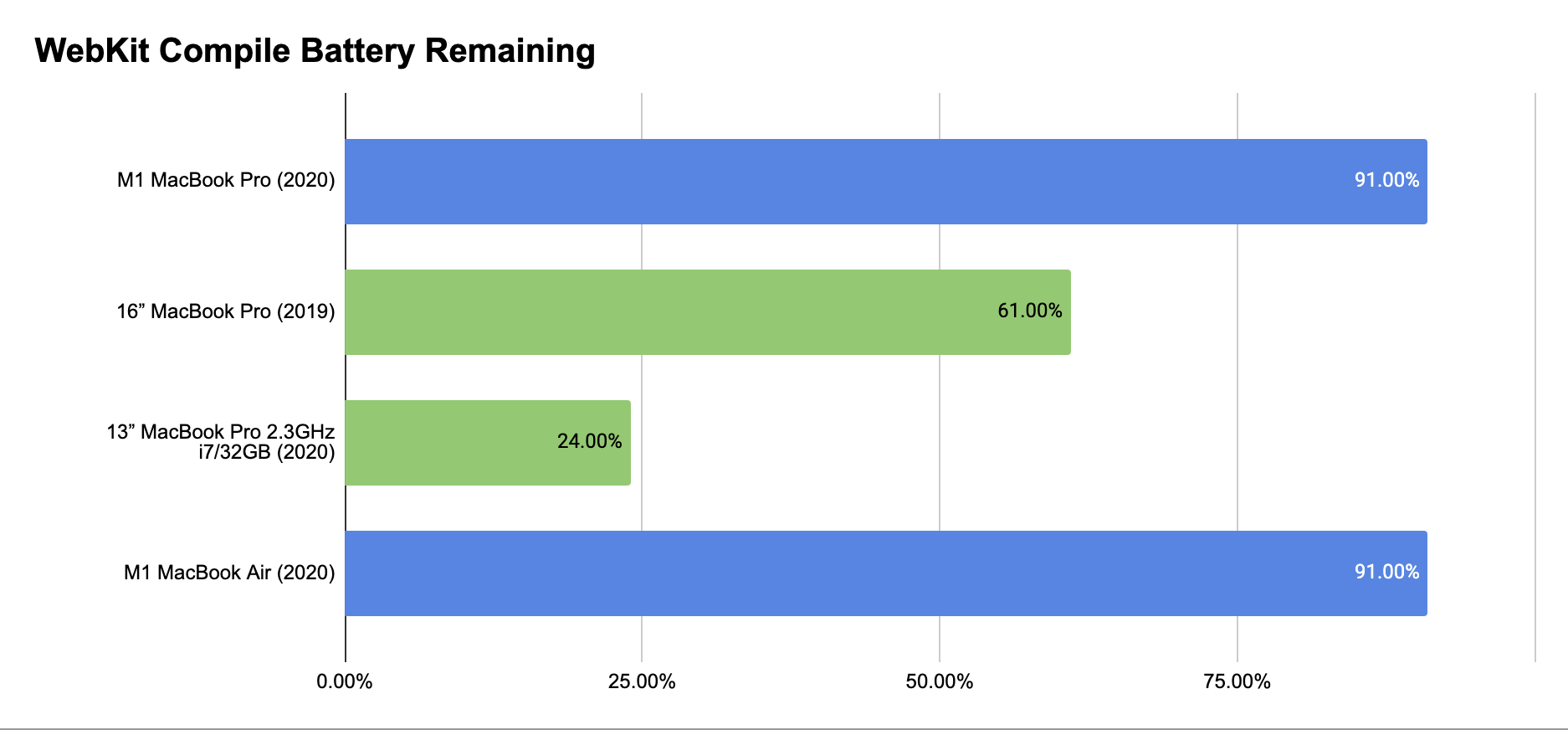
But, the big deal here is really this second chart. After a single build of WebKit, the M1 MacBook Pro had a massive 91% of its battery left. I tried multiple tests here and I could have easily run a full build of WebKit 8-9 times on one charge of the M1 MacBook’s battery. In comparison, I could have gotten through about 3 on the 16” and the 13” 2020 model only had one go in it. 

This insane performance per watt of power is the M1’s secret weapon. The battery performance is simply off the chart. Even with processor-bound tasks. To give you an idea, throughout this build of WebKit the P-cluster (the power cores) hit peak pretty much every cycle while the E-cluster (the efficiency cores) maintained a steady 2GHz. These things are going at it, but they’re super power efficient.

Battery Life

In addition to charting battery performance in some real world tests, I also ran a couple of dedicated battery tests. In some cases they ran so long I thought I had left it plugged in by mistake, it’s that good. 

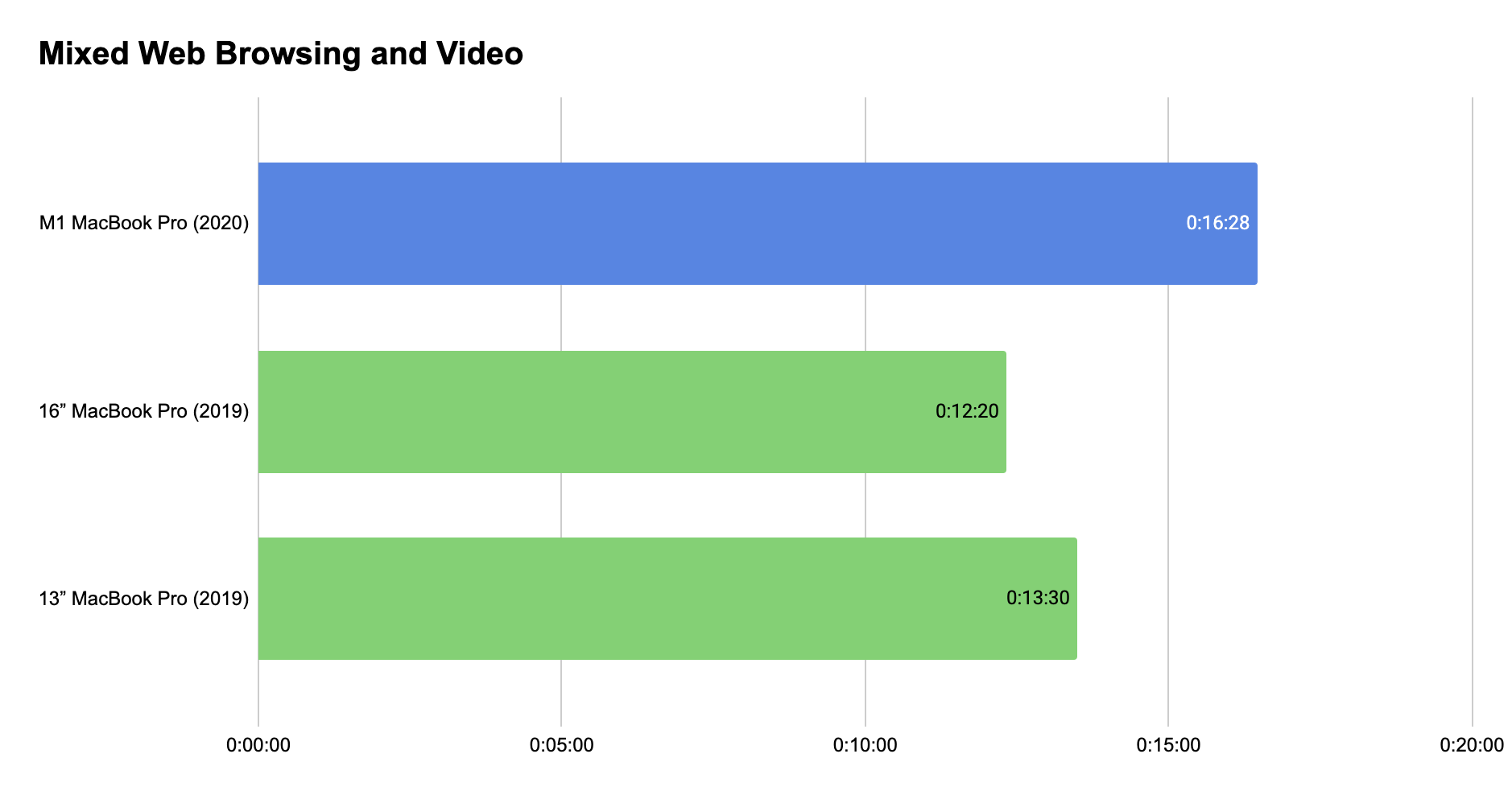
I ran a mixed web browsing and web video playback script that hit a series of pages, waited for 30 seconds and then moved on to simulate browsing. The results return a pretty common sight in our tests, with the M1 outperforming the other MacBooks by just over 25%.

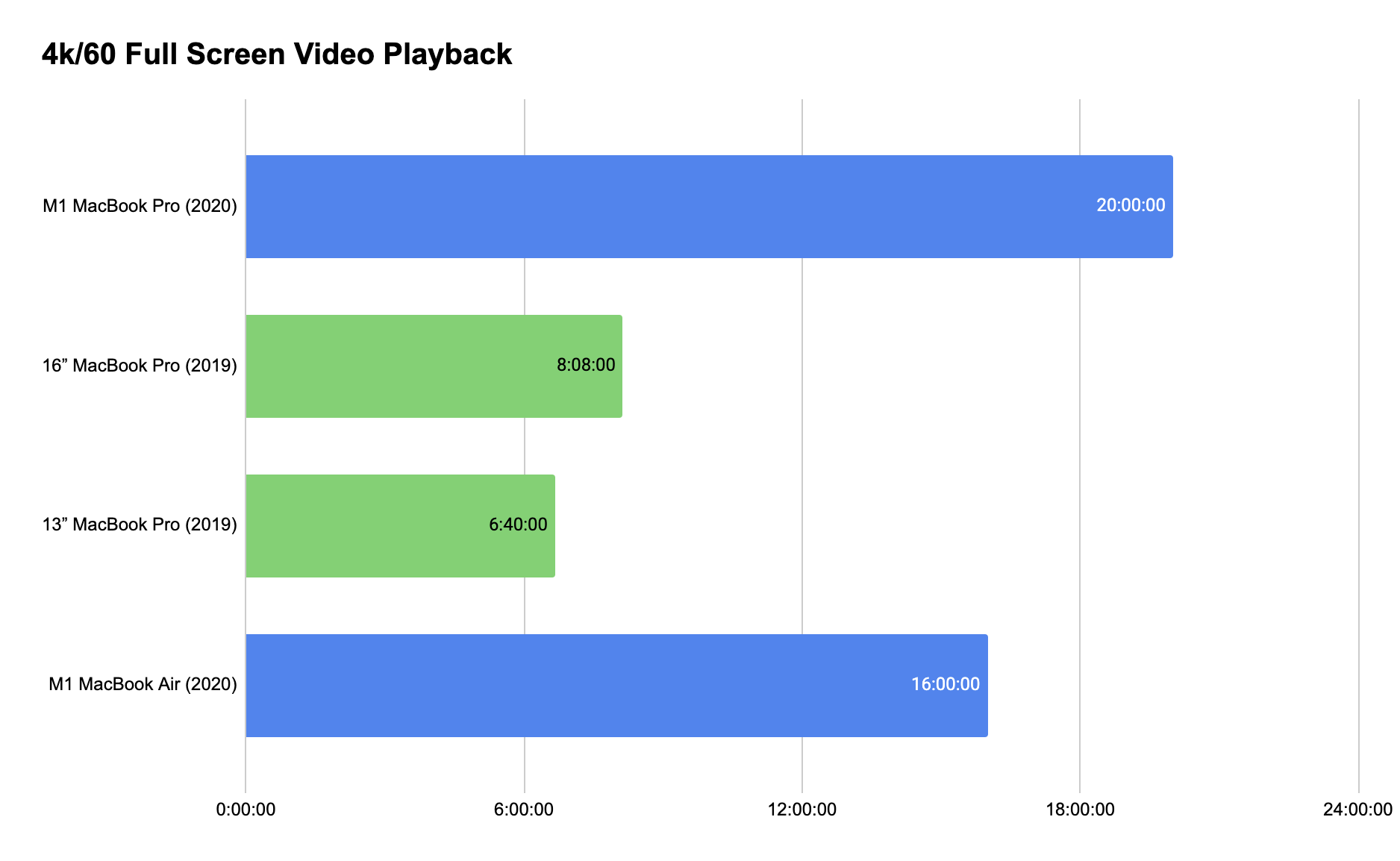
In fullscreen 4k/60 video playback, the M1 fares even better, clocking an easy 20 hours with fixed 50% brightness. On an earlier test, I left the auto-adjust on and it crossed the 24 hour mark easily. Yeah, a full day. That’s an iOS-like milestone.

The M1 MacBook Air does very well also, but its smaller battery means a less playback time at 16 hours. Both of them absolutely decimated the earlier models.

Xcode Unzip

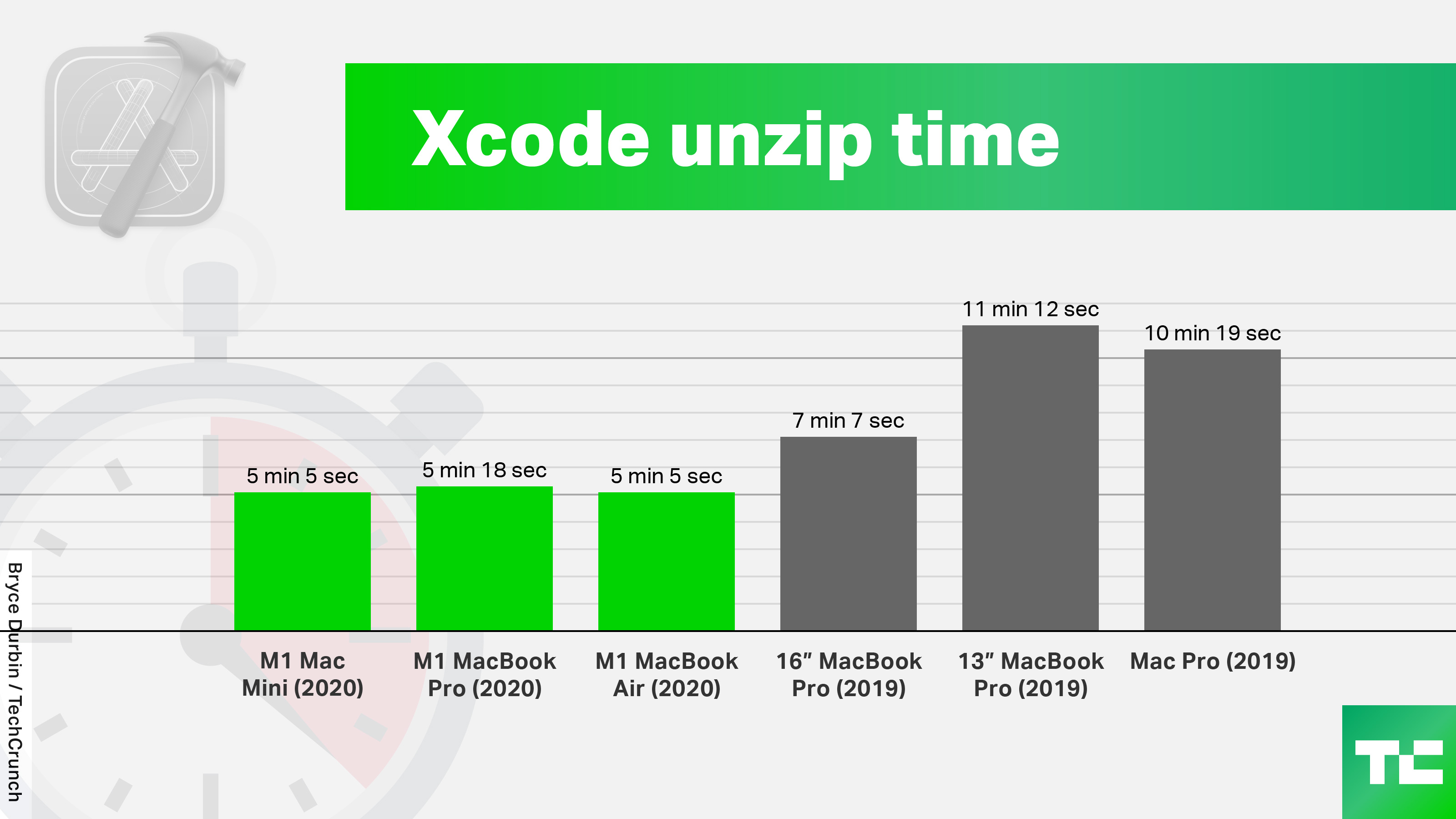
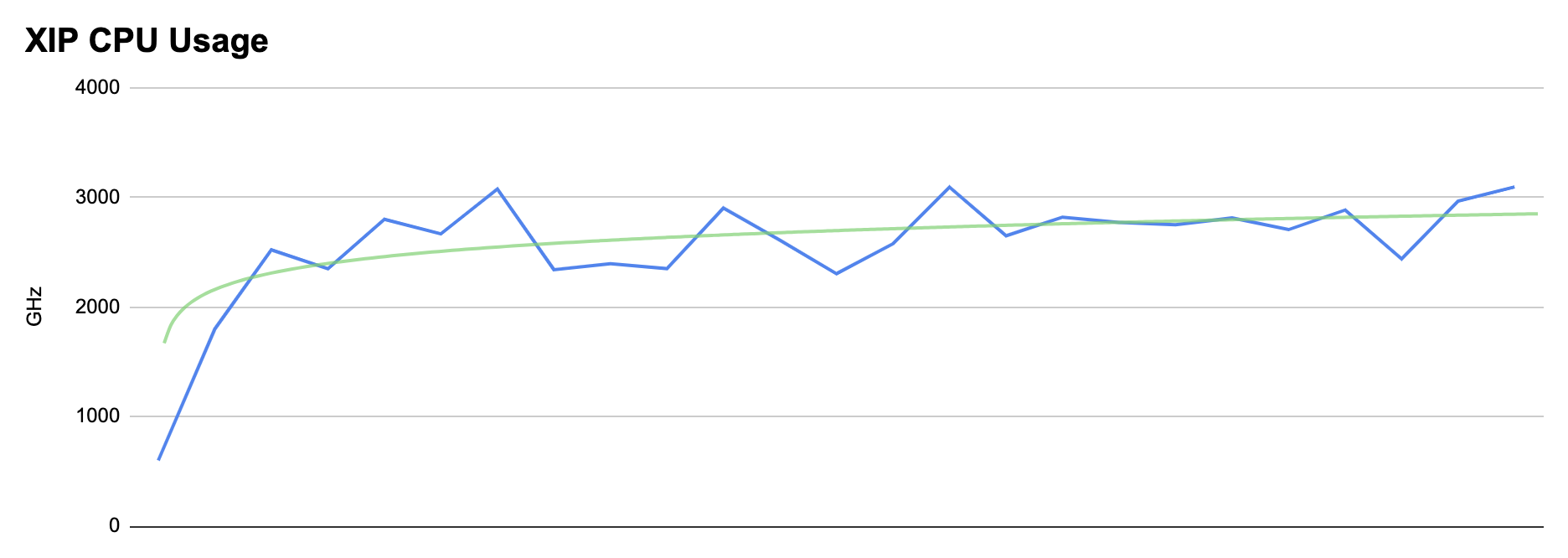
This was another developer-centric test that was requested. Once again, CPU bound, and the M1’s blew away any other system in my test group. Faster than the 8-core 16” MacBook Pro, wildly faster than the 13” MacBook Pro and yes, 2x as fast as the 2019 Mac Pro with its 3.3GHz Xeons. 

Image Credits: TechCrunch

For a look at the power curve (and to show that there is no throttling of the MacBook Pro over this period (I never found any throttling over longer periods by the way) here’s the usage curve.

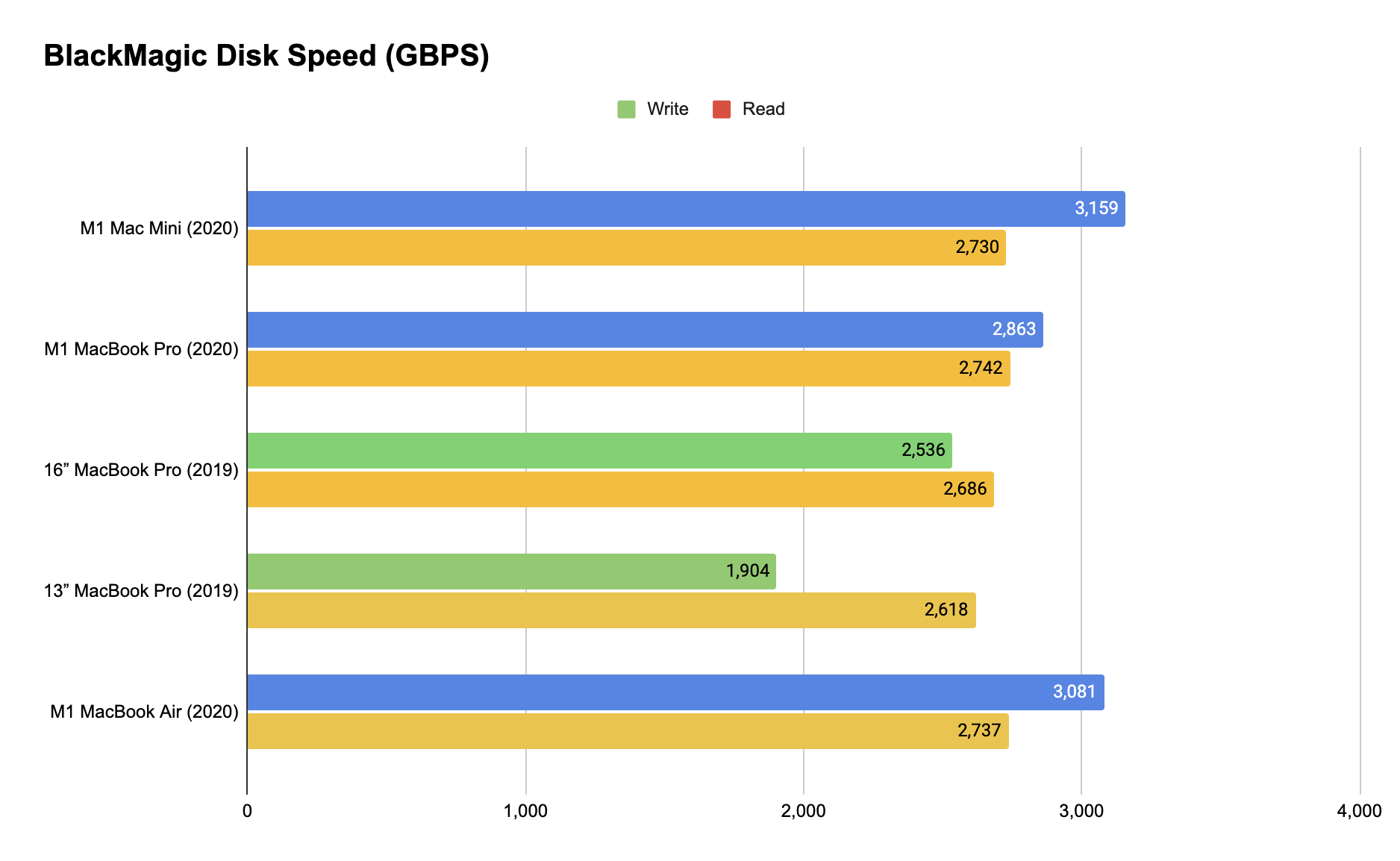
Unified Memory and Disk Speed

Much ado has been made of Apple including only 16GB of memory on these first M1 machines. The fact of it, however, is that I have been unable to push them hard enough yet to feel any effect of this due to Apple’s move to unified memory architecture. Moving RAM to the SoC means no upgradeability — you’re stuck on 16GB forever. But it also means massively faster access 

If I was a betting man I’d say that this was an intermediate step to eliminating RAM altogether. It’s possible that a future (far future, this is the play for now) version of Apple’s M-series chips could end up supplying memory to each of the various chips from a vast pool that also serves as permanent storage. For now, though, what you’ve got is a finite, but blazing fast, pool of memory shared between the CPU cores, GPU and other SoC denizens like the Secure Enclave and Neural Engine. 

While running many applications simultaneously, the M1 performed extremely well. Because this new architecture is so close, with memory being a short hop away next door rather than out over a PCIE bus, swapping between applications was zero issue. Even while tasks were run in the background — beefy, data heavy tasks — the rest of the system stayed flowing.

Even when the memory pressure tab of Activity Monitor showed that OS X was using swap space, as it did from time to time, I noticed no slowdown in performance. 

Though I wasn’t able to trip it up I would guess that you would have to throw a single, extremely large file at this thing to get it to show any amount of struggle. 

The SSD in the M1 MacBook Pro is running on a PCIE 3.0 bus, and its write and read speeds indicate that. 


Thunderbolt

The M1 MacBook Pro has two Thunderbolt controllers, one for each port. This means that you’re going to get full PCIE 4.0 speeds out of each and that it seems very likely that Apple could include up to 4 ports in the future without much change in architecture. 

This configuration also means that you can easily power an Apple Pro Display XDR and another monitor besides. I was unable to test two Apple Pro Display XDR monitors side-by-side.

Cooling and throttling

No matter how long the tests I ran were, I was never able to ascertain any throttling of the CPU on the M1 MacBook Pro. From our testing it was evident that in longer operations (20-40 minutes on up) it was possible to see the MacBook Air pulling back a bit over time. Not so with the Macbook Pro. 

Apple says that it has designed a new ‘cooling system’ in the M1 MacBook Pro, which holds up. There is a single fan but it is noticeably quieter than either of the other fans. In fact, I was never able to get the M1 much hotter than ‘warm’ and the fan ran at speeds that were much more similar to that of a water cooled rig than the turbo engine situation in the other MacBooks. 

Even running a long, intense Cinebench 23 session could not make the M1 MacBook get loud. Over the course of the mark running all high-performance cores regularly hit 3GHz and the efficiency cores hitting 2GHz. Despite that, it continued to run very cool and very quiet in comparison to other MacBooks. It’s the stealth bomber at the Harrier party.

In that Cinebench test you can see that it doubles the multi-core performance of last year’s 13” MacBook and even beats out the single-core performance of the 16” MacBook Pro. 

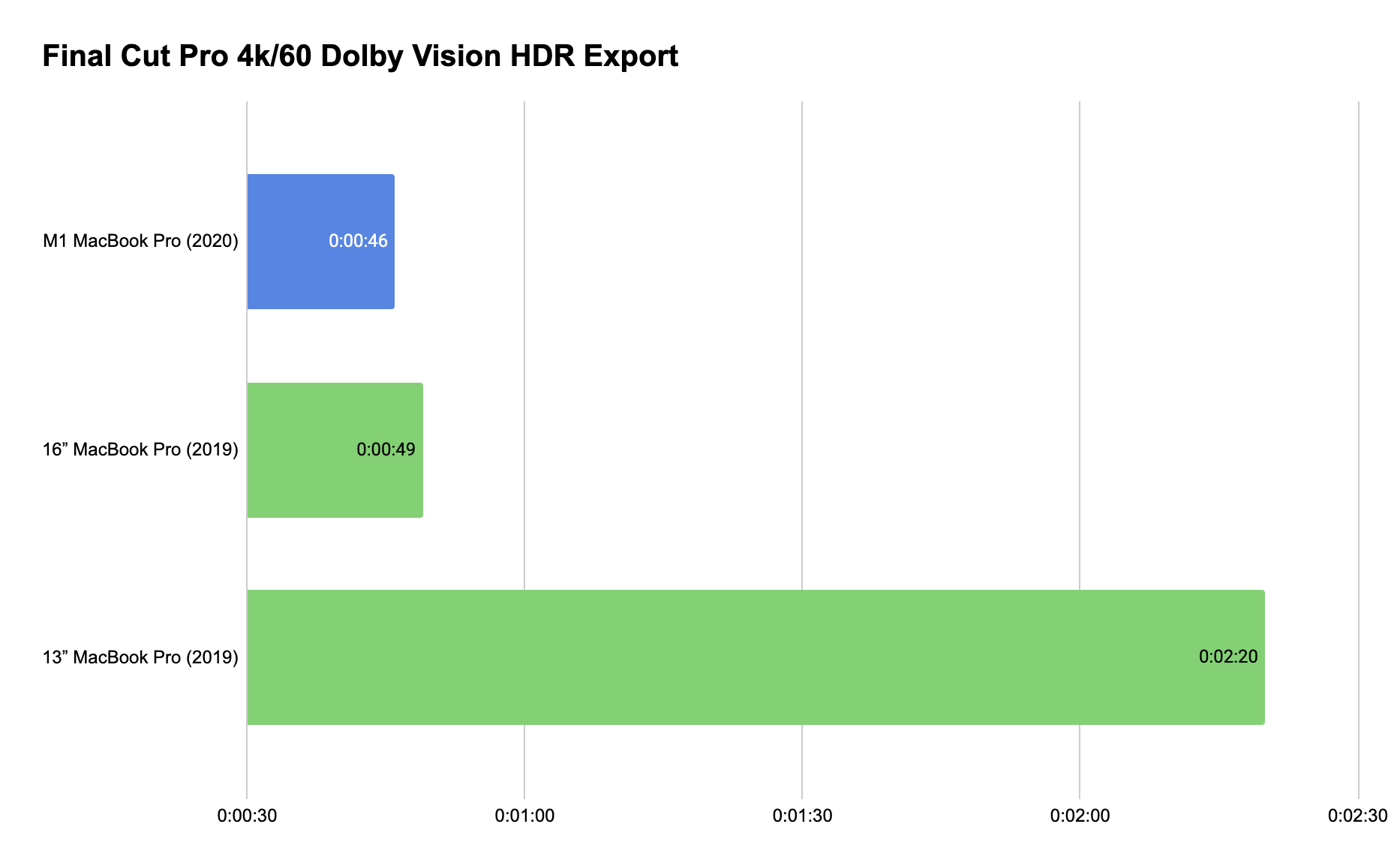
I ran a couple of Final Cut Pro tests with my test suite. First was a 5 minute 4k60 timeline shot with iPhone 12 Pro using audio, transitions, titles and color grading. The M1 Macbook performed fantastic, slightly beating out the 16” MacBook Pro. 


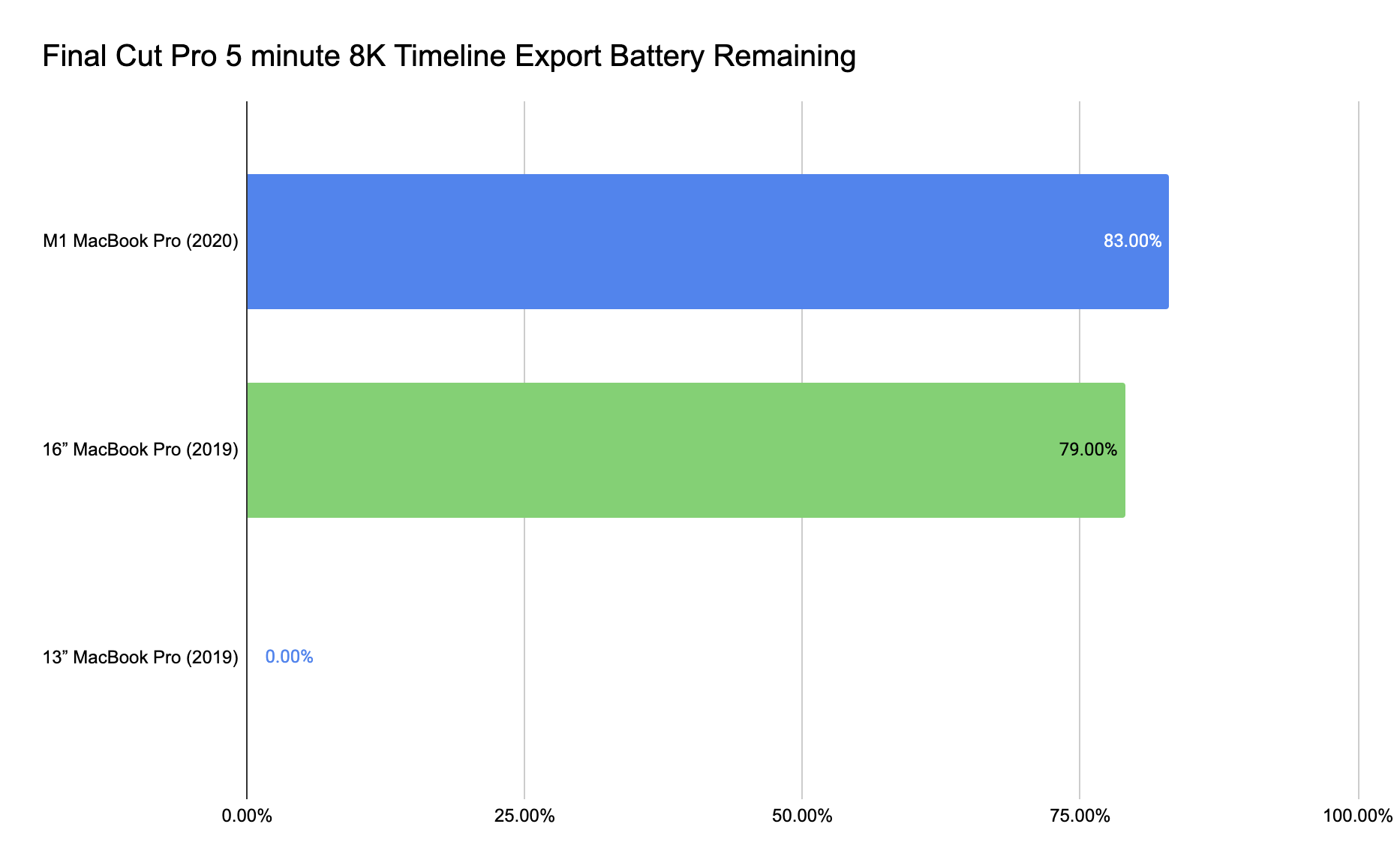
With an 8K timeline of the same duration, the 16” MacBook Pro with its Radeon 5500M was able to really shine with FCP’s GPU acceleration. The M1 held its own though, showing 3x faster speeds than the 13” MacBook Pro with its integrated graphics. 


And, most impressively, the M1 MacBook Pro used extremely little power to do so. Just 17% of the battery to output an 81GB 8k render. The 13” MacBook Pro could not even finish this render on one battery charge. 

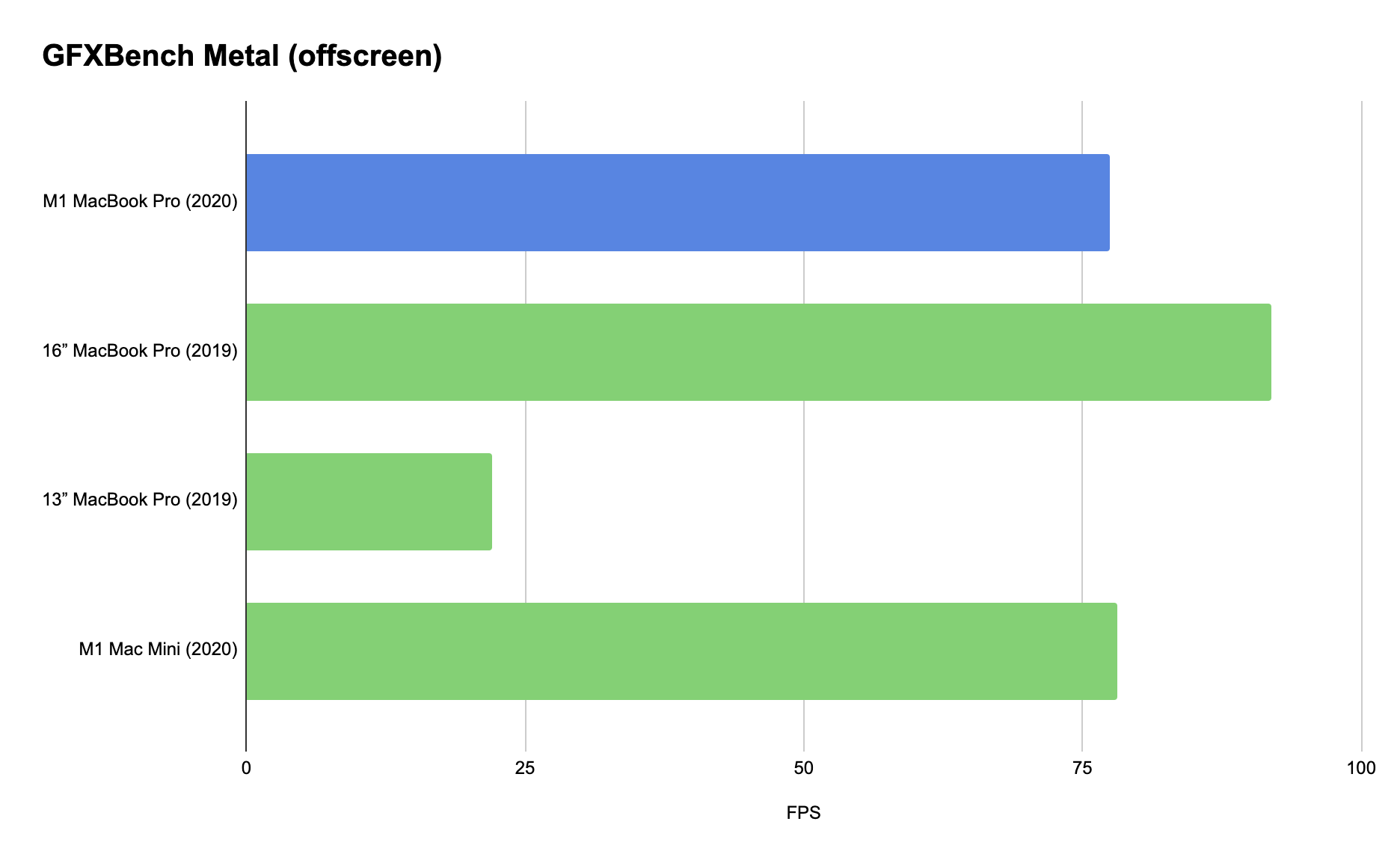
As you can see in these GFXBench charts, while the M1 MacBook Pro isn’t a powerhouse gaming laptop we still got some very surprising and impressive results in tests of the GPU when a rack of Metal tests were run on it. The 16″ MBP still has more raw power, but rendering games at retina is still very possible here.

The M1 is the future of CPU design

All too often over the years we’ve seen Mac releases hamstrung by the capabilities of the chips and chipsets that were being offered by Intel. Even as recently as the 16” MacBook Pro, Apple was stuck a generation or more behind. The writing was basically on the wall once the iPhone became such a massive hit that Apple began producing more chips than the entire rest of the computing industry combined. 

Apple has now shipped over 2 billion chips, a scale that makes Intel’s desktop business look like a luxury manufacturer. I think it was politic of Apple to not mention them by name during last week’s announcement, but it’s also clear that Intel’s days are numbered on the Mac and that their only saving grace for the rest of the industry is that Apple is incredibly unlikely to make chips for anyone else.

Years ago I wrote an article about the iPhone’s biggest flaw being that its performance per watt limited the new experiences that it was capable of delivering. People hated that piece but I was right. Apple has spent the last decade “fixing” its battery problem by continuing to carve out massive performance gains via its A-series chips all while maintaining essentially the same (or slightly better) battery life across the iPhone lineup. No miracle battery technology has appeared, so Apple went in the opposite direction, grinding away at the chip end of the stick.

What we’re seeing today is the result of Apple flipping the switch to bring all of that power efficiency to the Mac, a device with 5x the raw battery to work with. And those results are spectacular.


from TechCrunch https://ift.tt/3lzPQom
via IFTTT

Surging homegrown talent and VC spark Italy’s tech renaissance

As Italy reinstates many COVID-19 restrictions, the country’s tech ecosystem is watching and waiting to see what the wider effects of the emergency will be. Italy’s ecosystem for tech venture capital and startups has been in development for years and has made decent strides in the last decade. Will the coronavirus stymie their efforts?

Put off by high taxes and paperwork in their home country, many Italian entrepreneurs moved to places like London in years past to startup. Indeed, the Italian Ministry of Economic Development and the Italian Trade & Investment Agency in London have even been known to fund Italian entrepreneurs abroad to help them gain more experience. There are an estimated 100,000 Italians already living in London, attracting the likes of Riccardo Zacconi, co-founder of King.com (maker of Candy Crush) and Simon Beckerman of social shopping app Depop.

Rome has more than 20 incubators/accelerators and many established VCs; because of its lower costs compared to other European cities, it’s become a major base for startups. However, while many startups exist in cities like Turin, Bologna, Naples and Rome, Milan is generally seen as a bigger ecosystem because of its mercantile culture and a significant share of VC funds.

The good news: VC funding in Italy has grown. In 2019, Italian startups attracted $850 million, compared to just €140 million in 2017, as the VC ecosystem became less insular and more international investors arrived. Milan tends to attract the lion’s share of VC funding — in 2019, startups located there received €311 million, according to NGP Capital. In 2019, about 300 deals were venture-backed.

Even so, Italy is still very much behind its European counterparts, which means founders tend to move their HQ to fundraise elsewhere, while keeping their comparatively cheaper workforce at home. Italy continues to have structural problems for startups: Credit is based on a company’s financial history, so loans are off-limits.

However, in June 2020, the Italian government sponsored a €1 billion investment program aimed at the native startup ecosystem, creating a new venture arm: CDP Venture Capital.

This has seven different funds under management, including a VC fund-of-funds, “Series A/B matching” funds and acceleration funds. It has also launched two different acceleration projects aimed at supporting SMEs and startups with mentoring, networking and support services.

Additionally, the Ministry of Economic Development launched an initiative called The Italian Startup Act that bundled previously passed legislation to incentivize the Italian ecosystem with tools like tax breaks on early-stage investments and R&D credits, plus a startup visa to attract talent.

Entrepreneurs still face plenty of red tape, however, which is tough enough for Italians, let alone outsiders who might consider relocating. And skeptical observers are concerned that some of the government-backed initiatives look like the government is trying to pick winners, which rarely ends well. Plus, there is controversy about how a €209 billion recovery fund from the European Union, earmarked for the country’s 11,000 startups, will be spent.

But the talent pool is increasing, with Italian universities attracting more overseas students with English-language-based courses and big corporates investing. Microsoft has announced a $1.5 billion investment plan, which includes its first cloud data center in the country. NTT data is investing in Calabria. Amazon has invested in new infrastructure. And Apple has sponsored a Naples-based developer academy.

With a population of 60 million (for comparison, U.K.: 66 million, Germany: 83 million, Spain: 46 million), Italy is not lacking in people, but GDP per capita is a low $34,000. It has an estimated 67 VC funds, with 18 of them started since 2015.

Notable startups from Italy include MoneyFarm (which has raised $127 million from United Ventures, Allianz), Prima.it (€100 million, Blackstone, Goldman Sachs), Soldo (€83 million, Accel, Battery Ventures), Casavo (€59 million, Greenoaks, Picus, Project A, 360 Capital), Milkman (€32 million, p101, 360 Capital Partners) and Mosaicoon (€12 million).

Approximately half of seed to Series A funds have raised $100 million+ funds in the last year. However, seed rounds for startups remain low, even for Europe, ranging from anywhere from €300,000 to €1 million.

ScaleIT is a notable tech business event for the country (which clearly took over from the fabulous TechCrunch Italy events of a million years ago).

And finally, WeWork is opening two more buildings in Milan, taking it to five locations in the city, by mid-2021. Milan-born Talent Garden, which has raised €56 million, is still bullish about co-working despite the pandemic. While this was announced before news of a vaccine emerged, it’s clear that major players are still betting on Italy’s emerging tech ecosystem.

These are the investors we interviewed:

Giulia Giovannini, partner, United Ventures

What trends are you most excited about investing in, generally?

We are sector-agnostic in our approach, and we invest both in B2B and B2C tech/digital companies from various industries. We mainly invest in SaaS companies with some proven traction in the market – but overall, we seek the best technology entrepreneurs that want to make an impact. Our focus is on entrepreneurial and technological initiatives aimed at digitalizing and increasing the productivity of traditionally undigitized sectors. Lately, we have been looking into insurtech and medtech.

What’s your latest, most exciting investment?

In October 2020, we led a $7M Series A round in Boom Image Studio, a Milan-based company on a mission to reshuffle the world of commercial photography by transforming the way digital photo content is generated. We believe that Boom will significantly accelerate the photography industry’s digital transformation, dramatically improving the photo production experience for customers and photographers.

Are there startups that you wish you would see in the industry but don’t? What are some overlooked opportunities right now?

The strategy of venture capital is not to capitalize on the continuity of trends already existing on the market or to focus on the hype of the moment, but rather the exercise of imagining the demands of tomorrow, intercepting products and services capable of reinventing entire sectors with a view to a future industrial policy. Startups using tech to foster remote work, education, healthcare are undoubtedly in the spotlight at the moment: the key question is which technologies and platforms can meet current priorities and remain relevant in the post-pandemic future.

What are you looking for in your next investment, in general?

There is no such thing as a “typical United Ventures company,” but there is a paradigm that all our best investments have in common: ambitious founders with strong values and who know how to inspire their team, with an entrepreneurial project focused on a large growing market and the ability to scale internationally.

Which areas are either oversaturated or would be too hard to compete in at this point for a new startup? What other types of products/services are you wary or concerned about?

I have seen too many startups in payment services. I think the wave has passed.

How much are you focused on investing in your local ecosystem versus other startup hubs (or everywhere) in general? More than 50%? Less?

We are a European VC with a strong focus – approximately 50% – on the Italian ecosystem, where we are best placed to support teams in terms of value-add. We are committed to making the most of the Italian market’s peculiarities, connecting Italian entrepreneurs and talents to the global market. On a national level, we are active all around Italy, with startups headquartered in Milan, Rome, Bologna, Pisa.

Which industries in your city and region seem well-positioned to thrive, or not long-term? What are companies you are excited about (your portfolio or not), which founders?

Milan is well positioned on fintech matters, while Italy is home to many exciting initiatives very much oriented towards deep technologies thanks to research centers of excellence such as Milan and Turin Polytechnics and the IIT (Italian Institute of Technology). Concerning our portfolio, I am very excited by Credimi, a digital lending platform offering digital factoring solutions to enterprises experiencing significant growth rates, and I’m looking forward to working with Boom, our latest investment.

How should investors in other cities think about the overall investment climate and opportunities in your city?

The Italian ecosystem is still small compared to other European hubs, but it has been developing rapidly in recent years. Milan has earned a national hub’s status and reached that critical mass — of large companies, multinationals, universities with cosmopolitan vocation, new companies — capable of generating an ecosystem able to attract the best talents and connect them with other continental and global hubs.

Do you expect to see a surge in more founders coming from geographies outside major cities in the years to come, with startup hubs losing people due to the pandemic and lingering concerns, plus the attraction of remote work?

I think startups will continue to gravitate around big cities’ hubs because they bring value in terms of network and contamination. However, the pandemic has allowed an acceleration in the adoption of remote work organization, enabling the search and recruitment of talents from abroad. Many of our portfolio companies opened up fully-remote roles.

Which industry segments that you invest in look weaker or more exposed to potential shifts in consumer and business behavior because of COVID-19? What are the opportunities startups may be able to tap into during these unprecedented times?

B2C startups are certainly favored due to the increased penetration of e-commerce. On the other side, the adoption of new B2B business models may be slowed down by the modus operandi of large companies that are not at their ease signing remote commercial agreements, causing delays.

How has COVID-19 impacted your investment strategy? What are the biggest worries of the founders in your portfolio? What is your advice to startups in your portfolio right now?

Our role, as Venture Capital investors, is to support our portfolio companies at our best capacity. Getting fundraising done and signing customer deals has been challenging in these months, so our advice is, first of all, to control and manage the cash carefully. We highlighted the need to communicate effectively and realistically with their employees, clients, and stakeholders. Concerning our investment strategy, we refocused on the Italian market.

Are you seeing “green shoots” regarding revenue growth, retention or other momentum in your portfolio as they adapt to the pandemic?

Tech startups are facing challenges and opportunities. Our portfolio is navigating the pandemic with determination and creativity. For example, Credimi has put in place several initiatives to aid Italian SMEs to face the COVID-19 emergency. More generally, B2C startups have seen significant growth in revenues, while B2B startups have, in some cases, seen a lengthening in the average time taken to underwrite commercial contracts.

What is a moment that has given you hope in the last month or so? This can be professional, personal or a mix of the two.

Having managed to close the investment in BOOM working remotely with the startup from the first meetings to the closing, I had the confirmation that our job can be easily managed through remote work.

Any other thoughts you want to share with TechCrunch readers?

Technology is driving radical change across all aspects of our life, and the uncertain times we are going through has accelerated the digital transformation in multiple ways. Our job requires a long-term outlook: now more than ever, we are confident in technological innovation’s potential to lay the groundwork for a brighter future.

Anna Tampieri, partner, ENEA Tech

What trends are you most excited about investing in, generally?

Material science and biotech.

What’s your latest, most exciting investment?

Green Bone Ortho.

Are there startups that you wish you would see in the industry but don’t? What are some overlooked opportunities right now?

Startups dealing with new materials.

What are you looking for in your next investment, in general?

Innovative materials and solutions coming from recycling and the circular economy.

What are companies you are excited about (your portfolio or not), which founders?

Food and beverage, biotech, automation and tourism.

How should investors in other cities think about the overall investment climate and opportunities in your city?

Before the pandemic the business climate was positive, even if it was challenging.

Do you expect to see a surge in more founders coming from geographies outside major cities in the years to come, with startup hubs losing people due to the pandemic and lingering concerns, plus the attraction of remote work?
No, I don’t expect that: I think that the pandemic will create a move towards “localism.”

What are the opportunities startups may be able to tap into during these unprecedented times?

Mainly biotech and company involved in developing various anti-COVID solutions.

How has COVID-19 impacted your investment strategy? What are the biggest worries of the founders in your portfolio? What is your advice to startups in your portfolio right now?

Startups dealing with new solutions for personal mobility.

Are you seeing “green shoots” regarding revenue growth, retention or other momentum in your portfolio as they adapt to the pandemic?

Many.

What is a moment that has given you hope in the last month or so? This can be professional, personal or a mix of the two.

The moment that I contacted a newco developing an innovative cure for COVID-19 using monoclonal antibodies.

Any other thoughts you want to share with TechCrunch readers?

I would share an unpopular thought: To focus more on true innovations versus the short-term economic return.

Giuseppe Donvito, partner, P101 Ventures


from TechCrunch https://ift.tt/3pEClpN
via IFTTT

jueves, 12 de noviembre de 2020

OthersideAI raises $2.6M to let GPT-3 write your emails for you
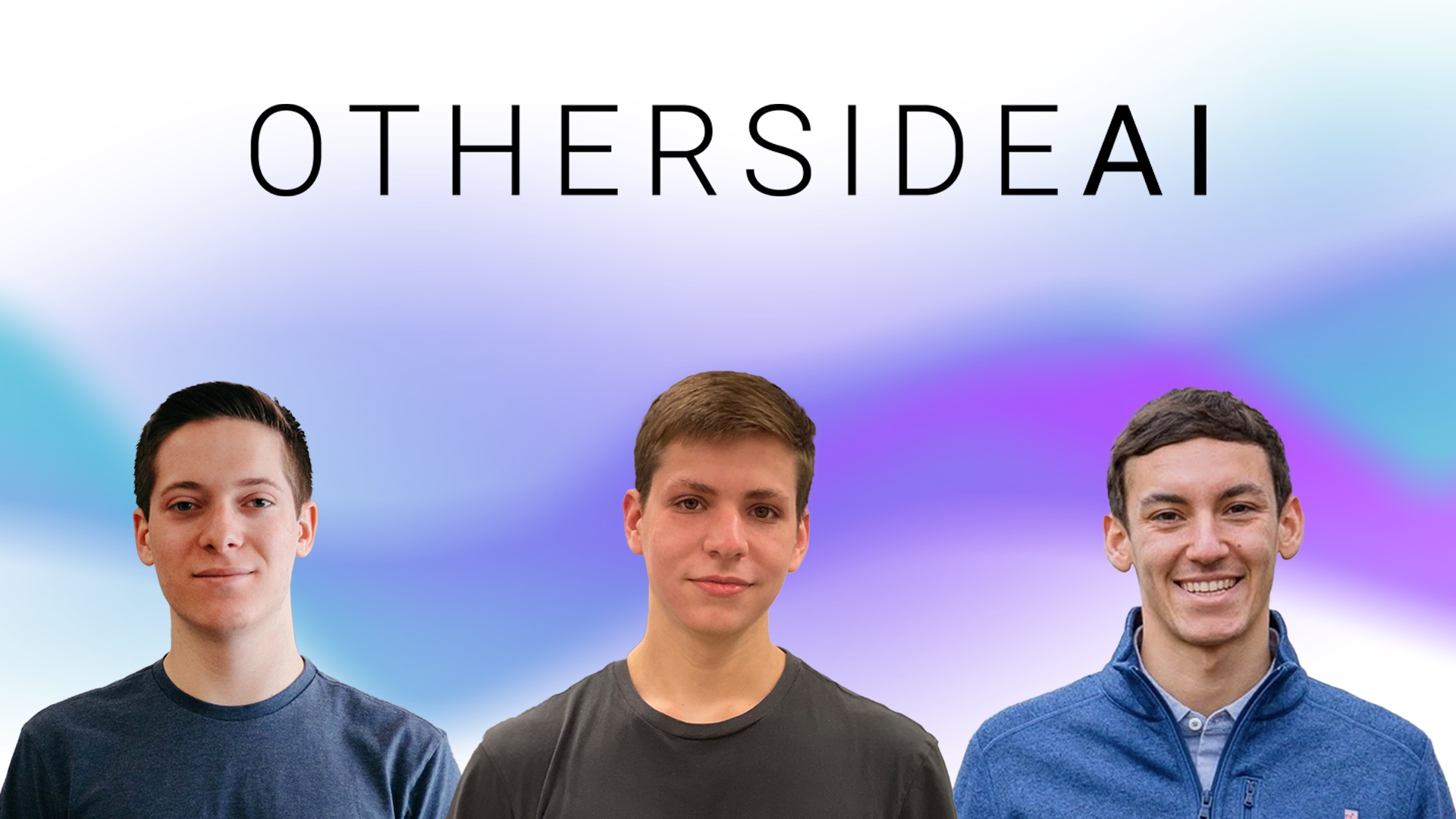
When I send an email, it’s special. A crafted, beautiful thing that — who am I kidding, it’s mostly automatic. So why not automate it? OthersideAI is taking this idea (with a $2.6M seed round) beyond the auto-responders and smart replies, using OpenAI’s GPT-3 language generation engine to turn bullet points into full, personalized messages.

GPT-3, or Generative Pre-trained Transformer 3, is of course the latest version of the AI model that writes such convincing copy that everyone under the sun has let it write their column about it, and then attempted to surprise readers by revealing the fact at the end. (There are usually a few tells, though.)

Access is carefully limited, though, and the team at OthersideAI has a cozy but uncharacterized relationship with OpenAI. It began when the team was working on their previous project, and found they had more emails than they could handle. At the time, GPT-3’s predecessor GPT-2 was in vogue.

“We built a cold email thing with it, but then we thought — that might be the business we should be pursuing,” said CEO Matt Shumer. “So we decided to go all in.”

He and his colleagues Jason Kuperberg and Miles Feldstein built a demo that got a bit of attention when they posted it to Twitter, and soon obtained access to the new version of the GPT engine.

OpenAI arguably already did the hard part by building this astonishing language engine, but it’s not as simple as letting it run wild in someone’s inbox. Unrestrained, GPT-3 will chase its own tail down a rabbit hole, producing truly strange stuff, as any player of AI Dungeon can attest.

“GPT-3 makes an amazing demo, but putting it in a product is another story,” said Shumer. “Our job is in a sense to tame its creativity.”

The resulting product turns a summary or bullet points into a complete email, and looks like this in action:

Image Credits: OthersideAI

If you don’t like the result, or there’s an error, or you just like torturing AIs, you can hit the button and it’ll generate it again, differently. Tweak it a bit first and the system will understand that in the future you’d prefer the new way.

The GPT systems are trained on millions of words and phrases, and then generate text inspired by that corpus after being given an input to work from. In this case the system takes as input not just your bullet points, but other information from the email chain and the user’s past preferences.

That way it picks up not just context: it may say “It was great to sit down for coffee with you” if coffee is referenced even if you only wrote “good to meet” in the bullet. And it also learns your style, preferring certain words or phrases or learning that you like to sign off a certain way.

It can make good guesses at technical and financial details, such as in making a job offer:

Of course, for something so important, you may wonder: why bother letting an AI do it at all?

It’s sort of like how a car can go 120 MPH, but you never drive it faster than 80 (okay… 90). You want to know the thing isn’t going to fall apart as soon as it leaves its most obvious use case. For Otherside’s AI model, this means being robust enough to handle “serious” emails even if it’s most likely to spend its time replacing rote messages.

Kuperberg said the company, which has almost 10,000 people waiting to get into its test version, has seen interest from engineers and developers as well as sales and support people. One instantly sees the application in a support or sales scenario where a handful of scripted questions or replies can be re-generated to be different every time, or slightly adjusted for the person or situation. That avoids the feeling of receiving a “form email” even though it amounts to the same thing.

I mentioned the possibility of helping people who have trouble typing — someone who must write emails letter by letter using gaze detection might find this extremely compelling. Shumer said this hadn’t been on their radars to begin with but that the in the last few weeks they’ve seen interest from this direction

Shumer was careful to assure that security comes first and this isn’t a data-sucking operation — obviously no one would want to use a tool that reads your email and uses that info for nefarious purposes, with the notable exception of Gmail.

They feel secure in their approach, noting that Google seems more interested in selecting the right reply for the context, and text generation tools aren’t robust enough to handle the inputs Otherside’s GPT-3-based system handles with ease. ”

“If you want to make an email in the tone of the user, it can’t guess about the details. It needs a human. This isn’t a generated response, it’s taking direction,” Shumer said.

The $2.6 million seed round was led by Madrona Venture Group, with Active Capital, Hustle Fund, Chapter One and more participating. It’s all going towards building the team so the company can build a full-scale product.

Ultimately, they envision this as a small-scale test for a larger system of interlocking AIs that can safely and securely connect with one another, answering questions and providing information in a human-like way but with only the minimum human involvement. Obviously that’s somewhat of a long-term goal, but given all the talk for a decade or so about replacing email has come to nothing, perhaps it’s time to embrace it but let someone (or something) else take on a bit of the load.


from TechCrunch https://ift.tt/32GlObf
via IFTTT

sábado, 7 de noviembre de 2020

Human Capital: The gig economy in a post-Prop 22 world

Welcome back to Human Capital and congrats on making it through one of the hardest weeks of the longest year.

Now that the Associated Press has called the election in favor of Joe Biden, it should be good news for DEI practitioners, who expressed some worry they’d be out of a job if Trump was allowed to continue on his path of destruction.

Meanwhile, over in California, the Uber and Lyft-backed gig worker ballot measure, Prop 22, passed. We’ll get into what that all means and the implications moving forward.

Human Capital is a weekly newsletter that lands in subscribers’ inbox every Friday at 1 p.m. PT. Sign up here to receive it.

Gig workers will continue being independent contractors in CA

As y’all may have seen by now, the Uber and Lyft-backed gig worker measure, Proposition 22, passed in California

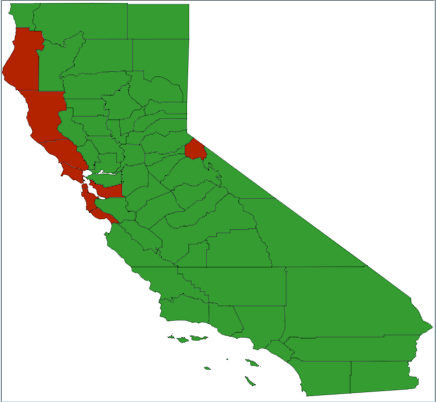
The current count is 58.4% in favor of Prop 22 and 41.6% in opposition. Below, you can see how mostly counties in Northern California along the coast drove the opposition. 

That means gig workers will continue to be classified as independent contractors in the state. It also essentially makes these gig companies exempt from AB-5, the gig worker bill that went into law at the beginning of the year. Lastly, it means we can expect these gig companies, which spent $205 million on the ballot measure, to seek similar legislation in other states.

“To get Prop 22 passed, gig companies — which have yet to turn a profit — spent a historic $205 million on their campaign, effectively creating a political template for future anti-democratic, corporate law-making,” Meredith Whittaker, co-founder of AI Now Institute and Veena Dubal, professor of law at the University of California, Hastings, wrote.

On Uber’s earnings call this week, Uber CEO Dara Khosrowshahi said the company would “more loudly advocate for laws like Prop 22” throughout the U.S. and worldwide.

Meanwhile, labor groups are already planning their next steps forward. Partnerships for Working Families, for example, is considering potentially lobbying the hopeful Biden administration’s Department of Labor for better federal laws for worker classification, according to Cal Matters. Other options entail suing for issues around worker’s compensation requirements or the ⅞ supermajority needed to amend Prop 22.

Below are statements issued over the past couple of days from interested parties.

Uber CEO Dara Khosrowshahi to drivers: “With this vote, drivers and delivery people will get what so many of you have been asking for: access to benefits and protections, while maintaining the flexibility and independence you want and deserve.

The future of independent work is more secure because so many drivers like you spoke up and made your voice heard—and voters across the state listened.”

Lyft Chief Policy Officer Anthony Foxx: “California voters have spoken, and they stood with more than a million drivers who clearly said they want independence plus benefits. Prop 22 is now the first law in the nation requiring health, disability and earnings benefits for gig workers. Lyft stands ready to work with all interested parties, including drivers, labor unions and policymakers, to build a stronger safety net for gig workers in the U.S.”

DoorDash CEO Tony Xu: Passing Prop 22 is a big win for Dashers, merchants, customers, and communities. Californians sided with drivers, recognizing the importance of flexible work and the critical need to extend new benefits and protections to drivers like Dashers

Gig Workers Rising: “Billionaire corporations just hijacked the ballot measure system in California by spending millions to mislead voters. The victory of Prop 22, the most expensive ballot measure in U.S. history, is a loss for our democracy that could open the door to other attempts by corporations to write their own laws.” 

Gig Workers Collective: “Our organizing has always been untraditional since we aren’t classified as employees and don’t have the legal protections to organize or unionize, but we still found a way to build worker power and fight back. We’re disappointed in tonight’s outcome, especially because this campaign’s success is based on lies and fear-mongering. Companies shouldn’t be able to buy elections. But we’re still dedicated to our cause and ready to continue our fight.” 

DEI professionals hope for a Biden administration

Uber Chief Diversity Officer Bo Young Lee said on Twitter that for many DEI professionals, “the results of the election will impact how we do our jobs and may even impact if we have jobs in the long term.”

Now that Biden is the presumptive president, the change in the administration will likely mean a change in the executive order banning types of diversity training for federal contractors.

Late last month, three civil rights groups filed a federal class-action lawsuit challenging the Trump administration’s execute order. That suit came after Microsoft disclosed that the U.S. Department of Labor Office of Federal Contract Compliance Programs contacted the company regarding its racial justice and diversity commitments made in June.

Shine app founder talks mental health for Black people and people of color

Shine app co-founders Naomi Hirabayashi and Marah Lidey

On this week’s episode of Mixtape, we spoke with Shine app founder Marah Lidey about mental health. We spoke about the psychological and physiological manifestations of racism, the adverse effects of 2020 and how Black death isn’t new, but it’s finally getting global attention.

“Nothing necessarily new is happening with Black people dying in the streets,” Lidey said. “[Black people] all know that. But when all of your friends and co-workers become aware in this very new way and want to understand and want to share and want to ask you questions and you’re watching this play out at this national level and you’re bombarded at the global level, right I mean, this is in our DNA. Our cells were in the cells of those people who were enslaved.”’

You can check out the full conversation here.


from TechCrunch https://ift.tt/3lcB9r2
via IFTTT